-
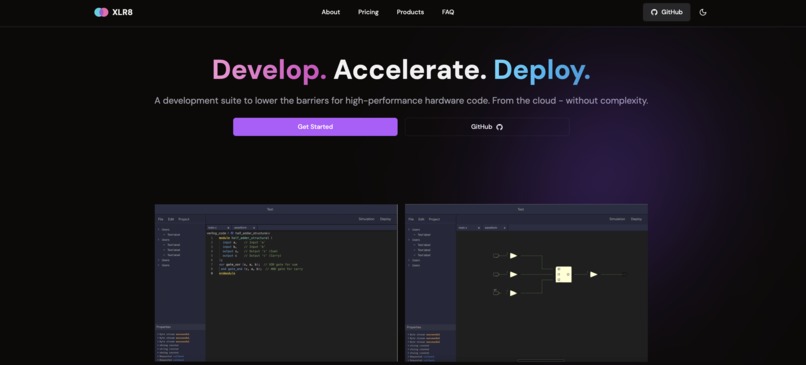
XLR8 Website
-
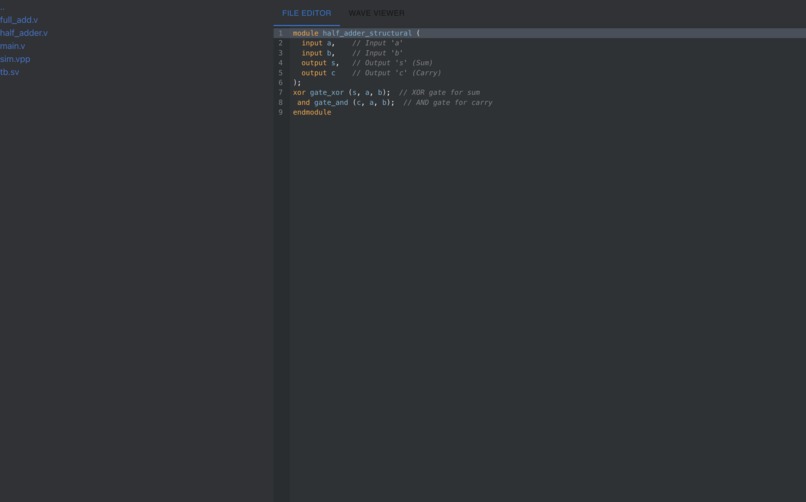
XLR8 Code Editor
-
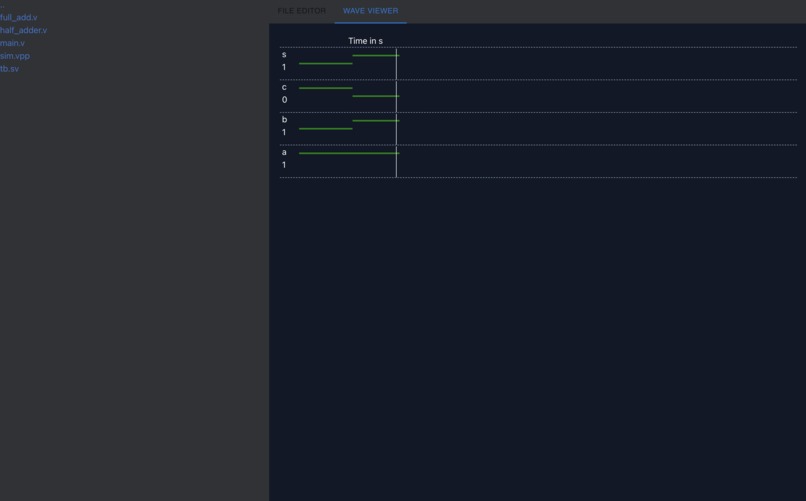
XLR8 Simiulation Wave Viewer


Inspiration
The inherent complexity in Vivado's design tools identified an opportunity for a streamlined, intuitive interface for hardware design. This led to the development of XLR8, a platform designed to simplify the hardware development process and enhance accessibility for a broad spectrum of users.
What it does
XLR8 enhances the hardware development workflow by providing real-time synthesis and simulation of Verilog code. It is engineered to reduce the development cycle time and improve productivity through an integrated suite of development tools that cater to the evolving needs of hardware developers.
How we built it
XLR8 was developed by integrating Node.js for robust backend operations, Electron for cross-platform desktop application deployment, and React for a dynamic and responsive user interface. This combination of technologies ensures a scalable and efficient application that meets modern industry standards.
Challenges we ran into
Documentational deficiencies in AWS EC2 F1 instances presented significant obstacles. However, the development team successfully navigated these challenges, successfully utilizing the platform's capabilities to provide a service to users.
Accomplishments that we're proud of
The Waveviewer feature within XLR8 stands as a significant achievement, providing users with clear and interpretable visualization of simulation outputs. This tool is a reflection of the platform's commitment to innovation and usability in hardware simulation.
What we learned
The project reinforced the importance of collaborative teamwork and effective task delegation in overcoming technical challenges. This approach proved essential in the successful execution of a project with the complexity and scope of XLR8.
What's next for XLR8
The next phase for XLR8 involves securing investment to scale up operations and expand the platform's functionality. The aim is to continuously adapt and extend XLR8's offerings, positioning the platform as a leader in the space.

Log in or sign up for Devpost to join the conversation.