-
-
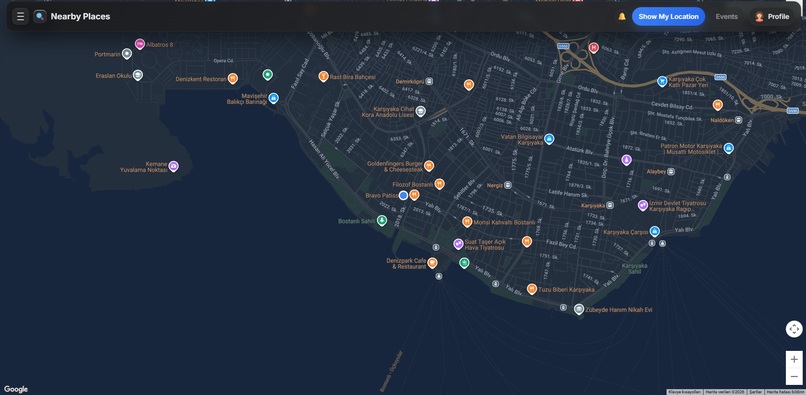
Welcome Page
-
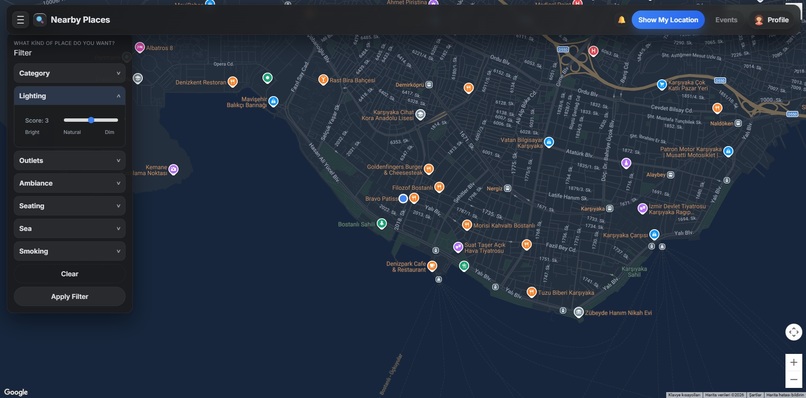
Filter Screen
-
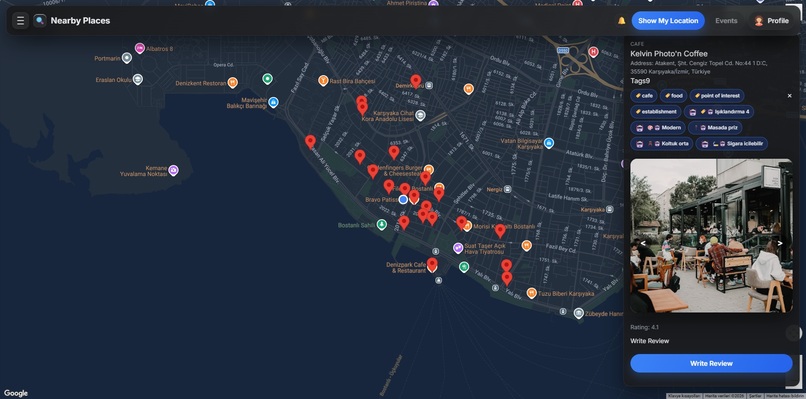
Analyzes


Inspiration
When I first started university, I couldn't find places that met my needs for relaxing, having coffee, studying, or chatting because I didn't know what any of the venues were like.
What it does
VibelyMap redefines location discovery by focusing on the atmosphere. It allows users to filter venues based on their specific 'vibe'—whether they need a quiet corner for studying or a lively spot for socializing—using a multimodal visual analysis approach powered by Gemini 3 Flash.
How we built it
AI Integration:We leveraged Gemini 3 Flash’s multimodal capabilities to analyze venue photos. Unlike traditional keyword-based searches, our system uses Gemini to "read" the lighting, seating arrangement, and overall aesthetic of a place to determine its true spirit.
Frontend & Framework: We used Next.js for its powerful server-side rendering and efficient routing, combined with JavaScript,TypceScript, to maintain a robust and type-safe codebase.
Design & UI: The interface was crafted with Tailwind CSS, focusing on a clean, "vibe-centric" aesthetic that prioritizes visual discovery through photos.
Location Services: We integrated the Google Places API (New) to fetch real-time data, using advanced features like locationBias and textQuery to prioritize relevant results.
Data Strategy: We implemented a custom pagination logic to handle large sets of venue data and built a filtering system that categorizes places based on user-defined "vibes" (e.g., study-friendly, cozy, social).
State Management: We used React hooks and modern state management patterns to ensure the UI updates instantly as users filter through different moods and atmospheres.
We developed VibelyMap as a dApp.
Challenges we ran into
Google API has a limit of 60 results, which made it difficult to provide a broad variety. We overcame this by using Gemini 3 to refine and rank these results based on specific vibe-matching accuracy. Another challenge was photo loading speed and describing the "spirit" of a place; we solved this by using Gemini to generate lightweight "vibe-tokens" (metadata) instead of processing heavy images every time. Also, working solo was a hurdle because people underestimate the complexity of syncing AI-driven analysis with blockchain.
Accomplishments that we're proud of
Getting accurate results only using photo analysis. Connection with blockchain. Solving the problem for nearly 680 million active cafe users.
What we learned
AI coding gets lazy quickly, needs a supervision API usage needs to be optimized otherwise it gets expensive. People want to use this app but they want to use as an extension(VibelyMap is also a dApp).
What's next for VibelyMap
Adversiteming Adding more features such as: -Events -Onchain activities -Reviewing food critics' comments
Built With
- base
- blockchain
- google-places
- next.js
- smart-contracts
- sui-move
- tailwind-css
- typescript


Log in or sign up for Devpost to join the conversation.