-
-
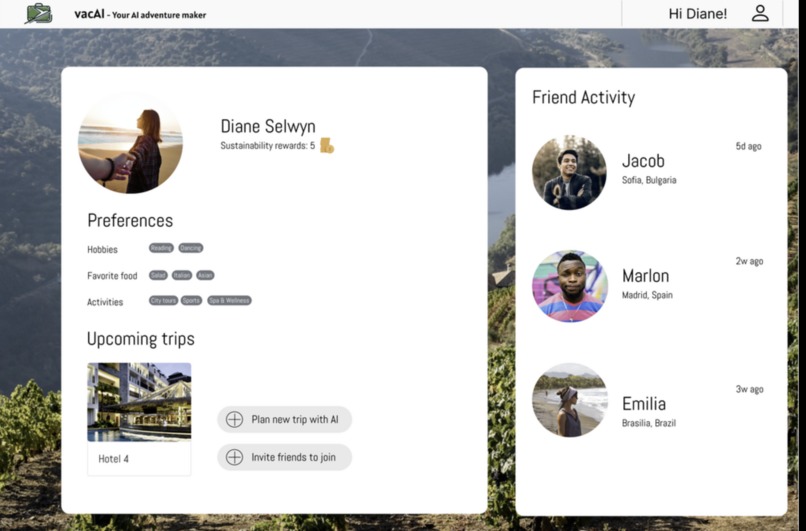
Profile
-
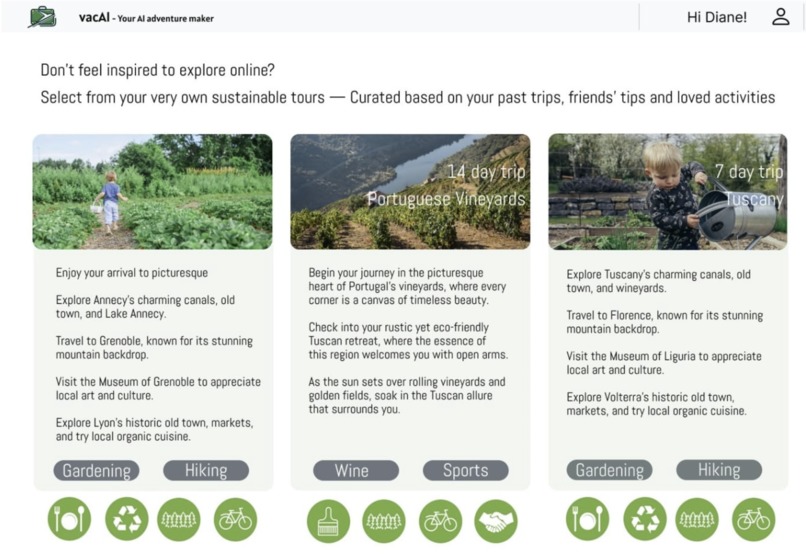
Tours suggestions
-
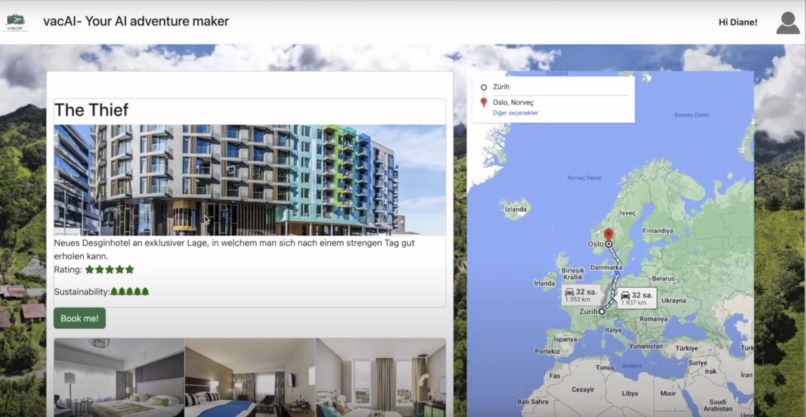
Recommendations system
-
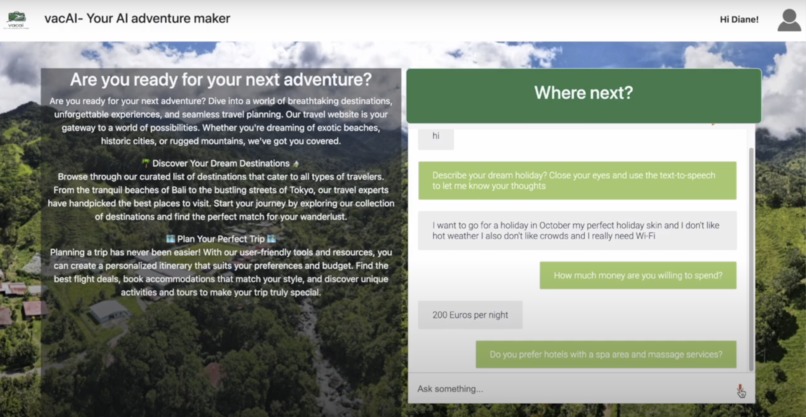
AI assistant
-
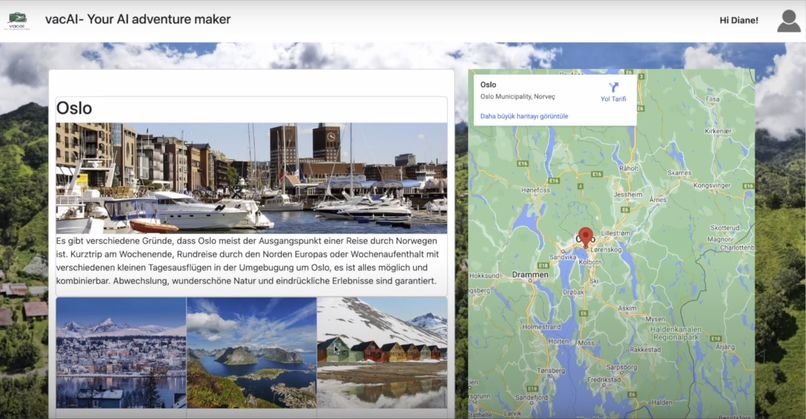
Recommendations system


1. Introduction Company Background: Hotelplan has been a pioneer in the travel industry with a noble mission - to enable all families to go on vacation. Over the years, Hotelplan has evolved through its purpose-driven commitment to improving the quality of life of its customers by creating exceptional travel experiences.
2. Problem Statement The Context: The climate crisis poses an ever-growing concern for all, without the exception of the tourism industry. Travelers are more conscious of their environmental impact than ever before. With quality of life as the guiding light, Hotelplan envisions being the most loved travel company in our markets, famous for customer experience and sustainable travel. Hotelplan takes an active stand in cutting down its negative impact on the planet. Having set ambitious climate targets, Hotelplan furthermore acknowledges the potential of its customers’ collective action and consecutively, wants to work on areas to be an enabler for travelers to make eco-friendly travel decisions. The Challenge: In the context given, how can Hotelplan leverage AI to enable its customers to seamlessly make better, more sustainable travel decisions?
3. Solution Overview Our Approach: Our team, vacai, took on the Hotelplan challenge with enthusiasm, mutual motivation to drive change for a regenerative future, and devotion to innovation. We understand that eco-friendly travel is more than just a choice of destination; it's about the journey, the mindset that governs all our decisions. The ‘Why?’ of this challenge resonated naturally with us. With that, we took a holistic approach to rethinking the what and how of the status quo. In doing so, we leveraged the mindset and methodology of Design Thinking. With its emphasis on positive impact, creativity, collaboration, user-centricity, and speed of execution; we deemed the innovational resources and the iterative flow to be of great value. Our journey started with our efforts to empathize with the stakeholders of the problem at hand which we were in lack of data. Therefore, we approached the Digital Festival participants with short interview requests. With the insights we gained, we then moved on to the understanding phase and sketched out our target personas. Our ideation sessions that followed were both fun and quite productive with a lot of output to work with. With our first version of the prototype at hand, we approached our fellow hackers to test our solution and iterated based on our clustered insights to make sure we were building the right product for the challenge, and our take on it. This is how we walked through the last forty hours of this fast-paced adventure. Let us move to give you a better understanding of our solution and product.
Our Solution & Product: What we have concluded to be the most problematic case for vacai’s target customers was the tedious process of sustainable travel planning. With a sea of options to scroll through in an era of excessive screen time and obscure sustainability metrics, customers’ needs stay unmet. This deduction, topped with our approach to give eco-friendly travel more visibility in a holistic manner guided our product in the making. We envisioned a seamless process where consideration of the sustainability aspect is a constant for all listings, routes, and personalized tours. Only through such standardization, we can achieve a future where our care for the planet is the norm. Beyond the sustainability aspect, we put a great deal of emphasis on the customer experience. Acknowledging the needs and pain points of the target users, we included a voice to text, AI-enabled chatbot as the first point of contact to retrieve all relevant information to make personalized destination and accommodation suggestions. If logged in, the user is prompted to provide past travel data and fill in their favorite holiday activities and hobbies to have the platform act as a one-on-one travel coach with personalized suggestions. Inspired by a small yet powerful detail that surfaced during our initial interviews, we also integrated a community feature into the platform. We all have a social network whose opinions matter to us, and whom we go to for tips and suggestions, and travel destinations are no exception. Through an invite, friends and family can join the platform see each others’ past trips, and draw inspiration from each other. With these product features, we are confident in addressing both focus points of Hotelplan’s vision, and the goal of the challenge at hand.
4. Technical Implementation The chatbot supports both text and speech input, and for the voice-to-text and text-to-voice recognition, we used Google Text-to-Speech AI and DialogFlow. It was fed to the OpenAI text embeddings API in order to classify the text and select the keywords. The keywords are then used as the parameters for querying the provided data. Based on these, we determine the destinations and hotels that match the user's criteria. The sustainability score of the hotels was a tricky case to solve. The provided data contained the sustainability parameter, but only to a limited extent. What we knew was limited to whether a hotel had an external sustainability certification or not. Given the constraint of data and our lack of domain expertise, we contented with a simple ranking here where we assigned 5 tree icons to the most sustainable options, and 1 to the least. Another strategy we saw as a decent alternative here would be to take the average energy consumption rate of the city and multiply it by the hotel’s level of usage. This would allow vacai to paint a better picture in the future, however, due to time constraints, was not feasible. We mention this area under What’s next? Section as an area of further improvement. When determining the optimal route, we utilize the Carbon Interface Python API. This tool enables us to calculate the carbon footprint for different routes between two destinations. The key aspect here is that we do not want to push the end users towards sustainable choices by increasing the travel price, so we suggest routes that are approximately equal in terms of cost and time but more energy-efficient. It is important to note that our goal is to promote sustainability subtly by working on their visibility on the platform and without increasing travel expenses to encourage users to consider routes that are efficient but environmentally friendly. We utilized the Google Maps API to display routes and destinations. Technology stack: Python, Flask, Angular, JavaScript We believe in empowering travelers to make responsible choices without sacrificing the quality of their travel experiences. Our user-centered design ensures that the AI interface is intuitive, engaging, and seamlessly integrated into Hotelplan's existing platform.
5. Impact Minimizing negative environmental impact: Hotelplan's challenge aligns with our shared goal of helping travelers minimize their environmental impact, whether it's before, during, or after their journey, at the same time not sacrificing the major goal of the holiday itself. By providing tailored recommendations, we aim to inspire and enable travelers to make eco-conscious decisions. Reducing the stress factor for both sides: We were deeply concentrated on the user experience and perspective, and we believe that it also provides a sincere contribution to the support of the business. We encourage businesses to also move towards sustainability by claiming that it would be able to maintain the same level of income, enhance the brand image, create a lock-in effect through the memory and community aspects, gain more support from the community, and profit from the growing number of loyal customers due to the top-level of the user experience of the platform.
6. Challenges The major challenge that we encountered was the trade-off between implementational polishings and idea refinement, but despite it requiring careful consideration, we managed to find a balance. Another hardship we faced was the sustainability metrics we needed to judge a hotel, route, or trip’s overall score. We feel like our work on this has not been satisfactory and hence, would like to encourage further work to be put into this area if this project space is further explored by Hotelplan.
7. What we learned? During the hackathon, we explored technologies that we hadn’t worked on before and gained new skills. We also got inside from mentors and workshops. Each of us also enjoyed having the chance to exchange with people of different backgrounds and diverse skills. HackZurich’23 has given us the chance to experience team building & formation from scratch, and we are happy to have had the experience!
8. What’s next? We aim to broaden the range of parameters in our dataset to enhance the precision of recommending destinations, routes, and hotels that align even better with the user's desires. Another goal would be to extend the functionality to enable seamless collaboration with friends, simplifying the planning process for large group adventures by combining the schedules, preferences, and budgets. A thorough look into the sustainability metrics to better assign scores to destinations, tours and travel plans would be further helpful in informing customers to make better, more sustainable decisions.
9. Conclusion Team vacai is excited to present our solution to Hotelplan's challenge of designing an AI-enabled platform for eco-friendly travel recommendations, personalized tours and more. We are aligned with Hotelplan's mission to improve the quality of life for customers by creating exceptional travel experiences. By harnessing the power of AI, we aim to contribute to Hotelplan's vision of becoming the most loved travel company, celebrated for its commitment to sustainable travel and outstanding customer experiences.
11. Acknowledgments We extend our heartfelt gratitude to Hotelplan for presenting this challenge and giving us the opportunity to innovate in the realm of sustainable travel. We also want to thank the organizers of HackZurich2023 for hosting this event, where we could collaborate and create solutions for a greener, more responsible future of travel.


Log in or sign up for Devpost to join the conversation.