-
Logo
-
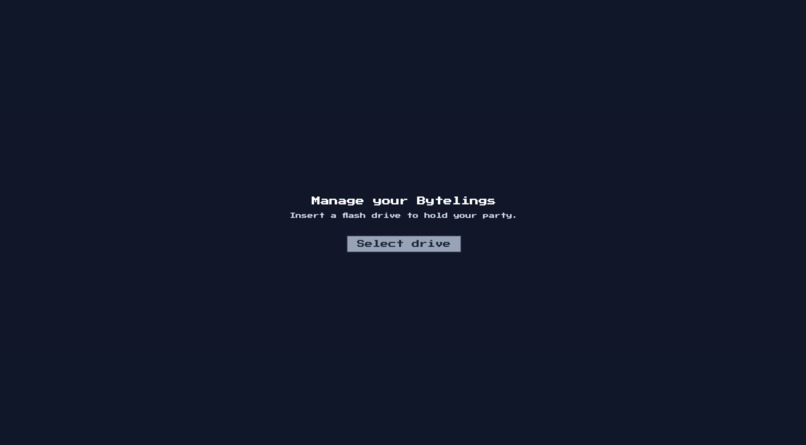
Set up your USB drive with Drive Duels
-
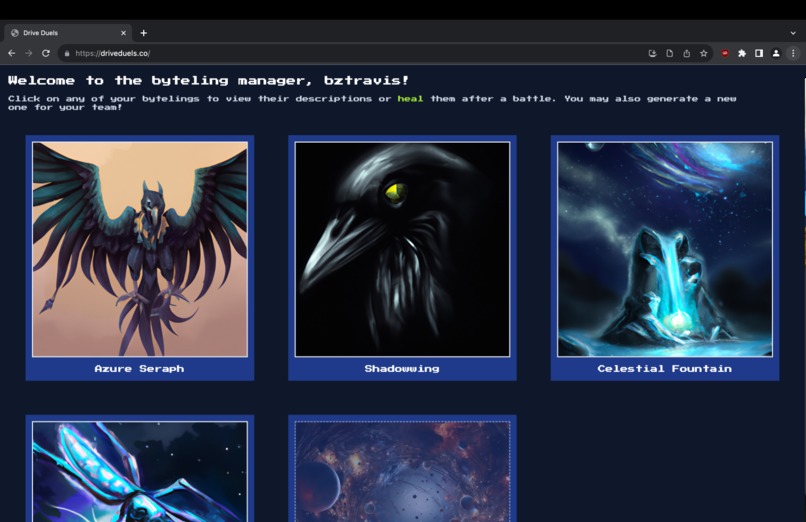
See your Bytelings
-
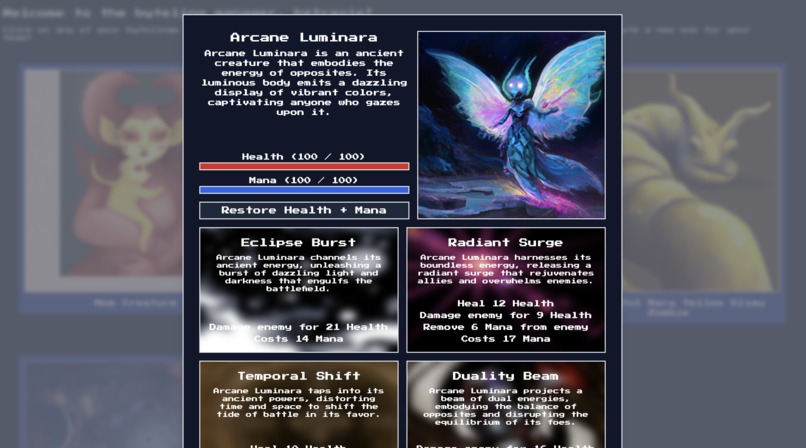
Inspect a Byteling's details
-
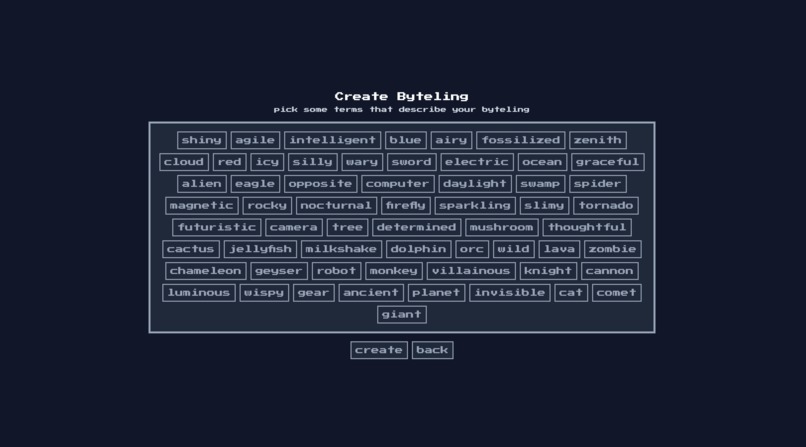
Create a new Byteling
-
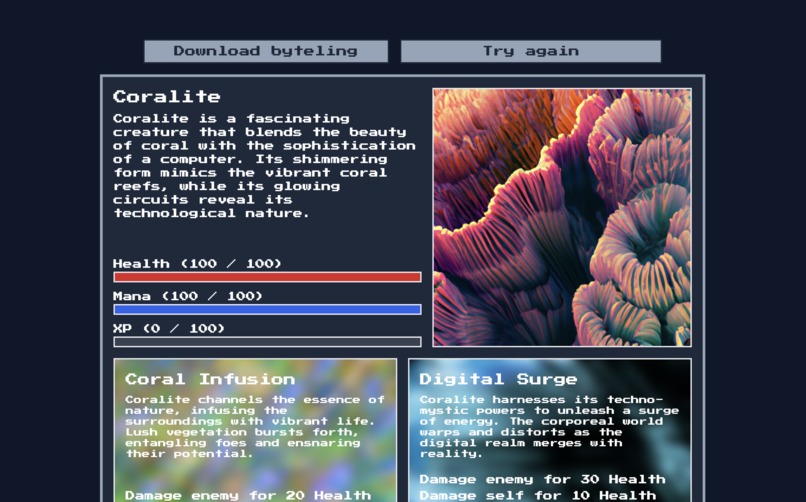
Review a newly generated Byteling


In the distant future, mysterious gatherings unfolded across the globe, where those with an affinity for technology convened. Oddly enough, participants carried only a singular item on their keychains: a small, unassuming stick. This cryptic phenomenon came to be known as "Drive Duels," born from a thirst to unite reality and the virtual realm. Its foundation rested upon its user’s thumb drives, serving as an interface to the strange world on the other side.
Inspiration
We were inspired by the physicality of old video games by using physical hardware directly tied to the game. We wanted to use something that most people have: a thumb drive. The data stored on a small drive isn’t fit for something like an online game, so instead we used them to give each player a unique physical object that can be used to meet others physically and challenge them. Anyone can take their thumb drive and use it to play Drive Duels.
What it does
Drive Duels is a gotta-catch-em-all-style turn-based combat game utilizing generative AI to create unique creatures and USB media to encourage physical interactions between players as they battle.
In Drive Duels, every creature (Byteling) is represented as a file that can be downloaded (“created”), transferred from disk to disk, or sent to a friend. Players carry USB drives to store their parties, which they may take into battle to fight on their behalf.
Players will primarily interact with two pieces of software:
The Byteling Manager app is accessible from your own computer at driveduels.co, and allows you to both create new Bytelings and review your existing ones—heal them up after battles, track their stats, and more.
The Battle Station is accessible at select in-person locations and supports live, turn-based, two-player battles. Players choose to utilize their fielded Byteling’s moves or swap in other Bytelings to strategically outmaneuver opponents and seize victory.
How we built it
Byteling Manager is built with React, TailwindCSS, and Chrome’s experimental filesystem API. A backend service utilizes the ChatGPT and DALL-E APIs to create new creatures with unique descriptions, art, and movesets when requests are sent from the front-end.
The Battle Station software is designed with Electron (for ease of direct filesystem access) and React. It utilizes a complex state machine to ensure that battles are always kept moving.
Challenges we ran into
Recognizing the USB’s connection automatically was tough, and many of the methods we wanted to try with our Electron app were simply incompatible. ChatGPT had a tendency to generate overpowered, misleading, or flat-out useless attacks, so we designed a balancing system to reassign attack values based on internal scoring metrics, which helped counteract some of these broken character generations.
Accomplishments that we're proud of
We’re especially proud of the creature creator, which takes inspiration from user-selected keywords to create monsters with their own unique lore, art assets, attacks, and more, using GPT-3 and DALL-E. We are also proud of the battle system, which allows Bytelings from different owners to engage in combat together on a shared system.
What we learned
We learned how to design a website mockup in Figma, and how to use TailwindCSS to style the site to our liking. We also got a better understanding of integrating ChatGPT/DALL-E into our web apps and creating more complex data from it.
What's next for Drive Duels
We’re hoping to flesh out a leveling system, with experience gained in battle and locked attacks.


Log in or sign up for Devpost to join the conversation.