-
-
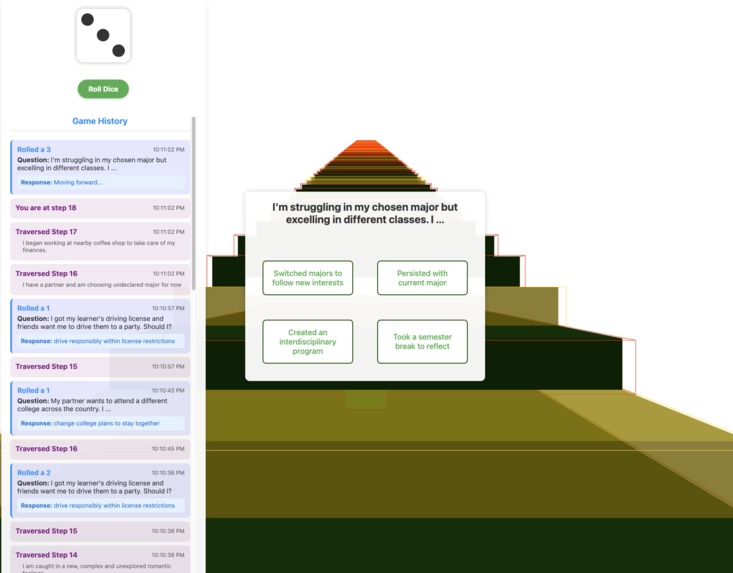
Game working
-
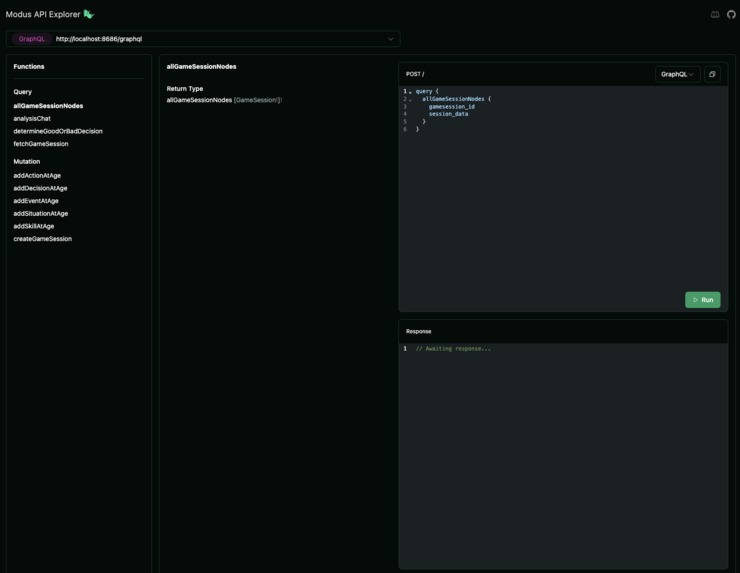
Modus
-
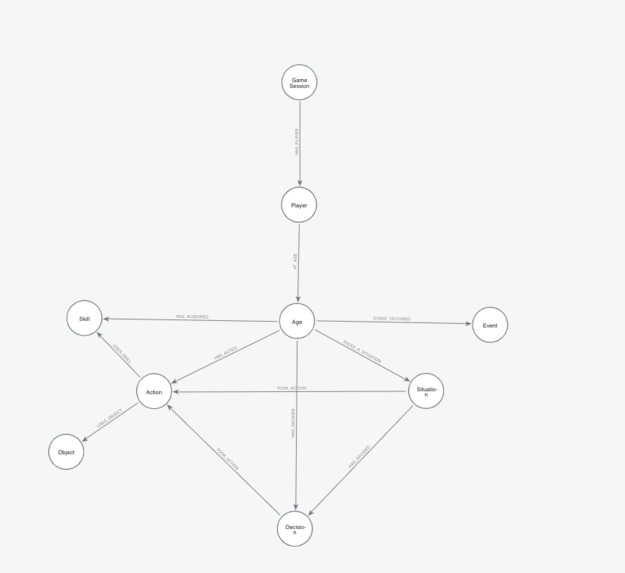
Knowledge graph model
-
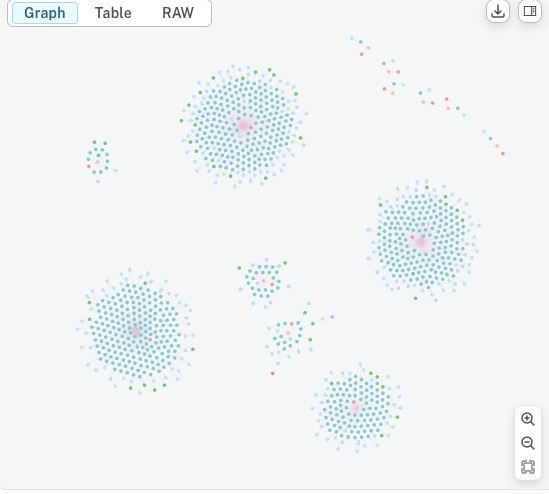
Clusters of games
-
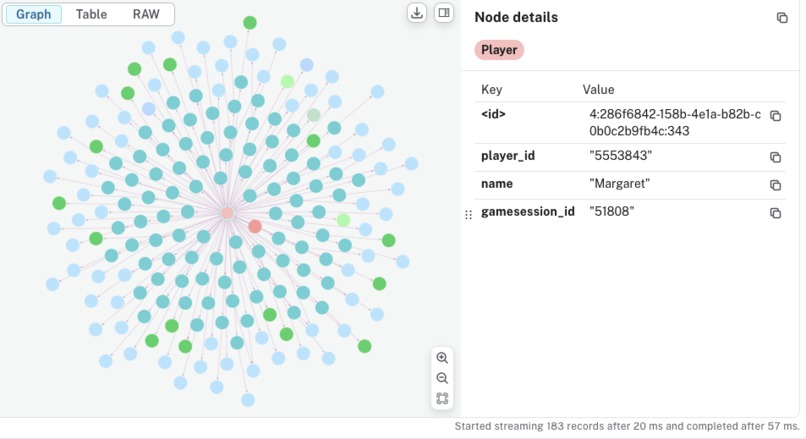
One life of a player


Inspiration
Life is a journey of full of surprises, setbacks and successes. The game "Ups and Downs" is inspired by the classic game "Snakes and Ladders". "Ups and Downs" let the player have an experience of life, decisions, and circumstances.
Game Overview
The game is a life simulation game where players roll a die and climb the stairs of life. Each step represents a life event outside their control. The steps on which player land on, presents a life question. There are some steps that are randomly selected before the game which are the "Snakes/Ladders" questions, meaning the answer to this question may give success or setback to the player in the life simulation. The outcome of these questions depends on the player's background and decisions, determining whether they face setbacks (snakes) or successes (ladders). Upon reaching the 100th step, players receive an analysis of their journey and can chat with an AI modeled bot about the life they've lived.
How it was built?
Frontend: Built using Vite-React and Three.js for an immersive 3D experience.
Server: Built with Hypermode Modus for high performance and seamless integration.
I was happy by how easy and efficient it was to incorporate LLM models into my project. The setup was quick and straightforward, and connecting with Neo4j was equally hassle-free. That said, I believe the fetchGameSession function could be optimized further for better and faster performance. However, given time constraints, I implemented the solution that best supported the game at this stage.
Database: Used Neo4j to build a graph-based understanding of the player’s decisions and life journey, enabling dynamic and meaningful analysis of their game experience.
One of the most rewarding moments was visualizing the Neo4j graph with all the interconnected game sessions. Seeing the nodes and relationships come to life was not only satisfying but also a testament to how the database beautifully captures the complexity of each player’s journey.
Challenges I conquered
I faced a few challenges during the project, with two major hurdles being the deployment of my Modus app and issues processing requests with the Meta LLM text generator. However, thanks to the incredible support from the Hypermode team (who worked on weekends), especially Kristen and Jairad, who worked strongly with me, I was able to overcome these obstacles and bring the project to life.
My accomplishments and learning graph
I was very novice with knowledge graph. Even though I had a good idea, brining it to fruition was a task. I initially tried creating knowledge graph with llm graph builder in neo4jlabs, however, I was not satisfied with the results. So I decided to make it from scratch using the THE DEVELOPER’S GUIDE: How to Build a Knowledge Graph by Jennifer Reif, John Stegeman, and Damaso Sanoja.
I also completed 4 courses that Neo4j docs provided and learnt a lot about it. I also got to practice it first hand. Though not the best at writing Cypher codes, it has been a great start.
Moreover, I have also never worked in Assembly Script, so able to pull an Assembly Script for Modus server was a pretty satisfying accomplishment for me.
I learnt to ideate different ways a project/game can be implemented. I found a way that I could do best with and in the given timeline.
What I could have done?
- I did not know that LLM Model can give structured output for modus. Currently the questions are hardcoded! To know more about the questions refer my front end code in the frontend project link.
What's next for Ups And Downs
The full vision for this project is broad and immensely valuable, with countless possibilities to explore. Here are the key aspects I aim to implement:
- Expand Scenarios: Life is complex, so the game should reflect that by introducing broader scenarios with richer relationships and dynamics, such as gender-specific or profession-specific challenges.
- Personalized Gameplay: Enable players to create games tailored to their own experiences. For example, parents could use the game to teach children life lessons through interactive simulations.
- Impactful Consequences: Introduce meaningful consequences for the actions and decisions players make, reinforcing the significance of their choices.
- Learn from the Successful: Allow players to experience the life decisions faced by successful individuals, offering insight into their psychological and emotional journeys.
- Therapeutic Applications: Provide therapists or psychologists with a tool to help individuals explore and understand their behaviors through gameplay.
The use cases are endless as life is constantly evolving - even if body isn't.
Front End Code: GitHub


Log in or sign up for Devpost to join the conversation.