-
-
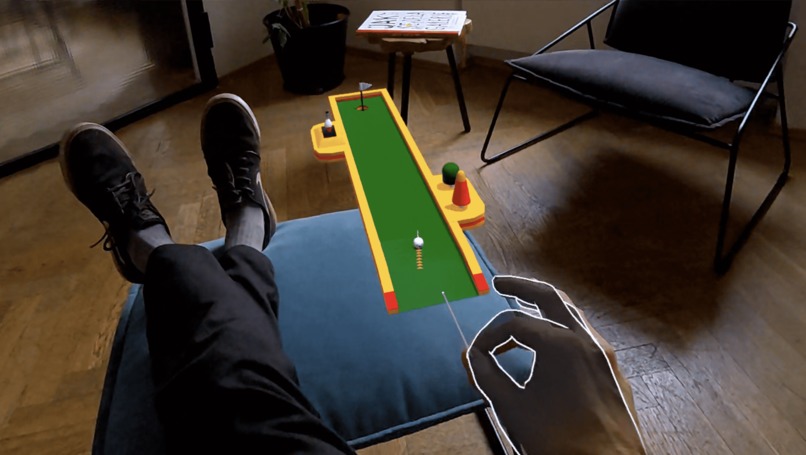
All you need is a pinch.
-
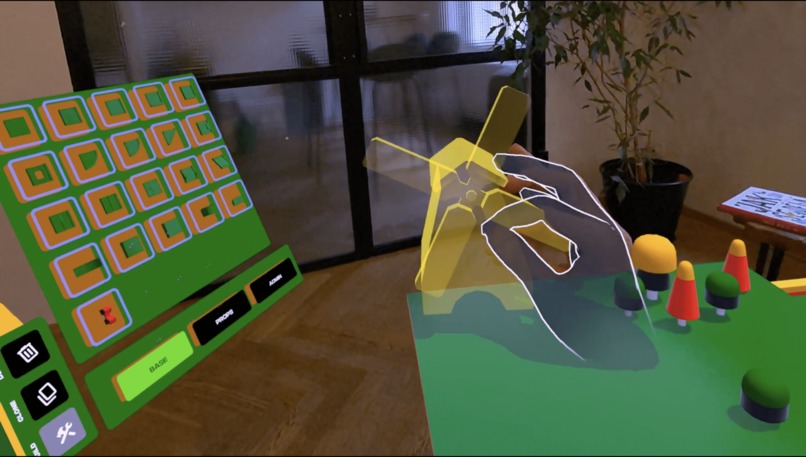
Unlimited UGC.


The Inspiration
Tiny Golf began with a simple question: What if your fingers could play mini golf? We imagined a tiny world on your table, where you line up a shot with nothing but a pinch — no controllers, no floating menus, just your hands and a playful mixed-reality toybox.
What it does
The idea started with exploring how natural it feels to “shape” force with your fingers. The inspiration for Tiny Golf took off when we borrowed the familiar feeling of the Angry Birds pinch: pull back, build tension, release, and the ball rockets forward. That single interaction felt instantly intuitive and became the foundation of the entire game. From there, we wanted to bring something like LEGO-style creativity into mixed reality. Instead of navigating UI panels, players can grab tiny pieces, place them, stack them, and invent their own whimsical courses right inside their living space. Mixed reality makes the world feel alive; hand tracking makes it feel effortless.
How we built it
Building Tiny Golf during a one-month hackathon with only 1 developer was… ambitious. Robin reused and adapted systems from older Unity work — physics, interactions, custom shaders, UI — anything to move fast. While Dominik focused on game design, UX, onboarding, hole layouts, and overall creative direction.
Challenges we ran into
Small-scale physics was far trickier than expected. Getting a golf ball to feel right at the miniature size required a lot of tuning. And hand-tracking UI consumed more time than anything — gestures, detection, stability, onboarding — every detail had to feel intuitive and welcoming for first-time MR players.
What we are proud of
Tiny Golf now works seamlessly with both hands and controllers. The pinch interaction feels precise and comfortable — maybe one of the most natural “couch-play” gestures available today. We didn’t just build a prototype in 30 days. In a month, we delivered a fully playable game — complete with endless content, a brand identity, and even a trailer. Of course, there are millions of ways to further develop the game, but the build is solid enough that we could launch Tiny Golf on the Meta Store today, with all the assets and systems in place. We took this challenge seriously and treated it as a real product, not just a hackathon experiment.
What we learned
Pinch is the king of hand interactions in terms of precision and comfort (aka couch play).
What's next for Tiny Golf
During the final hours of the hackathon, a few people tested it — and their reactions were exactly what we hoped for: joy, experimentation, laughter, and that instinctive “just one more shot.” Those testers helped us see that Tiny Golf isn’t just a hackathon project — it’s the seed of a full game. With more time and resources, we imagine themed worlds (paper, wood, space), casual progression loops (unlocks, rewards), richer UGC tools, and maybe even multiplayer — like a tiny-world Golf King mixed with MR creativity.
Of course, the competition will be full of innovative and creative projects — and at first glance, golf might not seem groundbreaking. But for a casual game, choosing a theme that anyone instantly understands was essential. Golf is familiar, intuitive, and approachable, so we could focus all our energy on playful interactions, tiny worlds, and hand-tracking magic rather than explaining the core concept.
Tiny Golf is hand-tracking at its most playful. A tiny world you can touch. A game you can learn instantly. A toybox that invites creativity.
This hackathon version is just the beginning.


Log in or sign up for Devpost to join the conversation.