-
-

TechKo
-
1
-
2
-
3
-

4
-
5
-
6
-
7
-
8
-
9
-
10


Inspiration
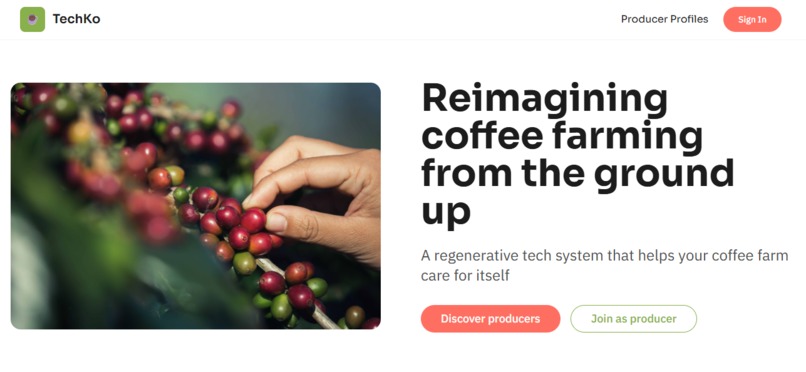
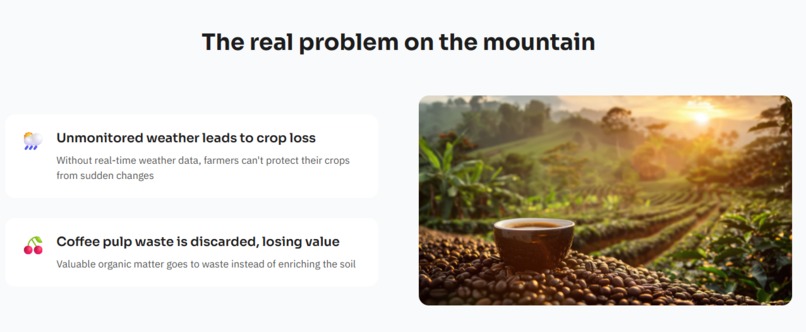
I was inspired by the urgent need for accessible and regenerative technology for smallholder coffee farmers in mountainous regions. These farmers often lack the tools to monitor their crops or reuse organic waste, leading to loss, inefficiency, and soil degradation. We imagined a smart coffee field — one that could care for itself, regenerate what it produces, and do so in a way that was low-cost, visual, and grounded in real rural workflows.
What it does
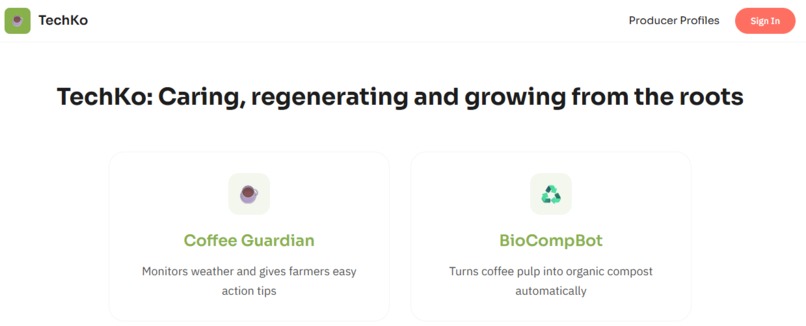
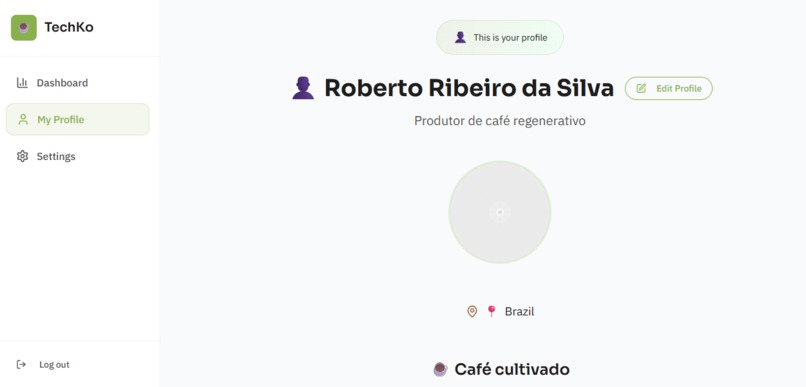
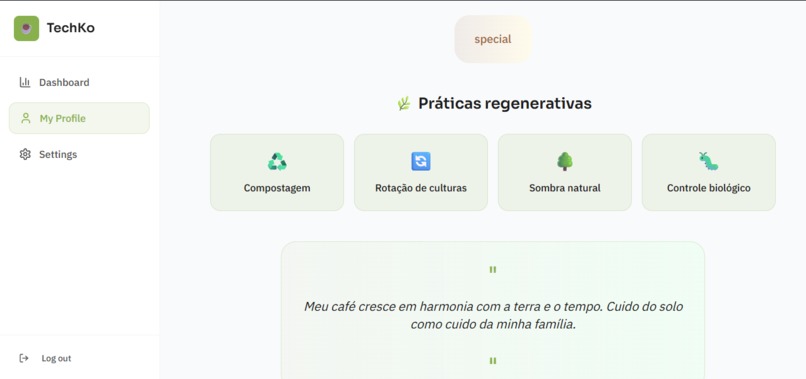
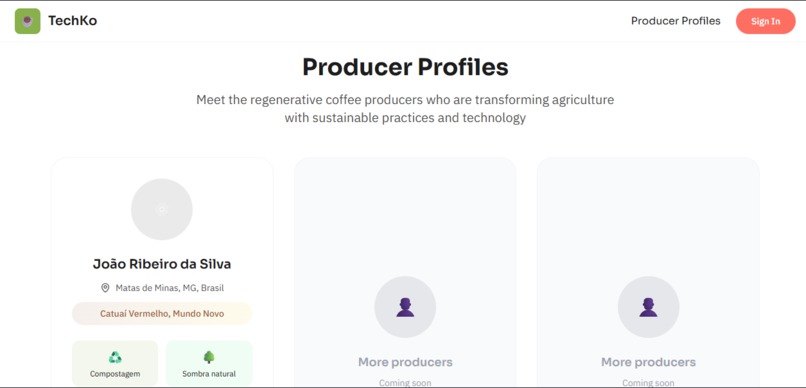
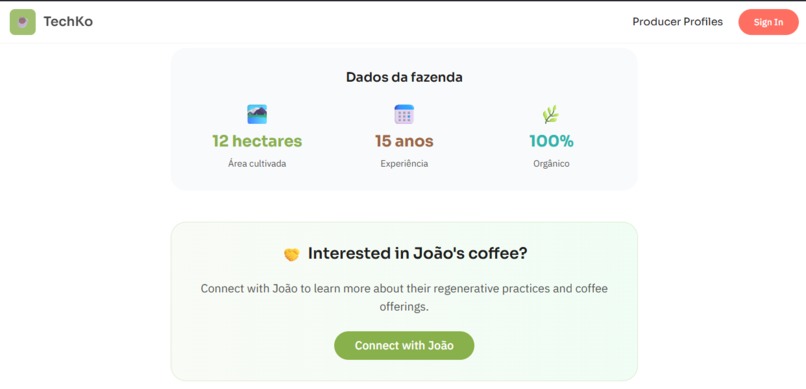
TechKo simulates a smart farm assistant built for mountain-grown coffee production. It brings together two main modules:
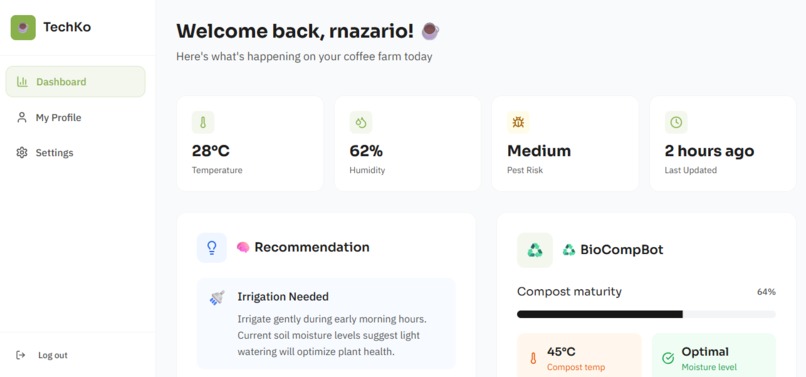
- Coffee Guardian – Simulates environmental monitoring with soil moisture, temperature, and pest alerts. It includes visual indicators and "rural AI" recommendations like “Delay irrigation” or “Apply compost”.
- BioCompBot – Simulates a post-harvest composting unit that processes coffee pulp. It monitors temperature/humidity and shows compost progress through a simple interface.
All this is displayed in a clean, intuitive dashboard that farmers could realistically use — even with minimal tech training or infrastructure.
How we built it
- We designed the full UI and interaction flow using v0.dev, focusing on minimalism and clarity.
- Sensor data and compost states were simulated using mock JSON logic and conditional flows.
- We created the system architecture, functional diagram, and scalability roadmap using Figma, draw.io, and markdown-based documentation.
- The logic mimics real-world behavior and could be implemented using Arduino or ESP32 in a future hardware phase.
Challenges we ran into
- Making a simulation feel real and grounded — without hardware
- Designing an interface that worked for users with low connectivity and digital literacy
- Staying focused on only two real-world problems while resisting the urge to overbuild
- Representing regeneration and technology in harmony, without relying on tech hype
Accomplishments that we're proud of
- Crafting a coherent and compelling vision that merges sustainability, UX and accessibility
- Creating a full visual prototype that feels usable and relatable
- Respectfully integrating indigenous concepts like “teko” (living in harmony) into our core identity
- Keeping the project realistic, rural-oriented, and scalable — not just visually impressive
What we learned
- Simulation can be powerful when it’s grounded in real farmer needs
- The best agri-tech tools don’t need AI buzzwords — they need empathy
- Composting isn’t just about recycling — it’s about closing a loop in the ecosystem
- Storytelling and design are just as critical as code when building for impact
What's next for TechKo
- Build a real composting unit using Arduino + solar panel + DC motor
- Add AI-based pest detection via camera modules
- Develop an offline-first PWA version with local language and audio support
- Connect TechKo to cooperative-level dashboards for multi-farm usage
Built With
- github
- v0.dev
- vercel

Log in or sign up for Devpost to join the conversation.