-
-
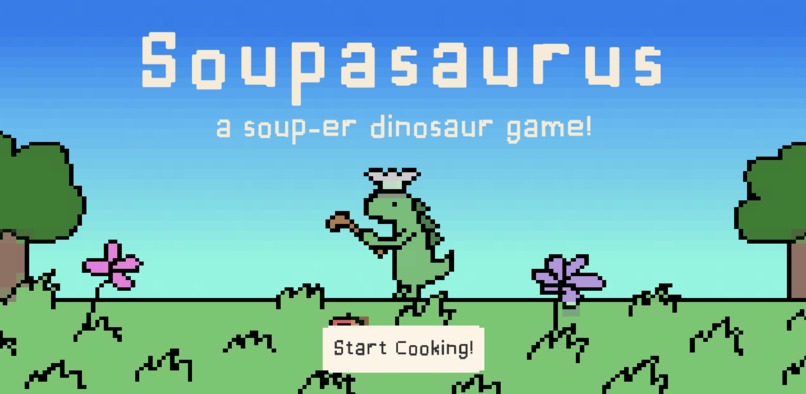
landing screen with hand drawn animation
-
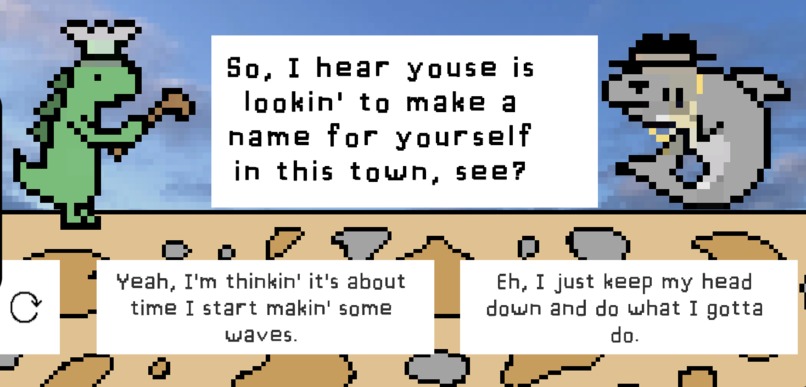
at the beach with a mob boss megalodon
-
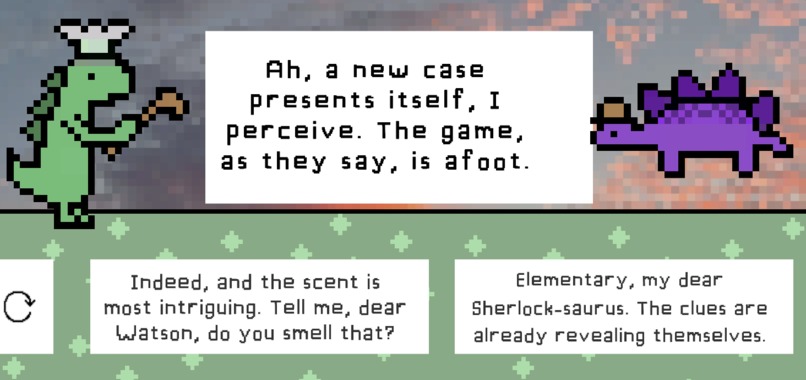
stimulating convo w/ sherlock holmes
-
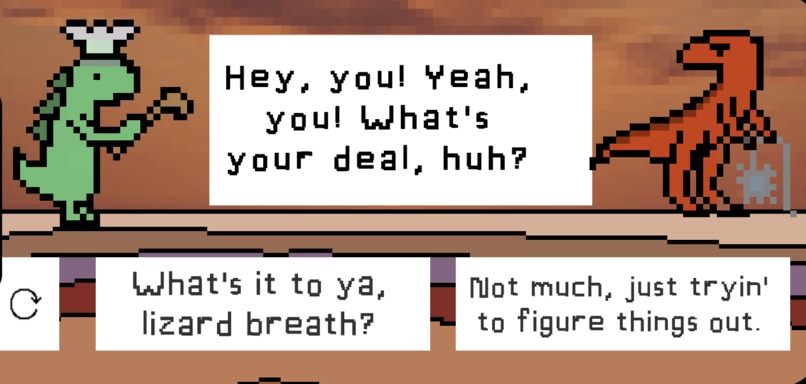
interrogation from an aggressive t-rex
-
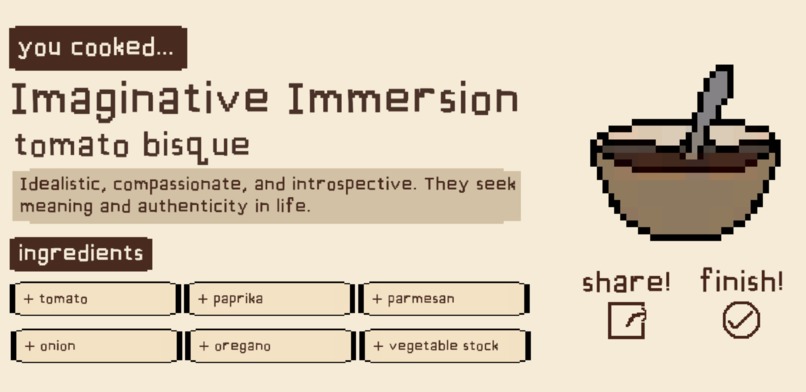
personalized soup screen
-
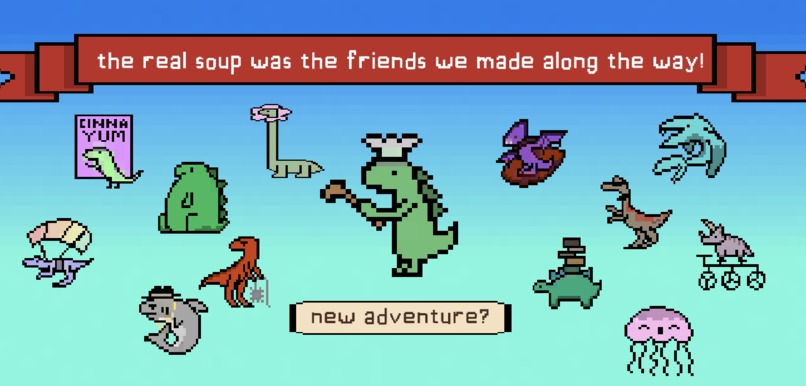
the final screen, with an option to start a new quest


Inspiration
If you were a soup, what soup would you be? This question haunted us until we came up with the idea for this choose-your-own-adventure personality test. And what goes better with soup than dinosaurs? Instead of taking the same boring and lengthy personality test every time you forget your MBTI, Soupasaurus is a brand new type of personality test powered by the Gemini API. In each adventure, you have the chance to converse with a new cast of eccentric characters, each with their own unique personalities and quirks, to find out once and for all what soup you really are…
What it does
Soupasaurus moonlights as a pixel RPG game in which the user plays as a hungry dinosaur craving some soup. In their adventure to the outside world, they meet other kooky dinosaurs against a variety of pixel backgrounds. NPCs ask questions the user responds to by choosing between AI-generated replies – users can even refresh for new answers if the phrasing isn’t their cup of soup. After this, the NPC gifts the user an ingredient based on their conversation! In the end these ingredients are combined to make a soup. Finally, after a lifetime of waiting, you’ll know The Soup that encapsulates your personality, and maybe find out that the real soup was the friends you made along the way!
Unlike other personality tests, Soupasaurus values a unique experience for a replay of the game—there’ll never be two play-throughs that are the same. Using Gemini, we were able to customize the conversations themselves in addition to the ending soup that the user gets each time. Each time you embark on a quest for soup, you’ll discover something new about yourself, and obtain a recipe for a new soup to try in your free time.
How we built it
We designed and hand drew all of the pixel art assets on Fire Alpaca, including the characters, backgrounds, icons, gifs, and so much more. After iterating over multiple designs for different pages and overall flow of the game on Figma, we got started with the actual creation of the game using the Unity engine.
It was important to us that the personality test be new and exciting every time, which is why we utilized Gemini with the creation of an API in a three-step process to give the NPCs their charm, generate responses based on the turn of the conversation, and grade the user’s personality based on their responses. Initial conversation starters with the AI were created through a local list of data, with names and brief personality descriptions for Gemini to build off of. Prompt engineering was necessary to ensure that the AI received the optimal amount of information -- not too little so the descriptions were too generic, but also not too much as to overwhelm the Gemini API. Additionally, to overcome the limitations of the Gemini API for our scalability uses, we had to build highly sophisticated retrial and error logic to prevent the game from crashing on the users.
While we delved into Gemini usage, we built the frontend of the game concurrently in Unity. Though we encountered many difficulties in starting -- importing assets through PNGs proved to be a challenge in itself -- we slowly and surely began to build up the game. By connecting Unity and Gemini by building an API middleware, we could handle state and enable communications between the two inside the middleware, devising our own API endpoints for a fluid and responsive game.
Challenges we ran into
- All but one of our teammates had never had experience with Unity before and had to learn Unity from scratch
- Finetuning and continual iteration of system instruction to the Gemini API due to unexpected responses and output
- Optimization of Gemini to reduce waiting time in the conversation
- Long loading times for Unity and odd merge errors due to collaboration
Accomplishments that we're proud of
There are countless versions of this personality test, a truly infinite expanse of conversations you could have and soups that you could possibly be. We’re so excited to have been able to be a part of the wave of potential that AI brings not only to the field of game development, but also witnesses of the implications the use of Gemini in a soup and dinosaur personality test has for the field of computing as a whole.
Most of all, we’re proud of how genuinely fun this game is. As a user, you’re plopped into conversations with mob boss megalodons, triceratops on tricycles, and wine-obsessed widows suspected of murder—-just to name a few. Throughout this project, we’ve had genuine laughs at the hilarious things Gemini has been able to come up with and the final results of our soup alter egos.
What we learned
Most of our team are new to hackathons as a whole, and especially at the major scale that LA Hacks puts on. This has been a major learning experience for all of us in working with the Unity engine using a LLM API and learning exactly what is required in order to train Gemini to be sophisticated and efficient enough to hold multiple conversations with different personalities. Additionally, we came into LA Hacks with a true blue sky of different features that we wanted to implement in the game; due to the time crunch, we were able to find out what was truly important for a base product and iterate on more features later.
What's next for Soupasaurus
Soupasaurus has room for so many more customization options! We were unfortunately unable to integrate more personalization: custom music, character selection screens, saving previous versions of the test you took, or even adding your own prompts for NPCs.
As always with the usage of models, we hope to do further optimization so that the connection to Gemini happens more quickly and efficiently without the extra loading time it takes for a call to be made. We’re also using a huge amount of memory to store the different ingredients and characters you meet, and would hope to reduce this to lessen the strain on both the user and the LLM.


Log in or sign up for Devpost to join the conversation.