-
-
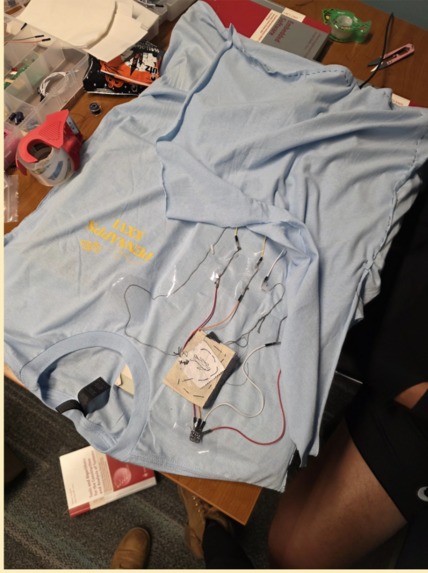
Soliss Device
-
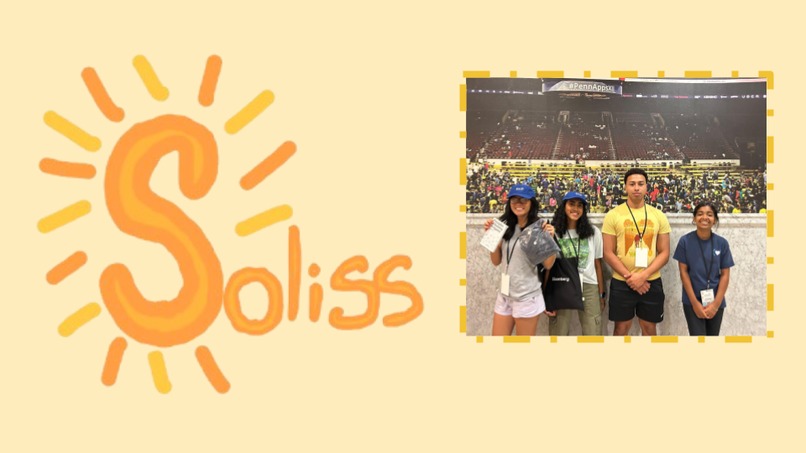
Soliss Team!
-
-
-
-


Inspiration
Too much sun exposure is the leading preventable cause of skin cancer, but most people don’t realize when they’re at risk. We wanted to create a simple, wearable way to monitor UV exposure in real time and make sun safety more accessible, especially across different skin tones.
What it does
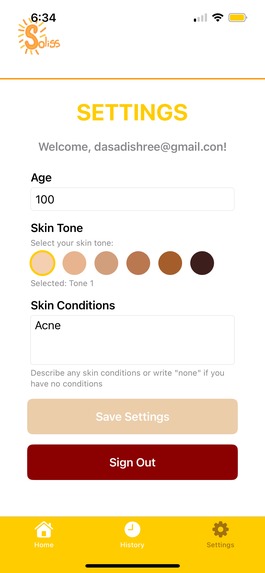
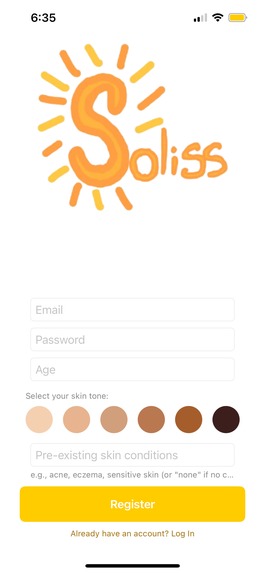
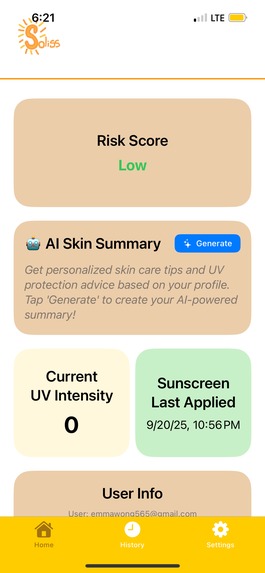
Sollis is a wearable t-shitrt and iOS app that tracks UV exposure. The UV sensor measures sunlight intensity, our backend calculates a risk score, and Cerebras AI generates personalized recommendations, like when to reapply sunscreen or step into the shade.
How we built it
We used an Arduino board and UV sensor programmed in C++ to capture exposure data. A Python backend processes this data and communicates with the Cerebras API for AI-powered insights. Finally, a Swift-based iOS app visualizes the results and provides users with actionable guidance.
Challenges we ran into
We faced compiling issues when integrating Arduino code into the system. Another challenge was designing the UV-to-risk formula so that it produced accurate and meaningful results. Getting each layer of the stack to communicate reliably under hackathon time constraints was also a hurdle.
Accomplishments that we're proud of
We built a full-stack prototype in under 36 hours that integrated hardware, backend logic, AI inference, and a mobile UI. We’re proud of making a functional system that connects raw sensor data with a clear, user-friendly experience.
What we learned
We learned how to connect hardware with backend and frontend software into a cohesive system. We also gained experience debugging integration issues and refining formulas for real-world accuracy. Most importantly, we saw how AI can make technical health data feel personal and actionable.
What's next for Solis's
We plan to make the design sleeker and more wearable, improve accuracy with better calibration, and expand inclusivity by tailoring recommendations for a wider range of skin tones.


Log in or sign up for Devpost to join the conversation.