-
-
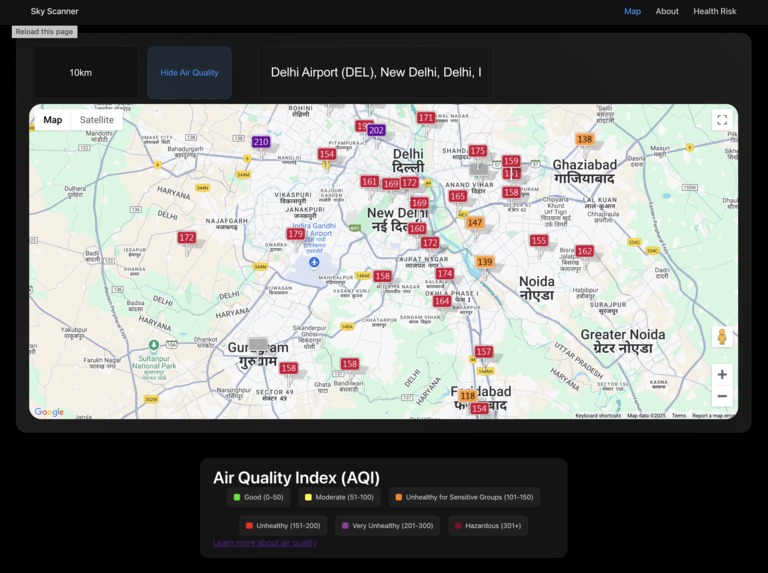
Sky Scan Map with Air Quality Index
-
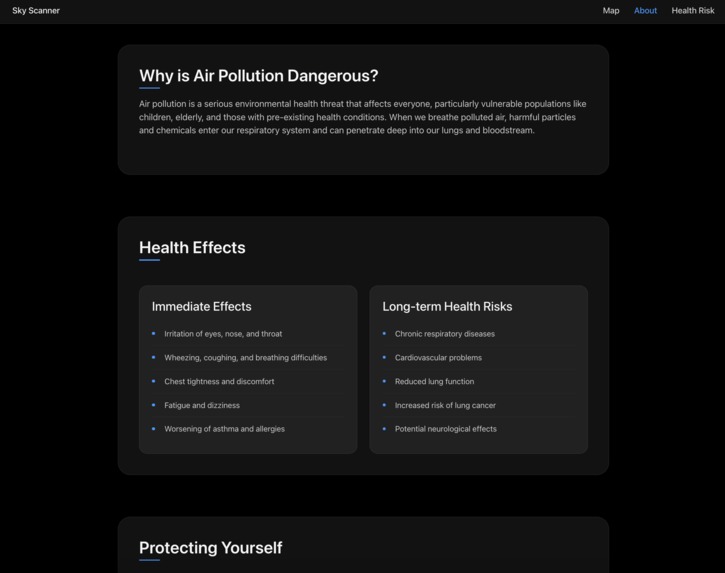
Sky Scan Information about Air Quality
-
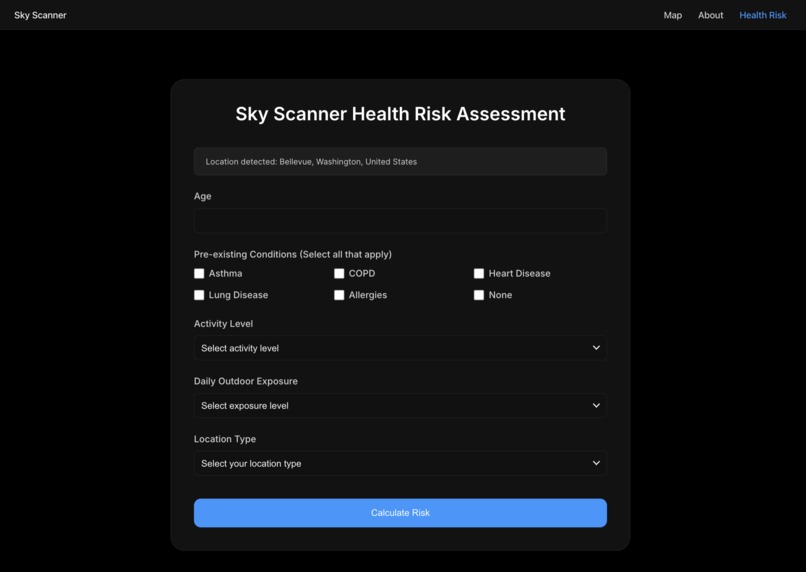
Sky Scan Personalized Air Quality Risk Index Calculator


Inspiration
The inspiration for creating an air quality and personalized health risk app comes from the growing need to protect individuals from the hidden dangers of pollution. Air pollution is a leading environmental threat, contributing to respiratory diseases, cardiovascular issues, and overall decreased quality of life. However, its impact is not the same for everyone—children, seniors, and individuals with conditions like asthma or heart disease are especially vulnerable.
What it does
Allows users to input a specific radius into a map and find all available good air quality sources within that area giving the areas Air Quality. Provides key Information about Air Quality, its impacts and how to protect yourself. Has an personalized algorithm that calculates Air Quality risk factor to go outside for each individual based on factors such as health risks, time spent, type of activity.
How we built it
Worked with the React library and JavaScript to develop a responsive and interactive User Interface. Integrated various APIs, including the AQI (Air Quality Index) API to display real-time air quality data, the Google Maps API for location-based services, and the ipapi.co API for accurate IP geolocation information. Used the Google Places API to provide nearby points of interest and relevant location data.
Challenges we ran into
Encountered multiple program crashes, code malfunctions, and logical errors, in addition to issues with Google Cloud. Gained proficiency in using the Terminal to access localhost, which enabled the successful development of a website. Additionally, learned to create and integrate APIs.
Accomplishments that we're proud of
We encountered several challenges during development, including program crashes, code errors, and issues with cloud integration. Overcoming these obstacles required refining our debugging skills and problem-solving techniques. Additionally, we faced difficulties with API integrations and ensuring smooth functionality across various platforms. These challenges provided valuable learning opportunities and strengthened our development process.
What we learned
We learned how to effectively troubleshoot and resolve program crashes, code errors, and cloud integration issues, improving our debugging and problem-solving skills. We gained a deeper understanding of API integrations and how to ensure seamless functionality between different services. Additionally, we became proficient in using Terminal for local hosting and API creation, which enhanced our technical capabilities. These experiences have equipped us with the knowledge to tackle complex challenges in future projects.
What's next for SkyScan
The next steps for SkyScan involve integrating crowdsourced data to provide more accurate and up-to-date information about air quality events locally and globally. This will include incorporating real-time user contributions to enhance the app's data accuracy and coverage. Additionally, we plan to implement air quality alerts, notifying users when pollution levels are dangerously high in their location. The app will also suggest safe areas to evacuate to, based on air quality data, ensuring users can take timely action to protect their health. These updates will improve the app's responsiveness and make it a more vital tool for air quality monitoring and safety.
Built With
- ai4life's
- api
- css
- html
- javascript
- react
- xml


Log in or sign up for Devpost to join the conversation.