-
-

Logo
-
-


Inspiration 💡
What should I cook with what’s left in the fridge? What should I eat to meet my fitness goals? How can I prepare simple and nutritious meals? Our team recognizes that these are struggles that many people, especially university students, have in their everyday life.
To address this issue with modern technology, we developed a phone application which allows students to enter what they have in their fridge and generate a customized recipe tailored to their own likings.
What it does 🥗
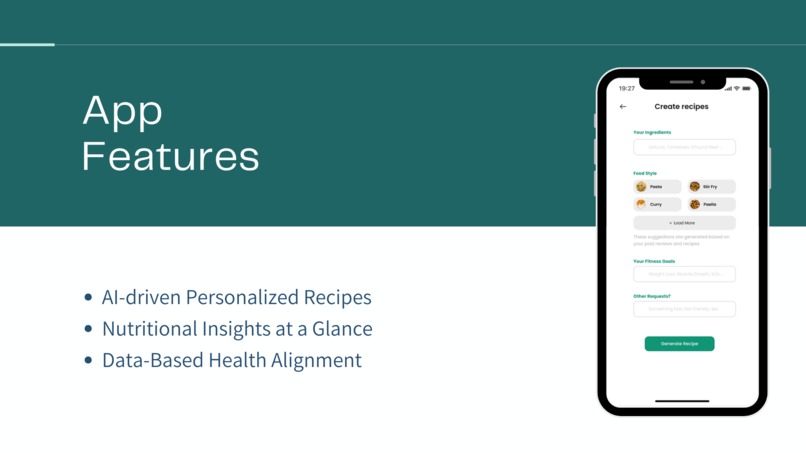
Main pages: Authentication page Home page Recipe Generation page User profile page User insight page
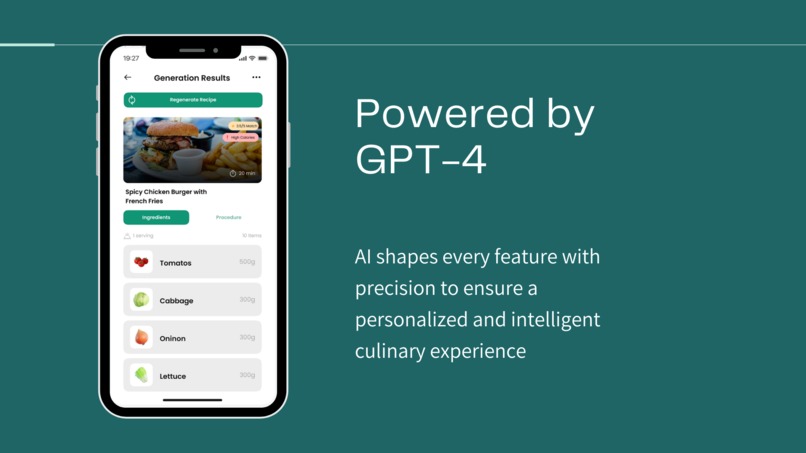
SimplYum utilizes AI to generate customized recipes based on the ingredients, the cuisine preference, and the fitness goals the user has. Our app saves the recipes the users create, and allows them to reuse their favorite recipes. Users can also view their daily/weekly calorie and nutrition intake in the user insight page to keep track of their fitness goals. SimplYum transforms cooking into a simple and enjoyable process, promoting healthy eating habits and a love for cooking.
How we built it 🛠️
Tools we used: IDE: Visual Studio Code, Android studio, Xcode Language: Javascript(backend), Javascript/CSS(frontend) Other tools and APIs: Figma, Express.js, OpenAI API, React-native, Firebase We designed the layout of our project on Figma. After having a formalized layout, we created our project on VScode and tested our front-end code on both Android emulators from Android studio and IOS emulators on Xcode. We built our backend with Express.js and utilized GPT function calling to create customized recipes for our users. We used Firebase to store user data, and execute the authentication workflow.
Challenges we ran into 🤯
We encountered numerous slow-downs, set-backs, and even pit-falls throughout our process. Some notable mentions include: Navigating the complexities of the React Native navigation bar layout. Integrating GPT function calls with the backend seamlessly. Accidentally exposing our API key online, leading to the need for regeneration. Battling fatigue as the hackathon progressed into its later stages. Coordinating tasks efficiently within the time constraints of the hackathon. Despite these obstacles, our team persevered, constantly motivating each other to push through and strive for success.
Accomplishments that we're proud of 🌟
3 of 4 of the team used the project’s tech stack, namely React Native for app development using Android Studio, for the first time; knowing CS fundamentals, this was a fun and challenging exercise in recognizing the transferability of our skills and adaptation speed.
The professional approach to the project; we employed various industry-standard project management strategies including Agile workflow, UI/X design in Figma, and extensive Git use.
Implementing a working mobile application with GPT Function calling model which is a relatively new technology
Built With
- android-studio
- expo.io
- firebase
- gpt
- javascript
- openai
- react-native
- vscode

Log in or sign up for Devpost to join the conversation.