-
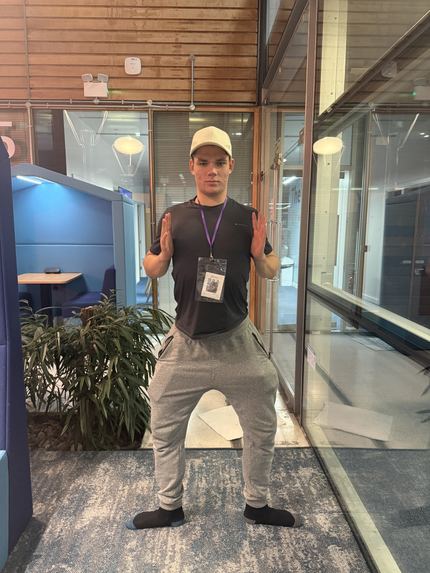
scuffed way to measure your chest size xD
-


Inspiration
We took inspiration from the Fraser's group category, creating a new retail experience for customers. We wanted to integrate AI into our project, giving us the idea of AI powered body scanning. As a first hackathon for us we had no clue what we had in store waiting for us.
What it does
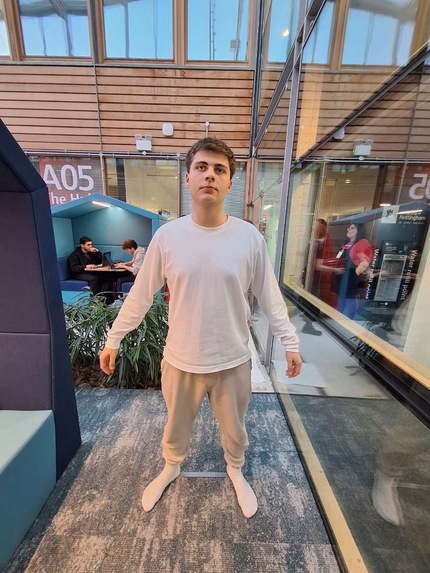
Our project is a website that takes an image of your body and a user prompt. It then uses Google's MediaPipe pose landmarker detection to callibrate the measurements using a reference point and scan the body. We then use the body scan to determine chest size. We use a csv file to hold the data of different suits. Each suit has attributes such as chest size, whether it is in stock or not, name, colour, etc. The calculated chest size is then used by Google Gemini along with the prompt to recommend suits of the correct size that are in stock and that fit the occasion.
How we built it
We started by creating a basic website and collecting suit data and images. Then we learnt about Google's MediaPipe landmarker detection, implementing it into our project and figuring out how to scan your chest. After this, we implemented Google Gemini by engineering a prompt that tells it take chest size and the user prompt as an input, then output four elligable suits using the csv file.
Challenges we ran into
The main challenge we ran into was scanning the chest. The reference points on the body that Google's MediaPipe landmarker detection measured the chest to be too small. To overcome this, we decided to use the customer's hands as the reference point, and get the user to place their hands next to their upper chest. Another challenge we ran into was engineering the prompt for google gemini. At first it ignored the chest size and stock availability, only taking into account the users prompt when giving suit suggestions. However, we perservered, altering the prompt and testing to make sure it won't suggest suits that aren't in stock for the user's size or are different to the users size.
What we learned
- How to use AI tools and pipelines
- How to develop the front and backend of a local web application


Log in or sign up for Devpost to join the conversation.