-
-
-
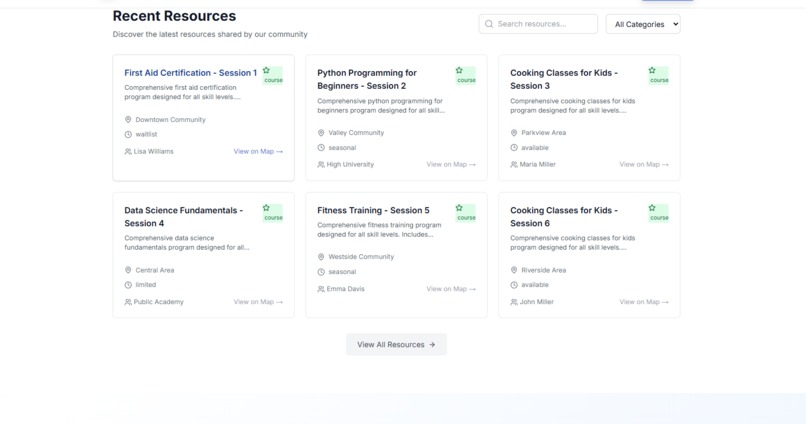
resource show page
-
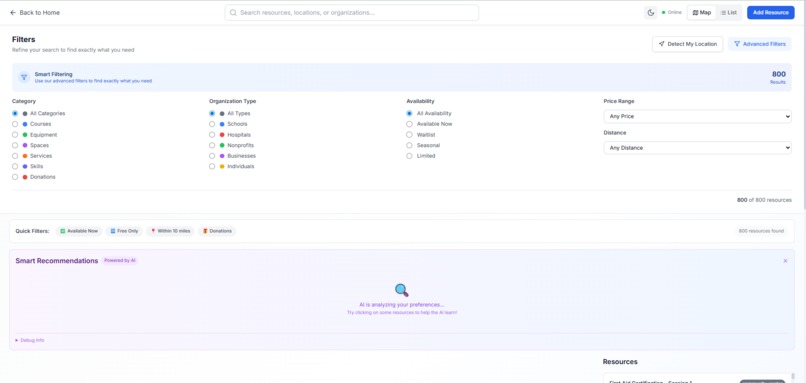
filters page
-
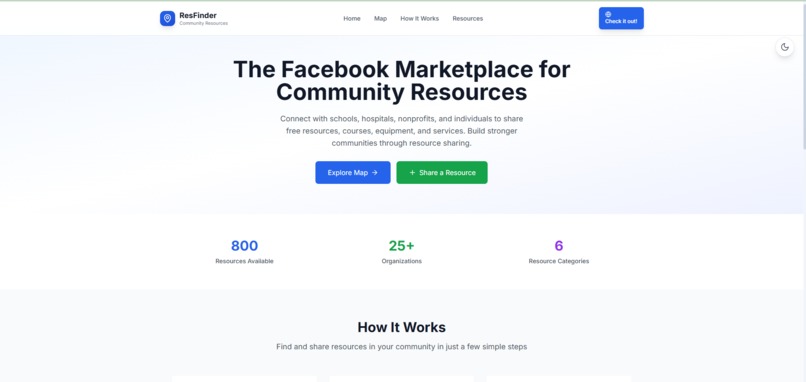
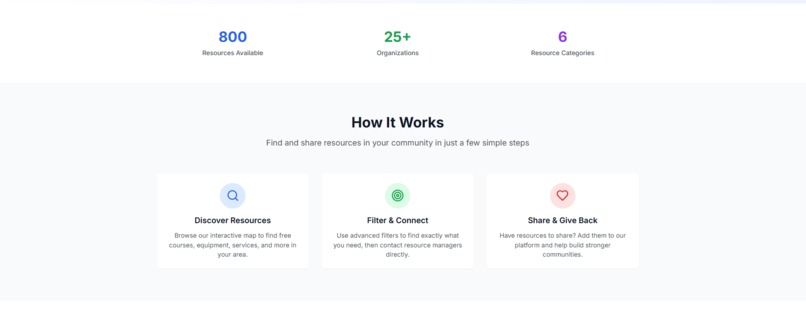
Main landing page
-
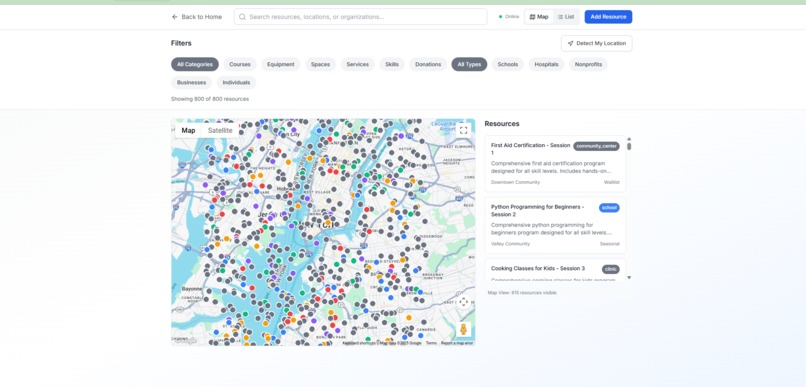
Map page with resources
-
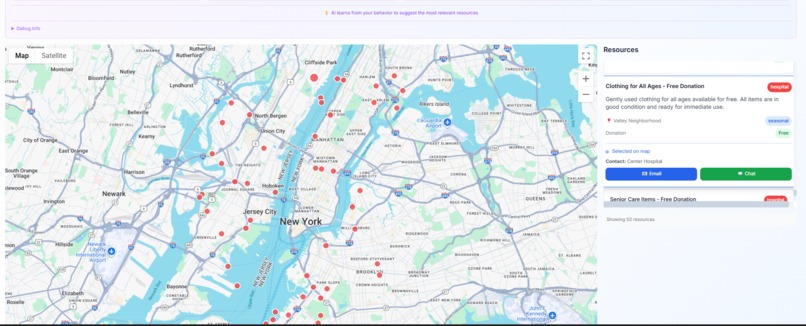
contact option
-
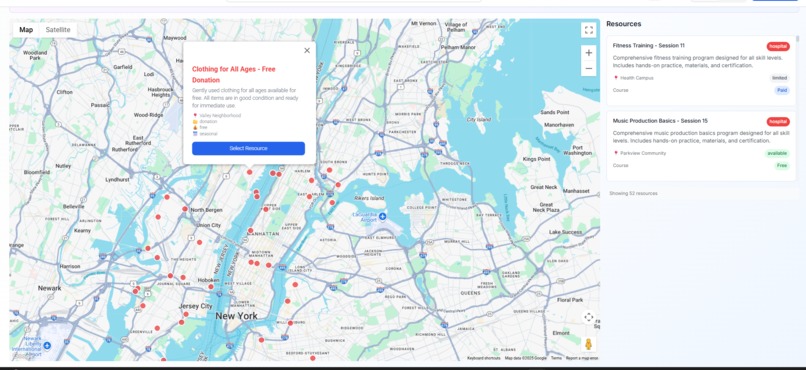
map show page
-
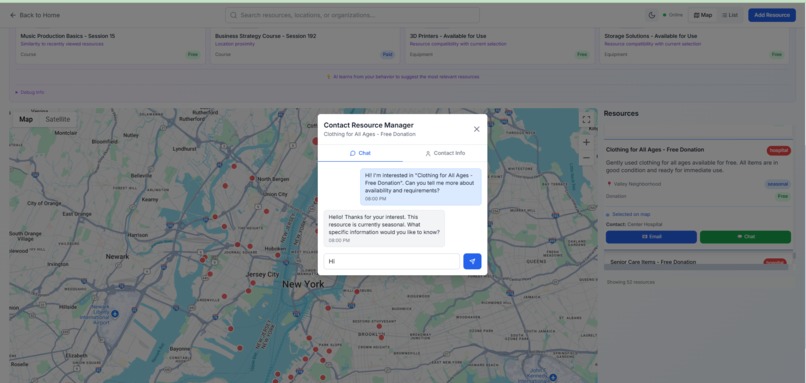
Contact for acquiring option


Inspiration
The idea for ResFinder came from watching perfectly good resources go to waste while people nearby needed them. Schools threw out extra equipment, hospitals had surplus supplies, and nonprofits didn’t know about available spaces.
The moment it clicked was when I realized that while Facebook Marketplace helps individuals, nothing existed for institutions and communities. I wanted to create a way for schools, hospitals, nonprofits, and businesses to share resources easily—turning waste into opportunity.
What it does
ResFinder is a map-based resource marketplace that connects schools, hospitals, nonprofits, businesses, and individuals. It’s like Facebook Marketplace + Google Maps, but built for community impact.
Core Features Interactive Map: Real-time resource discovery with custom markers Advanced Search: Filter by category, location, availability, and price Built-in Communication: Contact directly via email, phone, or chat AI Recommendations: Personalized suggestions powered by ChatGPT Resource Categories: School supplies, medical equipment, spaces, tools, services, skills, and donations The goal: faster discovery, less waste, and more access to opportunities.
How I built it
Frontend: Next.js 14 + TypeScript + Tailwind CSS Backend: FastAPI + SQLAlchemy + SQLite/PostgreSQL Maps: Google Maps API integration AI: OpenAI ChatGPT API for recommendations
I built: A custom Google Maps interface with clustering and location detection A multi-layer search and filter system with fast response A mobile-first responsive design with light/dark themes A backend optimized for geospatial queries and efficient search
Challenges I ran into
Geospatial performance: I had to design a hybrid system with bounding boxes + spatial indexing for smooth searches State management: Keeping the map, filters, and search results in sync without excessive API calls was tough Real-time updates: I had to carefully avoid infinite loops while syncing filters, maps, and AI recommendations Information overload: I solved this with progressive disclosure—showing simple options first, advanced ones later Mobile design: I focused on touch-friendly layouts that hide complexity until needed
Accomplishments I’m proud of
Built a production-ready platform during one hackathon Created efficient geospatial search that scales to thousands of resources Designed a filtering system on par with platforms like Facebook Marketplace Integrated AI that makes resource discovery smarter Delivered a clean, accessible UI with dark/light themes Built the first platform that combines institutional sharing with map-based discovery
What I learned
Geospatial queries are more complex than they appear—coordinate systems and distance filtering take real planning Multi-dimensional search can quickly become a bottleneck without optimization Real-time React state management requires careful handling of useEffect dependencies Accessibility and mobile-first design are must-haves for community platforms Verification and trust are harder than expected when dealing with institutional resources Community building happens inside the product itself, not just through marketing
What’s next for ResFinder
For Next 3 months Launch in real communities and gather feedback Optimize performance with caching, query tuning, and CDN integration Develop native iOS and Android apps Improve AI recommendations with more advanced models
Built With
- maps
- openai
- postgresql
- python
- restapi
- sql
- sqlalchemy
- tailwind
- typescript

Log in or sign up for Devpost to join the conversation.