-
Welcome to reMEDiate!
-
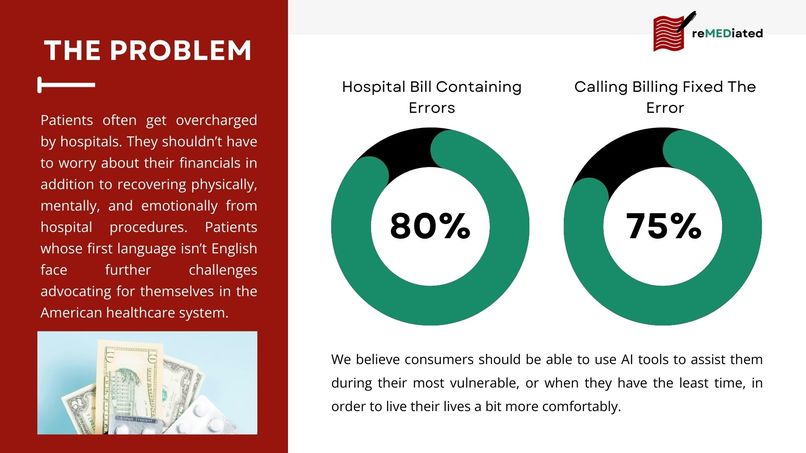
The problem and why we want to address it.
-
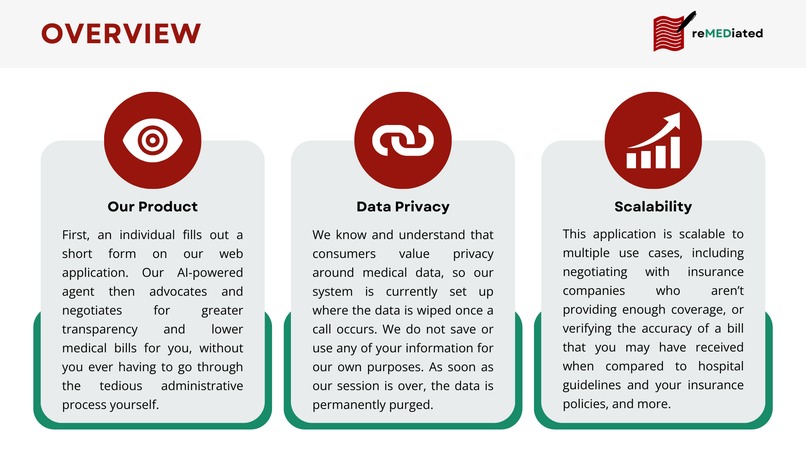
Our product and its features.
-
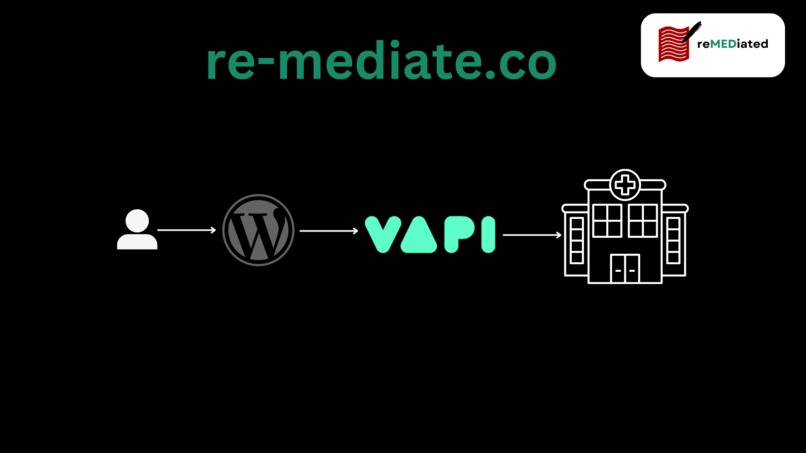
Our structure.
-
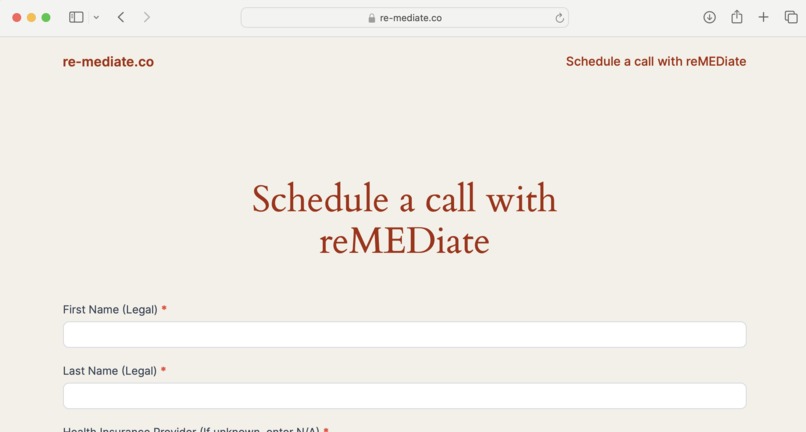
Our website where patients enter their information to get an automated call on their behalf.


Inspiration
Did you know that a 2019 study found that up to 80% of hospital bills contained some kind of error? Oftentimes, this leads to patients being severely overcharged, leading to many of them struggling to pay their bills. For patients who are chronically ill, recovering from an injury, non-native English speakers, or unfamiliar with the American medical system in any other way, this can be incredibly stressful and taxing to deal with.
reMEDiate aims to lift some of the weight off of their shoulders--and free up substantial time in their days and weeks.
What it does
The user first fills out a short questionnaire with their personal information and qualms. This is then processed and fed into our AI-powered calling agent, which takes on the burden of calling and negotiating with hospitals over mischarged bills and unclear costs. By obtaining an itemized bill, reMEDiate brings greater clarity and understanding to the user and allows them to spend their time more efficiently, rather than waiting for hours or even days for their issues to be solved. In order to also ensure user privacy, we take efforts to minimize the amount of time that their data spends in our hands, and we purge it as soon as our interactions are done.
How we built it
- VAPI was used for our caller agent.
- React was used to streamline our frontend development.
- JavaScript added utility to our website.
- The addition of HTML and CSS provided visual improvements to our frontend.
- Figma helped us design and plan our pitch.
- Twilio allowed us to create an externally hosted caller agent.
- Wordpress served as an initial landing spot for our product.
- Pork Bun was used to host our website.
Challenges we ran into
Time and experience constraints--for many of us beginner hackers, this was our first time seeing a project through from beginning to end in such a short amount of time! This was also our first time building a website from scratch with React, as well as using any of the AI voice tools we tried (we cycled through Cartesia and Hume before landing on Vapi). There was a lot of time and energy poured into reading documentation, fixing bugs, and figuring out what we wanted to do!
Despite trying for most of the event to integrate Fetch.ai into our application, we ultimately ended up narrowing the scope of the project so that we could focus more on the quality of the other aspects of our product. We also determined that it wasn't necessary for what we currently wanted to do, though it certainly is on our horizons if we plan to expand in the future.
Also: sleepless nights, class projects, and way too much caffeine.
Accomplishments that we're proud of
We managed to finish with something that we all were happy with. We're especially proud of the successful implementation of a dynamic AI agent with Vapi, as well as seamless user interaction. Though there were a few challenges along the way, we were able to adapt and overcome them to create something even better than what we had originally planned. Our final product is beginner-friendly, simple to use, and effective in its task.
What we learned
Aside from learning new APIs and technologies literally overnight, we learned a lot about product development and scope creep. We learned how to market, how to ideate and create, and how to divide tasks so that we all were challenged to an appropriate level, while making sure we all completed what we needed to.
What's next for reMEDiate
We have plans to expand the functionality beyond just negotiating over the phone for an itemized bill. There are many other areas even just in the medical field where tedious paperwork and administrative incapabilities takes up a disproportionate amount of time--especially when the implications are oftentimes severe and time-sensitive. Delegating other tasks like verifying insurance coverage, comparing costs, and managing appointments to reMEDiate gives a person much more free time and security.


Log in or sign up for Devpost to join the conversation.