-
-
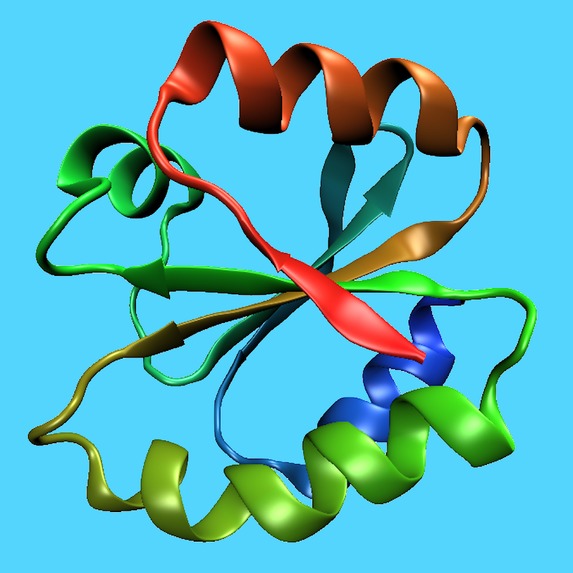
ReFold Protein Synthesis
-
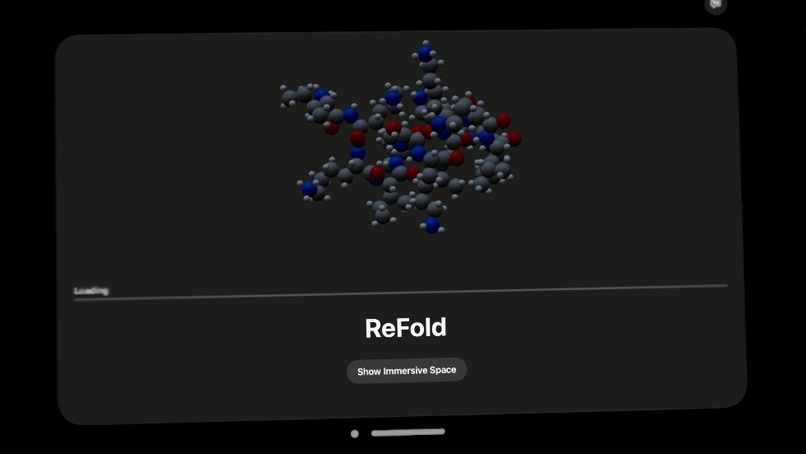
Load protein model
-
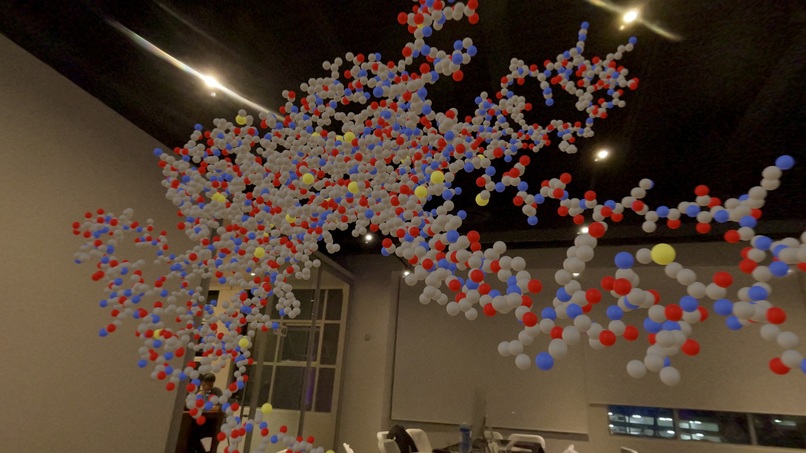
Visualize folded protein
-
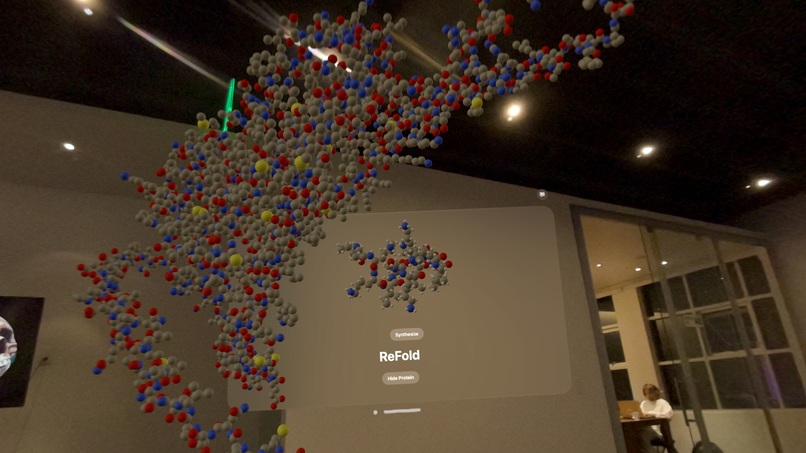
Folded protein and controls
-
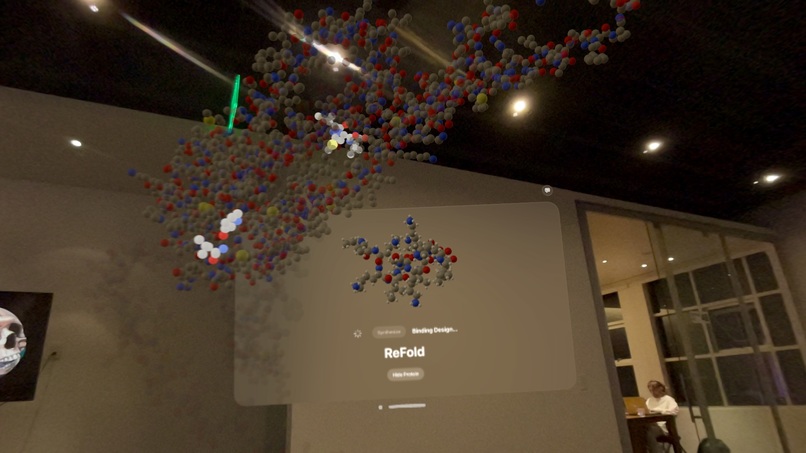
Synthesize new protein structure
-
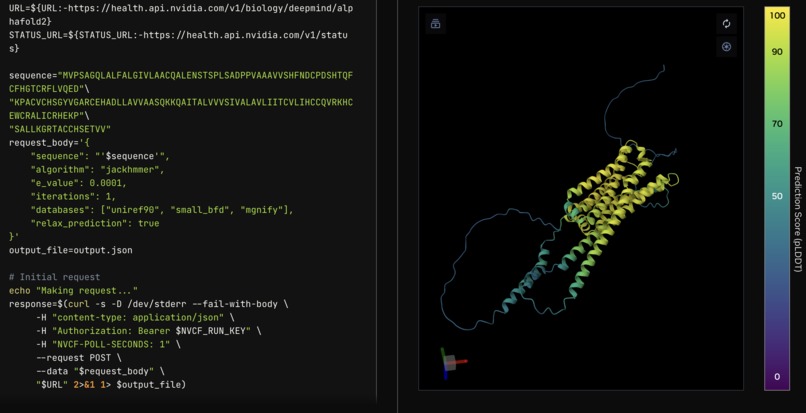
Generating protein structures with Alphafold and Nvidia
-
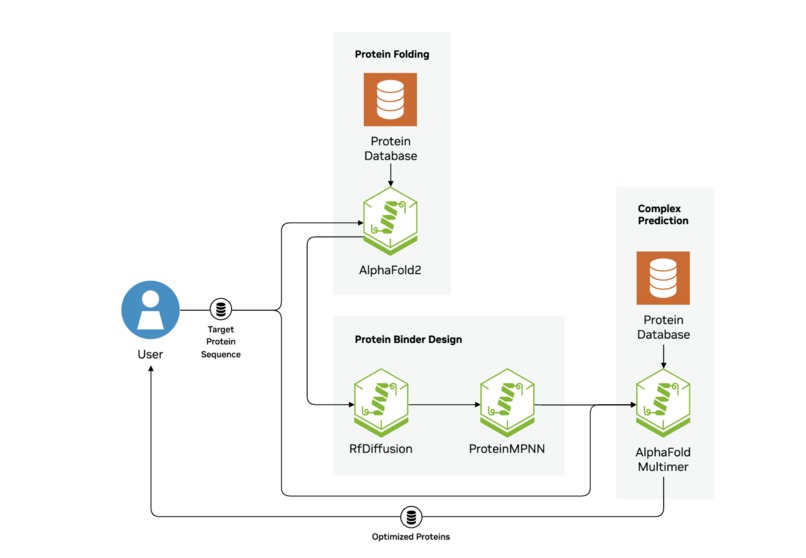
Protein binder design architecture


Inspiration
Some people we know are suffering with rare diseases. Rare and orphaned diseases get very little attention or funding. Big Pharma mostly ignores them since they are not profitable. Recent advances in AI have developed models and tools that can greatly accelerate the discovery of new and effective medicines. However, most research groups focusing on these underfunded diseases lack the resources or skills to make effective use of these new tools. ReFold aims to simplify the use of these AI tools to make them accessible to researchers working on rare and orphaned diseases, cutting months or years off the drug discovery process.
What it does
ReFold is an app for Apple Vision Pro that visualizes the 3D structure of proteins and integrates protein AI models that perform essential functions for protein synthesis. Currently the models are running on an NVIDIA backend, but most are open source and can be hosted anywhere.
The Vision Pro app starts with a candidate protein's amino acid sequence. It calls a protein folding model to generate the 3D description of the protein and creates a 3D visual model from the description to display in an AR view. The app can highlight the binding region in the protein where it bonds to the molecules of interest. It then runs additional models to generate candidate replacement amino acid sequences for the binding region. Those potential replacements are then evaluated for various properties relevant to the binding and transport processes. The app user can choose from these based on the properties that are most important to their research. These candidates can then be re-folded by the first AI model and the process repeats.
These iterations can be executed far more rapidly than a lab could do in-vitro, and with a high degree of confidence in the results. Ultimately the lab will end up with several high-quality candidates that can then be pursued with standard lab procedures. This process might normally take months or even years in the lab, but can be reduced to weeks with the application of AI tools.
How we built it
We created a visionOS app that can parse a PDB file (a standard for describing proteins) and generate 3D models for display in an AR view. The model can be adjusted with gestures, and can be highlighted to show the steps in the re-synthesis process. The app also coordinates calls to the backend service that runs the AI models. We're using several hosted on NVIDIA servers including esmfold to fold an amino acid sequence, rfDiffusion and ProteinMPNN to generate candidate replacement sequences, and AlphaFold Multimer to evaluate the binding properties.
Challenges we ran into
This was a big app to create in one day to a sufficient level to demonstrate the operation. None of us have a background in bio-sciences, so we had a lot to learn just to figure out how to provide proper input to the AI models. And we had to figure out how to generate appropriate API calls into the NVIDIA backend, which had very little documentation in how the tools worked together. We also ran into several limitations with visionOS when rendering such large constructs.
Accomplishments that we're proud of
We got the whole toolchain working with an app that provides some nice looking visuals and is easy to use.
What we learned
An awful lot about the in-silica process for protein synthesis.
What's next for ReFold
While there's a lot of work to make this a tool that could be used in the field, it's very close to being demonstrable to scientists working in the industry. We want to find a few willing to work with us to provide feedback and insights into how best to deploy ReFold.


Log in or sign up for Devpost to join the conversation.