-
-
What's wrong?
-
Our solution!
-
What we did
-
Who we care about
-
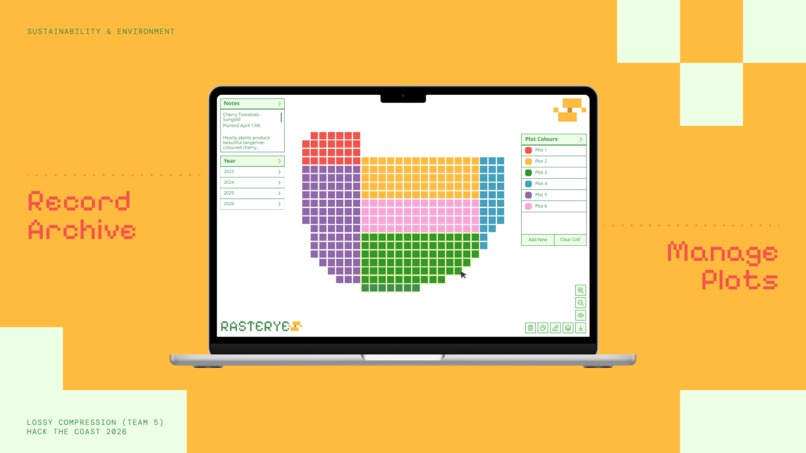
Mockup
-
Rasterye logo
-
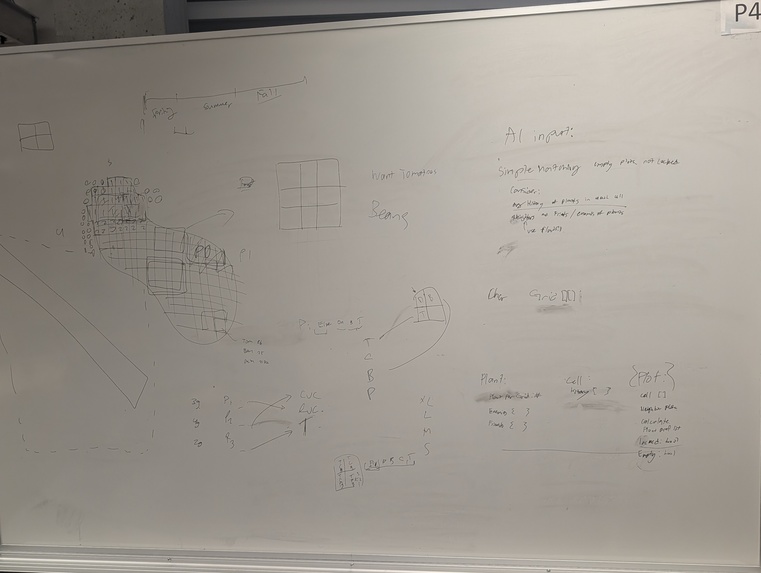
Brainstorming algorithm


Inspiration
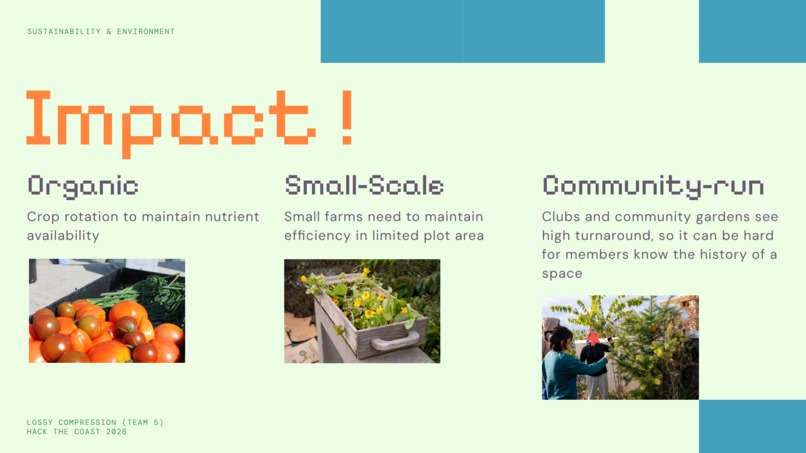
Crop rotation is very important for soil health, crop yields, and overall sustainable agriculture. This project is kickstarted by our personal anecdotes but fueled by the motivation that our idea can be scaled to help sustainable agriculture world-wide.
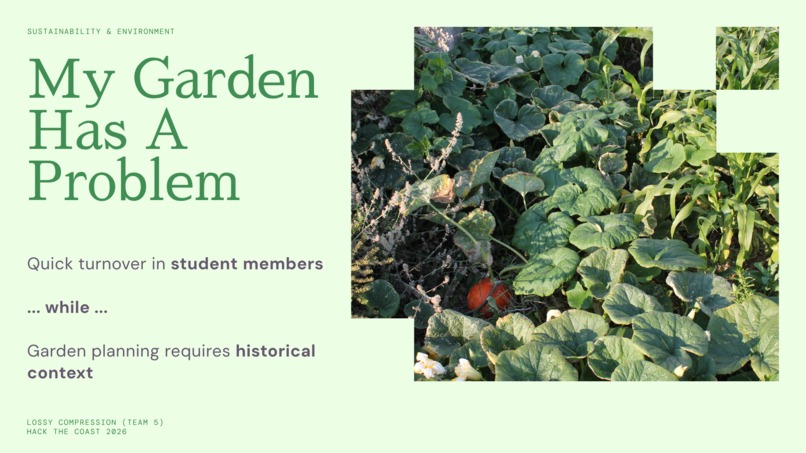
One of our members is the president of UBC Roots on the Roof and proposed the issue of constantly keeping track of the crops and detailed rules for co-planting, especially considering the high member turnover rate due to being a school club. History and details get lost over time and it gets difficult to accurately calculate which plots of land contain the proper nutrients for certain crops. We settled on developing an app that would solve this issue by integrating a matching algorithm with a data recording and visualization system. The goal was to build a real app that Roots on the Roof can substantially bridge the learning curve gap that comes with crop rotation. As the technology evolves, sustainable agriculture will become more accessible for the community.
What it does
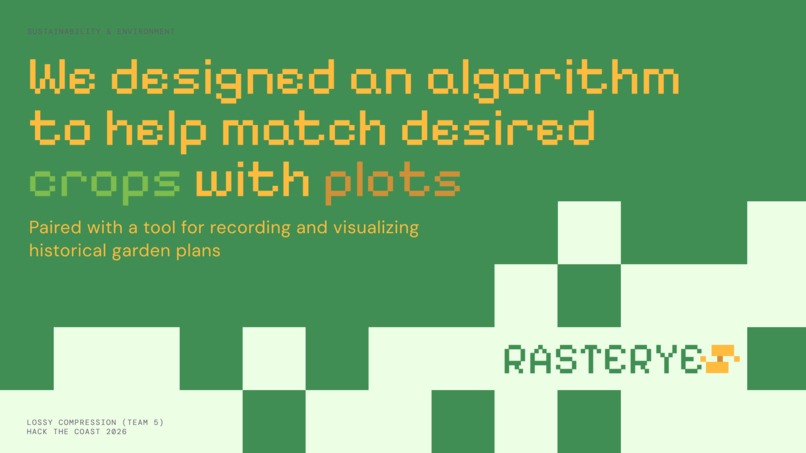
Records and visualizes historical garden data. Makes predictions for best subsequent crop rotations based on user requests and maximizing algorithm that takes into consideration each plant's compatible and incompatible co-plants for neighboring plots, as well as historical data of the plants harvested in each plot.
How we built it
Pulling from relevant experience, we integrated our problem with a simple matching algorithm to imagine a spatio-temporal crop rotation engine that would ideally match each garden plot with the best possible crop. We used Claude Opus 4.6 to aid in developing the algorithm as well as integrate it with our frontend. We found a real dataset from West Coast Seeds that provided the vital information needed about many different crops, their compatibilities, and planting dates. The frontend was designed and built in Figma before being wired to the backend. The entire backend data is fully exportable; we do not store data in the cloud and functions fully independently.
Challenges we ran into
It was difficult to align our planning and come to a consensus regarding the design and functions of the app. There was a lot of deliberating in deciding the priorities of our algorithm and what limited aspects we could take into consideration. Farming is a complex endeavor that required our team to learn a great deal about the intricacies in order to properly envision the project.
Accomplishments that we're proud of
We are proud to have addressed a real problem that was affecting our lives and to have created something worth using. We utilized our diverse skillset to come together and build an actually applicable project.
What we learned
We learned a great deal about crop rotations and the detail that goes into sustainable agriculture.
What's next for Rasterye
Roots on the Roof plans on demoing this project for their garden and continue to implement improvements as we discover new factors. Rasterye has amazing potential to expand to a larger scale and add more features that we did not have time to address during this hackathon.
Built With
- figma
- python


Log in or sign up for Devpost to join the conversation.