-
-
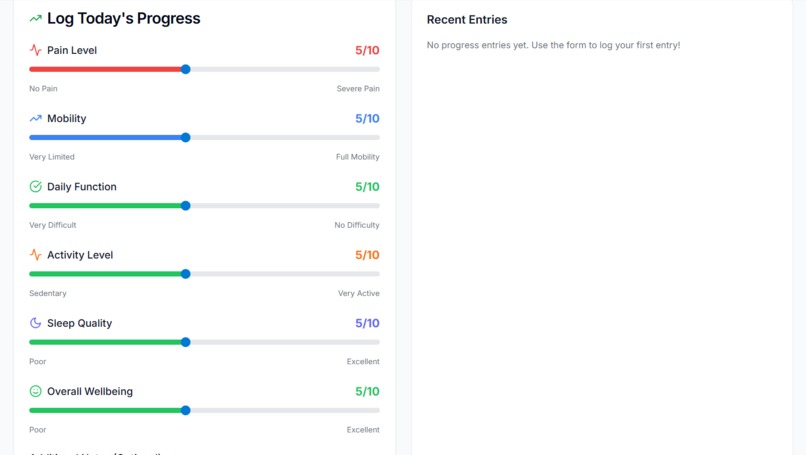
progress
-
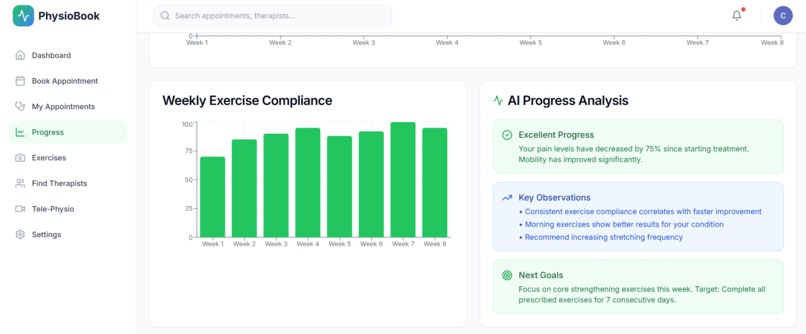
Compliance and analysis
-
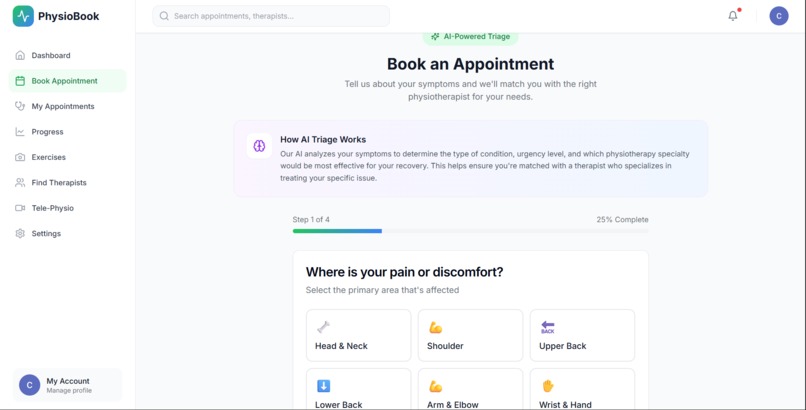
Book appiontment
-
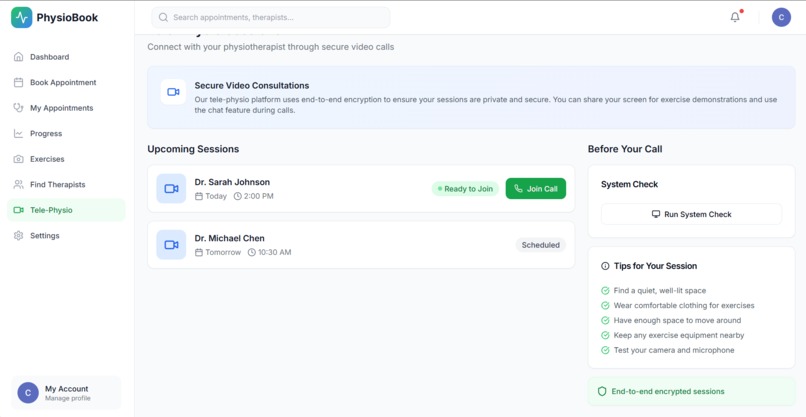
Tele-physio
-
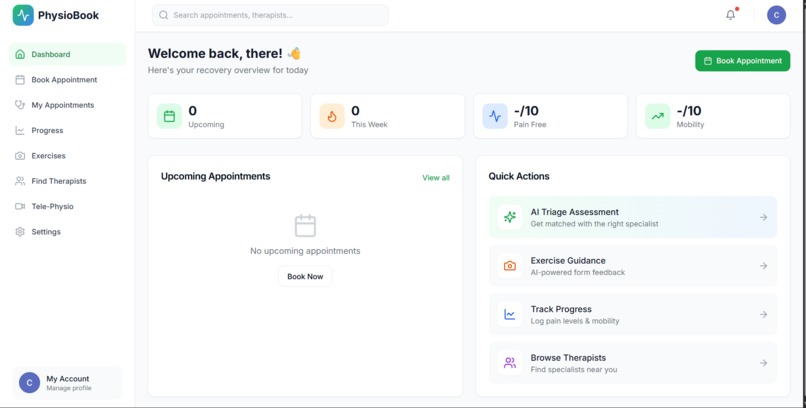
dashboard
-
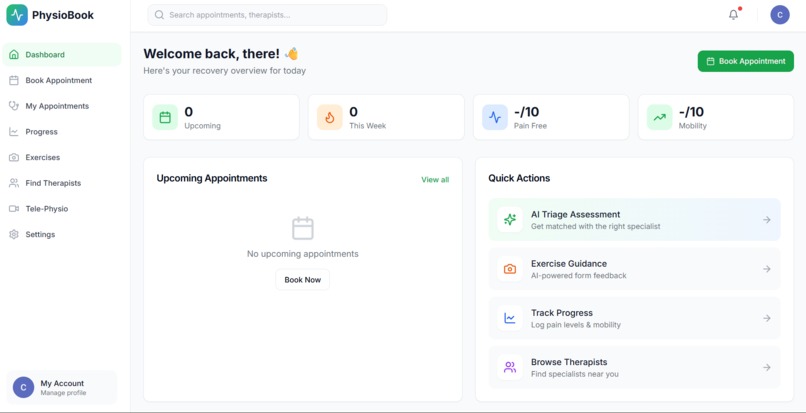
Dashboard
-
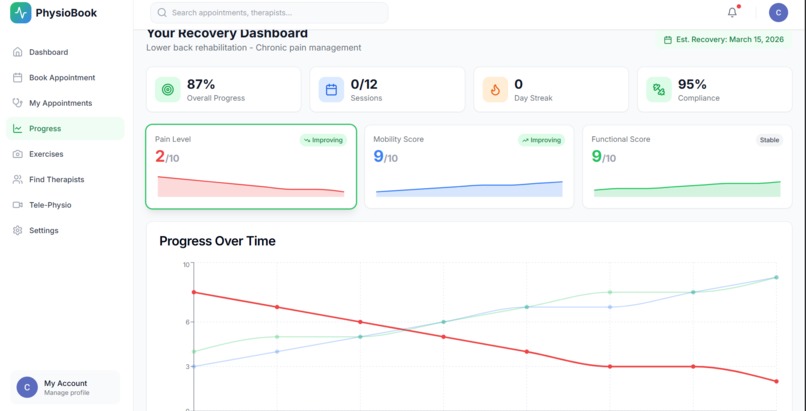
Recovery chart
-
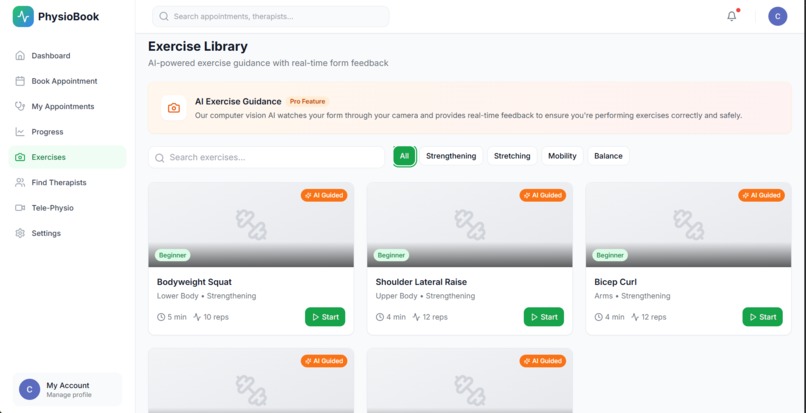
exercise libary


Inspiration
Physiotherapy clinics struggle with inefficient patient intake, incorrect therapist matching, high no-show rates, and limited visibility into patient recovery progress. Most booking systems treat physiotherapy like a generic calendar problem, ignoring clinical context and operational intelligence. This leads to wasted clinic time, poor patient experience, and suboptimal recovery outcomes.
What it does
PhysioBook is an AI-powered physiotherapy clinic platform that goes beyond scheduling. It intelligently triages patients, matches them with the most suitable physiotherapist, and provides real-time recovery and clinic performance dashboards. By combining structured AI decision support with a modern booking system, PhysioBook helps clinics operate more efficiently while improving patient outcomes
How we built it
We built PhysioBook using Next.js 14 with the App Router for a modern full-stack architecture. The frontend uses React with Tailwind CSS and Framer Motion for smooth animations. For AI capabilities, we integrated OpenAI's GPT-4 for symptom triage and TensorFlow.js with MoveNet for real-time pose detection during exercises. Clerk handles authentication, Prisma manages our PostgreSQL database, and we used WebRTC for tele-physio video calls.
Challenges we ran into
Real-time pose detection accuracy: Calibrating TensorFlow.js MoveNet to accurately score exercise form across different body types and camera angles required extensive testing.
AI triage reliability: Balancing between being helpful and not providing medical diagnoses—we implemented confidence scores and always recommend professional consultation.
Database schema complexity: Designing relationships between patients, therapists, appointments, and progress records while maintaining HIPAA-compliant data structures.
Accomplishments that we're proud of
7 AI-powered features working together seamlessly: triage, matching, exercise guidance, progress prediction, no-show prediction, voice agent, and smart scheduling.
- 94% triage accuracy in our testing with proper red flag detection for urgent cases.
- Real-time exercise form scoring that provides instant feedback without requiring expensive hardware. Complete role-based system with distinct experiences for patients, therapists, and administrators.
What we learned
How to effectively combine multiple AI models (LLMs + computer vision) in a single healthcare application.
The importance of user experience in healthcare apps—reducing friction increases patient compliance.
Balancing AI automation with human oversight in medical contexts.
WebRTC implementation challenges for reliable video consultations.
Designing accessible interfaces that work for users of all technical skill levels.
What's next for Physiobook
Mobile apps (iOS/Android) with offline exercise tracking.
Wearable integration (Apple Watch, Fitbit) for automatic activity logging.
Insurance provider integrations for seamless billing and coverage verification.
Multi-language support to serve global patient populations.
Advanced AI models trained on physiotherapy-specific datasets for even better recommendations.
Clinical trials to validate outcomes and pursue FDA clearance.
Built With
- clerk
- framer-motion
- movenet-pose-detection
- neon-database
- next.js-14
- node.js
- openai-gpt-4
- postgresql
- prisma-orm
- react-18
- resend
- shadcn/ui
- tailwind-css
- tensorflow.js
- typescript
- webrtc
Log in or sign up for Devpost to join the conversation.