-
-
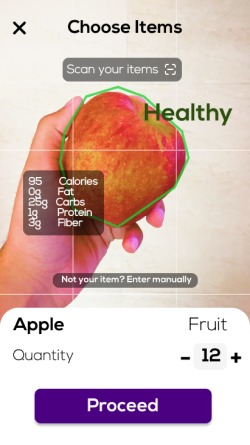
ML object recognition
-
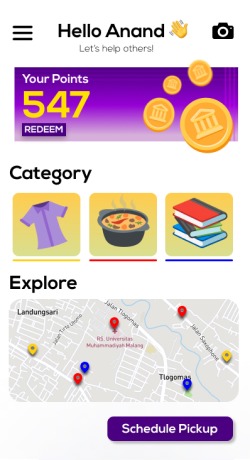
Dashboard
-
-
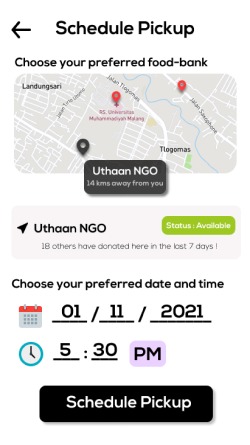
Schedule Pickup
-
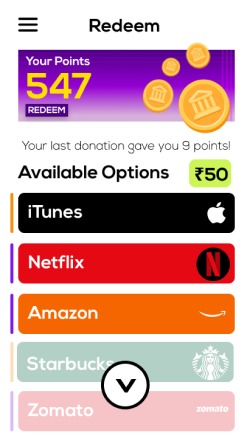
Redeem points


Inspiration
While brainstorming for a project idea, we came to a realisation that a lot of people have noble intentions of helping the community but are unable to do so because of their hectic schedules, time constraints and other logistical issues. This claim was further backed by evidence which we received after surveying; 92.5% of people wish to donate but only 12.7% out of those regularly do so. A massive 63.5% of the population didn't have information about their nearby salvation armies or foundations. Here comes, Paropkaar.
What it does
Based on the observation that most people donate out of convenience, Paropkaar is a service that let's people donate items from the comfort of one’s own home. 'Paropkaar.' - परोपकार, Hindi for donation/donate, is a one-stop platform where people can donate items in a few clicks! Paropkaar allows household users and vendors to locate and donate food, books and clothes to donation hot-spots such as food banks or shelters on an interactive map. Donations are as simple as snapping a photo with a camera that will label your item for you. Simply scan your items, select a foundation and schedule pickup right at your doorstep! The map also shows where other users around you are donating to incentivize more donations. Users can select their profiles (Individual, Business, Other) and donate accordingly. A vendor can donate their leftovers at the end of the day with a few taps! Going out for shopping? Buy a few additional items and just Paropkaar it.
You can also earn points by donating and redeem them to avail discounts, get gift cards and more! The aim of our app is to tackle numerous problems at once; Wastage - of food, clothes and books, Necessity - of these items for the underprivileged, Logistics - of the entire donating process.
How we built it

Challenges we ran into
A teammate had school exams, so we could not sit for brainstorming sessions before the hackathon
A teammates had previous commitment to go out for 5 hours during the hacking hours
Never used Cockroach DB before
Learned Flutter on the go
No previous experience in using Filecoin or working on any sort of decentralised technologies.
Had to change from Prisma to TypeORM since our DB was not compatible with Prisma. TypeORM was completely new and we had trouble migrating.
Figuring out a business model for the concept we had : We had the challenge of making Paropkaar commercially viable, on paper. - To tackle the same, we decided to partner with companies, be it small scale businesses or large corporations and use their funding which falls under the category of CSR (Corporate Social Responsibility). Under CSR, every corporation has to undertake practices to help the community and allocate funds for the same.
Learning and implementing a new auth - SAWO Labs
Accomplishments that we're proud of
Getting a proper backend working with an API hosted on a custom domain
Building a proper application with full functioning backend, frontend and APIs even after just being 12th graders and 1st year students.
What we learned
the importance of making a protype before actually implementing the code
communicating and having a proper workflow in place
following good naming conventions to avoid confusion in version controls
What's next for Paropkaar
gaining legal knowledge to determine feasibility of business model
improving ML model to be able to identify more items
expanding the database to accommodate large amounts of data in a more efficient way
Built With
- cloudflare
- cockroachdb
- express.js
- figma
- flutter
- googlemaps-api
- linode
- nginx
- node.js
- tensorflowlite


Log in or sign up for Devpost to join the conversation.