-
-
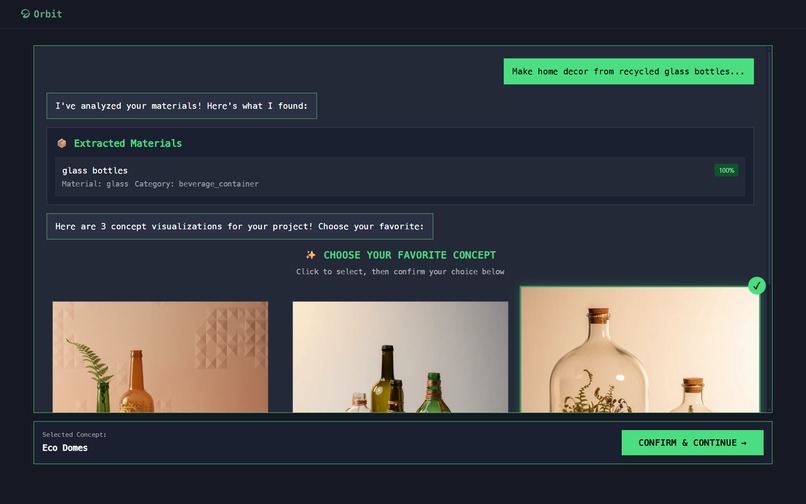
Chat Analysis
-
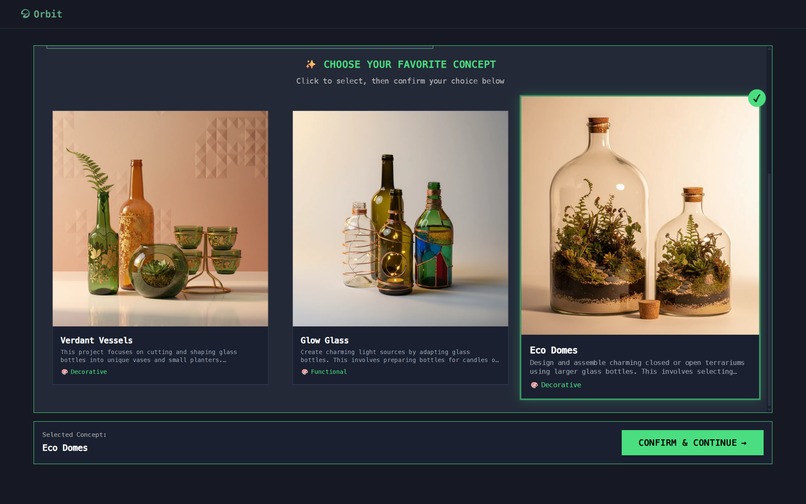
Recommendations
-
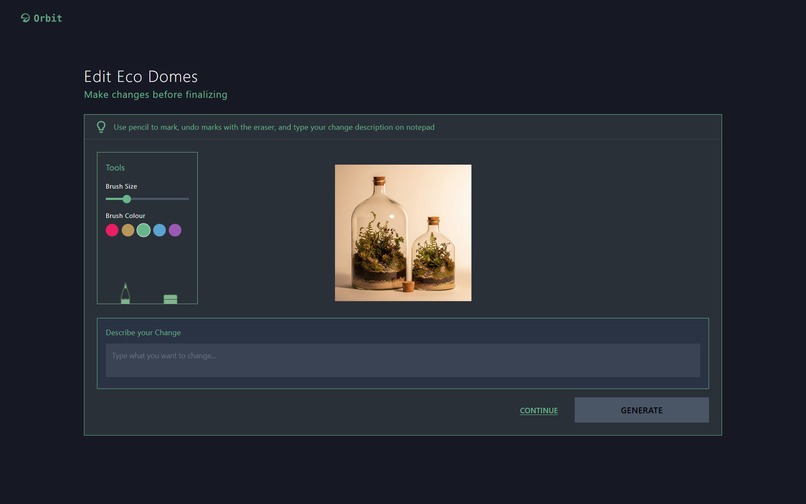
Magic Pencil Editor
-
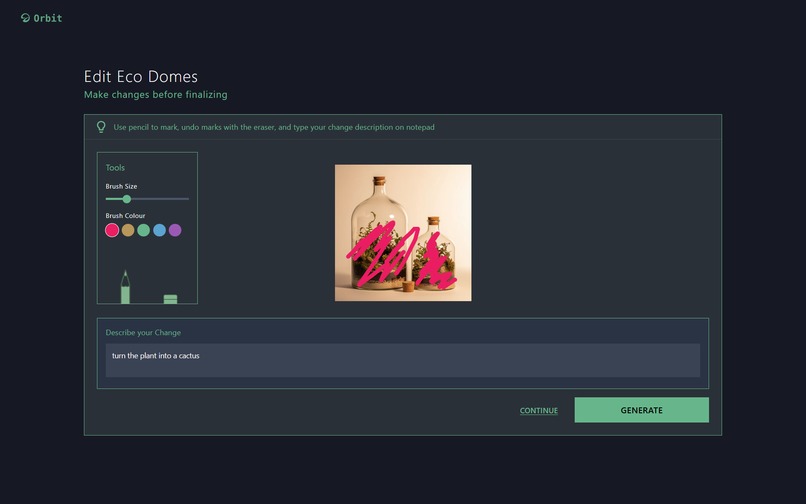
Editing
-
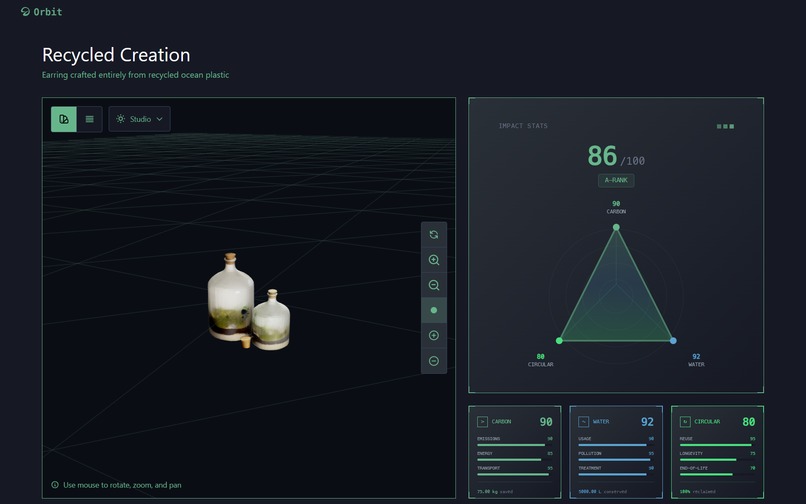
3D Model + ESG
-
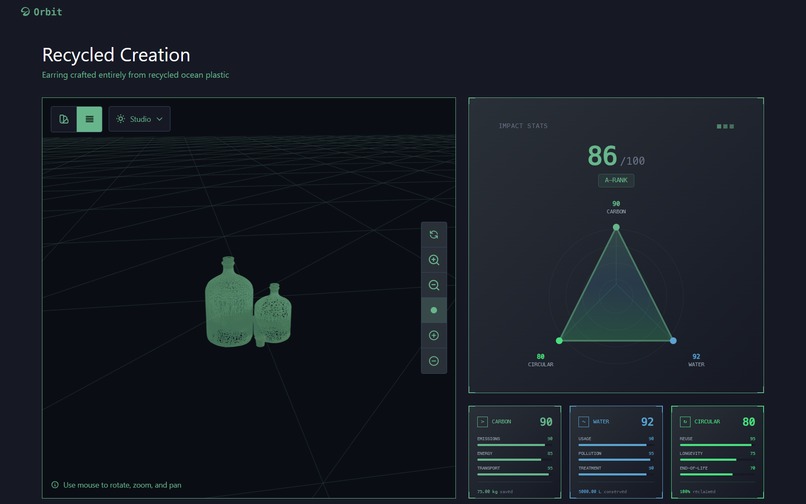
Wireframe Model


Inspiration
Over 2 billion tons of waste are produced each year, but only 6.9% of materials are recycled. Many materials with potential value go unused, not because people don't care, but because they don't know what else to do with them. Although there's an increasing interest in upcycled goods, upcycling remains complex and inaccessible.
What it does
Orbit is a platform that turns any waste material into actionable product concepts with visual previews, complete build instructions, and impact analysis.
How it works
- User inputs waste material
- Orbit generates three distinct product concepts, each with material breakdown, required tools, and feasibility scores. User selects one.
- Users can adjust designs by marking changes or specifying edits; AI updates the concept accordingly.
- Orbit produces a 3D model, real-time sustainability metrics, and complete DIY guidelines for building the product.
How we built it
Tech Stack
- Frontend: Next.js 15 (App Router), React 19 + TypeScript, Tailwind CSS, Three.js, EventSource (SSE)
- Backend: FastAPI (Python 3.11+), LangGraph, Redis, Pydantic, Uvicorn
- AI/ML: Gemini 2.5 Flash, Nano Banana (gen + edit), Trellis (2D→3D), strict responseSchema
- Infrastructure: Docker + Compose, Redis (in‑memory + persistence), CORS‑enabled API
Challenges we ran into
LangGraph State Management Complexity: Managing interrupts and resume patterns in LangGraph was tricky. We needed workflows to pause for user input and seamlessly resume without losing context. As a solution, we implemented Redis-backed checkpointing with thread IDs and careful state serialization, and created comprehensive error recovery patterns.
Gemini Structured Output Reliability Getting consistently formatted JSON from LLMs was challenging, especially for complex nested structures. To solve this, we used Gemini’s responseSchema and response_mime_type=application/json features to enforce strict schema validation and automatic retries, ensuring reliable structured outputs.
Accomplishments that we're proud of
- 11‑phase AI agent orchestration with interrupt/resume; multi‑model pipeline (Gemini, Imagen, Trellis)
- Parallel image generation reduced total time by ~66%; SSE updates <100 ms
- Conversational discovery UX and localized edits via Magic Pencil
- Production‑ready practices: error handling, checkpointing, CORS, Dockerization
What we learned
- How to treat LangGraph like a persistent state machine with checkpoints
- With LLMs, never trust unvalidated outputs—enforce schemas, handle nulls/types, backoff on transient errors (Fall-back importance)
- SSE is ideal for server→client progress—design for reconnection and event ordering
- Redis as state store—namespacing, TTL strategies, and memory monitoring (images add up)
- Latency‑aware UX—parallelization + honest progress beats opaque spinners
What's next for Orbit
Tap B2B Opportunities: Partner with brands and packaging companies seeking to meet sustainability commitments. For example, Unilever, Nestlé, Coca-Cola target 25–50% recycled or upcycled content in packaging. Offer Orbit as a scalable tool for companies to prototype sustainable products, packaging, and campaigns.
Gamification & Rewards Impact-Based Rewards: Users earn points or badges when they upcycle, recycle, or complete sustainable projects. Points can unlock exclusive content, discounts, or digital collectibles. Community Engagement: Share achievements, completed projects, and impact milestones. Leaderboards and challenges.
Add more features Smart Sourcing: Suggest substitute materials if the user doesn’t have a specific item, with direct supplier links or local sourcing options. Local Material Sharing: Connect users with neighbors or local communities to swap, trade, or borrow materials.


Log in or sign up for Devpost to join the conversation.