-
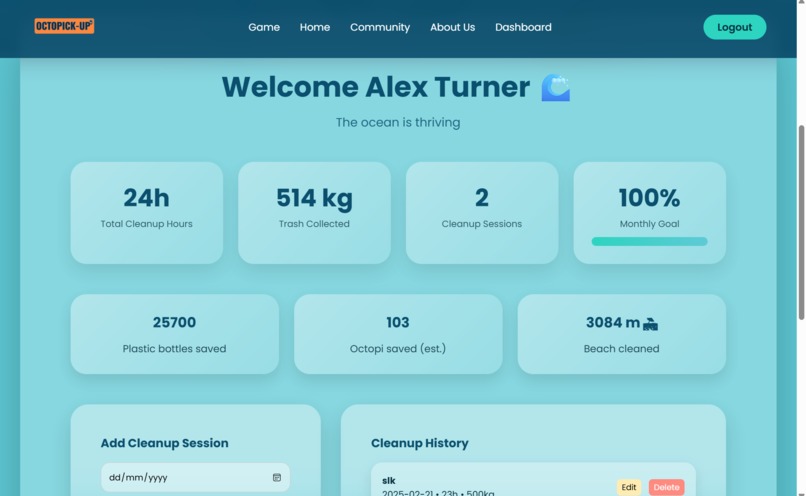
Dashboard - where progress and real-life impact is displayed
-
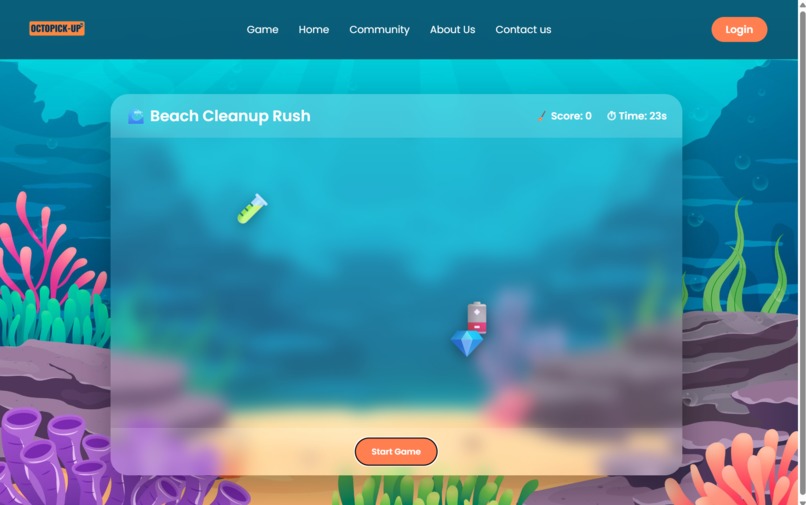
Interactive Game - user experience
-
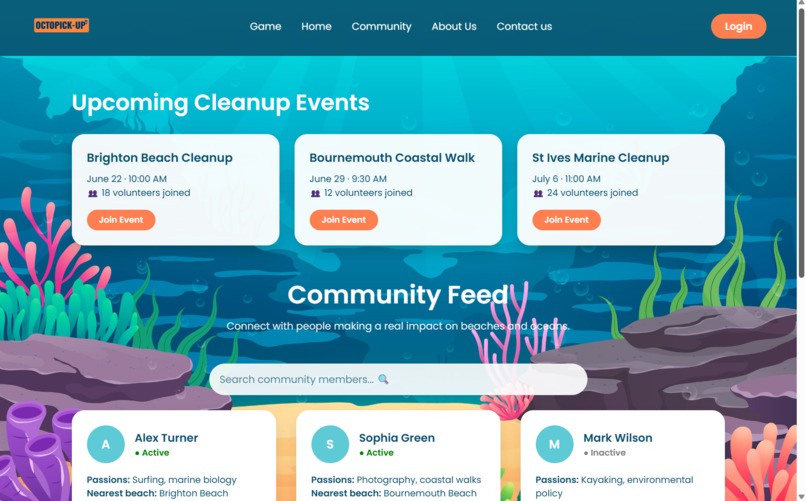
Community Feed - where users can connect
-
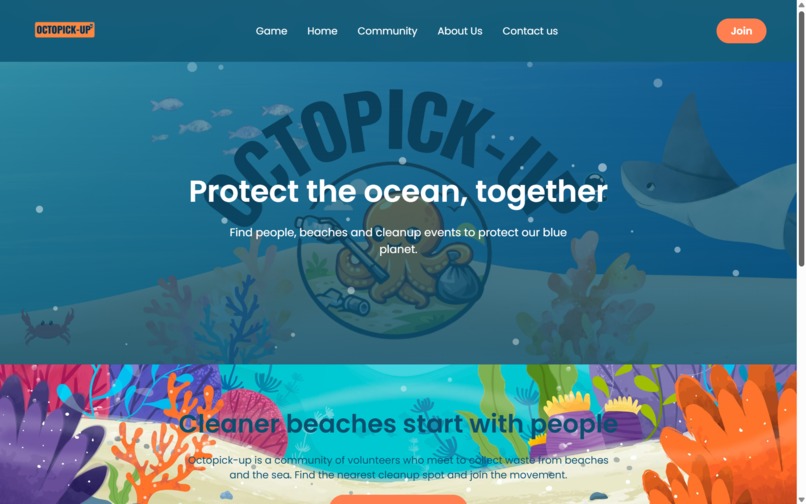
Homepage - introduction to Octopick-up


Octopick-up was born from the core themes of the challenge: community and octopus. We were inspired by the octopus not only as a symbol of intelligence and adaptability, but also as a metaphor for connection, many arms working together toward a shared goal.
We asked ourselves a simple question: How can we bring people together around something meaningful that involves the ocean and an octopus?
From that point, our focus naturally shifted toward climate change, ocean pollution, and the growing need for collective action to protect marine ecosystems. We wanted to create something that could motivate people, connect them, and make their positive impact visible and rewarding.
At the beginning, the project went through several conceptual iterations. We explored different directions, including: desktop application, web-based platform and video game experience. While this exploratory phase helped us generate ideas, it also introduced some uncertainty. Eventually, we decided to split the work: I focused on building the web platform, while other team members worked on the video game and a desktop application.
As the hackathon progressed, we encountered significant challenges, mainly related to time constraints and technical limitations. We quickly realised that the desktop application was not feasible within the available time. Later on, the plan shifted to integrating the video game with the web platform. However, as the night went on, more obstacles emerged: the backend implementation faced blocking issues and could not be completed in time and the video game prototype could not be finalised.
Eventually, I found myself continuing the project with little in hand, focusing entirely on the web platform Despite this, instead of abandoning the project, I adapted the scope and doubled down on making the web experience as complete, polished, and functional as possible.
Octopick-up was built as a front-end focused web platform, designed to simulate a real, usable product even without a full backend. Key features include: user authentication logic using local storage, a personal dashboard to log cleanup sessions and impact visualisation that converts collected trash into real-world equivalents (bottles, wildlife saved, beach cleaned) a cleanup history system, a small interactive game as an engagement feature and a strong emphasis on UI/UX, animations, and visual feedback
The project prioritises clarity, motivation, and emotional engagement, turning abstract numbers into meaningful outcomes.
This project taught us several important lessons: the importance of clear direction early on and the cost of changing ideas too often under tight deadlines. How adaptability and resilience are crucial when plans fail and how much can still be achieved by focusing and executing decisively. Most importantly, we learned that even when a project does not go exactly as planned, it is still possible to deliver a strong and meaningful result.
We are proud that: we developed a solid concept aligned with the challenge theme, we delivered a visually polished and functional web platform, we successfully adapted to unexpected setbacks and we transformed a difficult situation into a complete and presentable product
Octopick-up has strong potential for future development. Possible next steps include a real backend and database, multiplayer or community-based game integration or even more detailed impact analytics . With additional time and resources, Octopick-up could evolve into a fully professional platform that genuinely supports environmental action and community engagement.


Log in or sign up for Devpost to join the conversation.