-
-
MealAhead Logo
-

MealAhead Icon
-
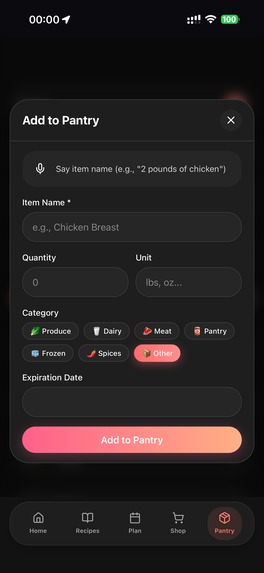
Add item to pantry modal
-
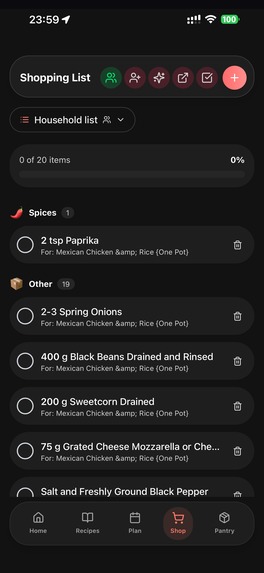
Shopping list screen
-
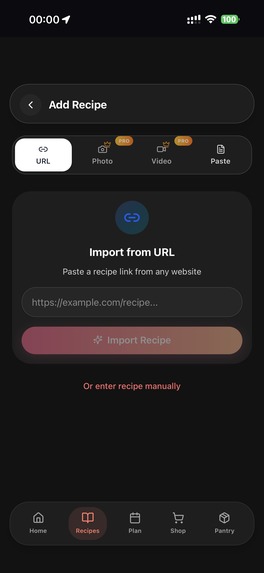
Add recipe screen
-
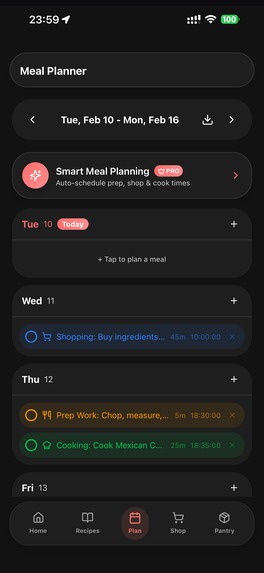
Meal schedule planner screen
-
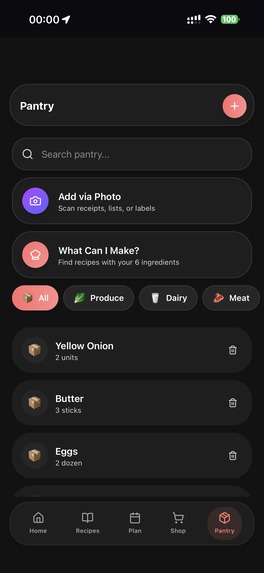
Pantry screen
-
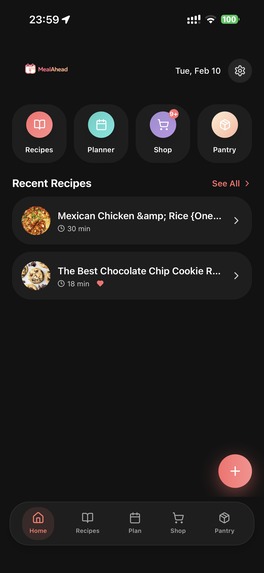
Home screen
-
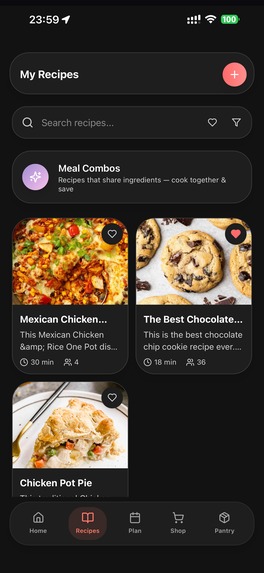
Recipes screen


MealAhead — Smart Meal Planning Made Simple
Inspiration
After watching Eitan’s video, I was inspired to build a recipe and kitchen app that supports more of the real cooking process than most tools on the market.
Most apps focus on saving recipes or basic planning, but they don’t reflect how people actually cook — especially those who break meals into shopping, multi-day prep, and coordinated cooking timelines.
As someone who is extremely organized in the kitchen, I’ve always treated cooking like a system — not a single event.
I regularly plan meals across multiple days — shopping in advance, prepping ingredients early, and sequencing dishes to reduce stress. Friends would often ask how I managed it, which sparked the idea to turn my personal workflow into a product others could use.
As people began testing the app and requesting features, I expanded the scope to cover as much of the cooking process as possible — from recipe import all the way to hands-free execution.
What it does
MealAhead is an end-to-end cooking workflow platform that transforms scattered recipes into fully planned, shoppable, and executable meal plans.
Core capabilities
- Import recipes from any source
- Automatically parse ingredients and instructions
- Schedule meals with prep timelines
- Generate consolidated shopping lists
- Track pantry inventory
- Cook using hands-free step-by-step guidance
It connects every stage of cooking:
- Discovery
- Planning
- Shopping
- Prep
- Cooking
How I built it
Tech Stack
| Layer | Technology |
|---|---|
| Development Platform | Sticklight (AI-assisted development) |
| Language | TypeScript |
| Frontend | React 18, Tailwind CSS 4, Vite 6 |
| Routing | React Router 7 |
| Backend | Supabase (PostgreSQL, Auth, Real-time) |
| Native Runtime | Capacitor 8 (iOS + Android) |
| Voice Input | @capacitor-community/speech-recognition |
| Text-to-Speech | @capacitor-community/text-to-speech |
| Notifications | @capacitor/local-notifications |
| OCR | Tesseract.js |
| Payments | RevenueCat |
| Offline Storage | IndexedDB (via idb) |
| Testing | Vitest, Testing Library |
Architecture
The app runs on a single React codebase deployed to three platforms — web, iOS, and Android — via Capacitor.
Supabase handles authentication, database storage, and real-time synchronization for collaborative features like shared shopping lists.
Native device capabilities (microphone, camera, haptics, notifications) are accessed through Capacitor plugins, with Web API fallbacks for browser use.
This approach allowed me to maintain one product surface while still delivering native device functionality.
Development Approach
I built MealAhead using Sticklight, an AI-assisted development platform. Sticklight provided the scaffolding, live preview environment, and Backend Cloud integration that allowed me to move from idea to cross-platform production app as a solo non-traditional developer.
The AI-assisted workflow was especially valuable for:
- Database schema design and RLS policy authoring
- Debugging cross-platform Capacitor plugin issues
- Security auditing (identifying the Moltbook-class vulnerability)
- Iterating quickly on native feature integration
Challenges I ran into
Cross-platform native plugins
Capacitor plugins for speech recognition and text-to-speech behave differently on iOS and Android.
On iOS, speech results arrive asynchronously through event listeners. On Android, they return directly from the start() method.
I built a unified abstraction layer that normalizes both response patterns.
Android build compatibility
Community Capacitor plugins shipped with outdated Gradle configurations (proguard-android.txt) incompatible with modern Android Gradle Plugin versions.
This required manual patching of node_modules and persistence via patch-package.
Text-to-speech on Android
The Web Speech API does not function inside Android WebView.
To solve this, I integrated a native TTS plugin (@capacitor-community/text-to-speech) that bypasses WebView entirely and uses Android’s built-in TTS engine.
Voice input parsing
Speech recognition returns numbers as words (“three” instead of “3”).
I implemented a word-to-number conversion layer before regex parsing could extract quantities, units, and ingredient names.
Supabase security hardening
A security audit revealed that SECURITY DEFINER functions were callable by anonymous users via the public anon key — the same vulnerability class that caused the Moltbook data leak.
I locked down function permissions and implemented default privilege policies to prevent future exposure.
Real-time collaboration
Shared shopping lists required live synchronization across multiple users.
This required Row Level Security (RLS) policies that validate list ownership and accepted share invitations across multiple relational tables.
Accomplishments I'm proud of
- Single codebase shipping to web, iOS, and Android
- Real-time collaborative shopping lists with secure authorization
- Cross-platform voice input with quantity/unit parsing
- Hands-free cooking mode with native text-to-speech
- Completed security audit and privilege hardening
- Full offline support with IndexedDB caching
- End-to-end platform built by a solo developer using Sticklight for AI-assisted development
Turning a personal workflow into a production-ready cross-platform system is the accomplishment I value most.
What I learned
I learned that cooking is not a single action — it’s a pipeline.
Key insights:
- Planning matters as much as cooking
- Pantry awareness reduces waste
- Prep timing reduces stress
- Automation must remain flexible
I also learned the importance of user feedback in shaping product direction — many core features originated directly from tester requests.
Technically, the project deepened my experience in cross-platform architecture, offline-first design, and real-time collaboration systems.
What's next for MealAhead
Completed
- [x] Recipe import & parsing
- [x] Smart scheduling & prep timelines
- [x] Pantry tracking with expiration alerts
- [x] Hands-free cooking mode with TTS
- [x] Voice input for shopping & pantry
- [x] Collaborative shared shopping lists (real-time)
- [x] Push notifications
- [x] Cross-platform deployment (Web, iOS, Android)
- [x] In-app subscriptions via RevenueCat
- [x] Row Level Security audit & hardening
Planned
Improvements to:
- [ ] AI video recipe extraction
- [ ] Pantry-based meal suggestions
- [ ] Predictive prep automation
- [ ] Predictive nutrition optimization
Vision
MealAhead aims to become:
The operating system for home cooking.
A single platform that manages everything from recipe discovery to final meal execution.
Built With
- android-studio
- capacitor
- html/css
- indexeddb
- ios
- node.js
- postgresql
- react
- revenuecat
- sticklight
- supabase
- tailwind-css
- tesseract.js
- typescript
- vite
- web-speech-api
- xcode

Log in or sign up for Devpost to join the conversation.