-
-
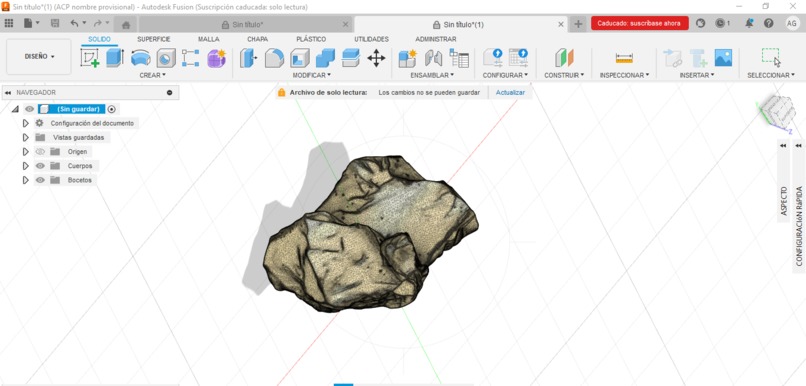
3D model of the rock
-
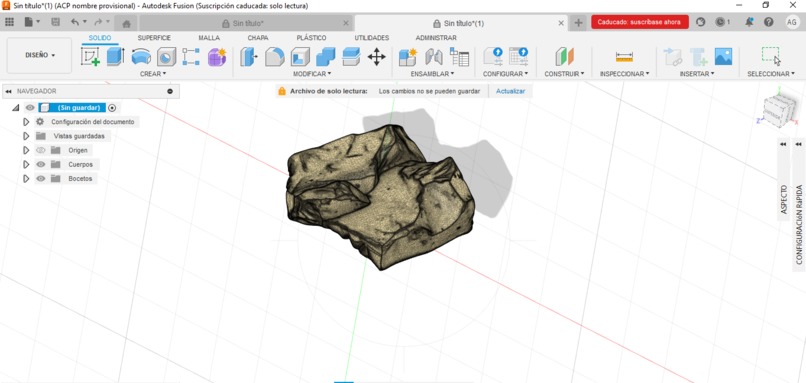
3D model 1 of the rock


Inspiration
This project was born from direct experience with nature. As members of a mountain hiking group, we spend a significant amount of time exploring forests and natural areas. During these routes, we observed that many aspects of environmental monitoring, safety, and conservation could be improved using technology in ways that would benefit both people and the ecosystem without disturbing it. This firsthand connection with nature inspired us to design a solution that works with the environment, not against it.
What it does
The project consists of a smart device designed in the shape of a stone, allowing it to blend seamlessly into its surroundings without altering the behavior of local fauna or damaging flora. These “smart stones” collect environmental data such as temperature, air quality, soil quality, water quality, light levels, and ambient sound. The collected data is analyzed to enable early wildfire detection, continuous monitoring of forest health, and real-time assessment of environmental conditions such as water stress and air quality distribution.
Thanks to sound detection, the system can also identify abnormal human activity, including illegal hunting, unauthorized logging, or the use of vehicles in protected areas. All stones are connected to a centralized application that provides open access to the data for educational, research, and commercial purposes. In addition, the system can act as a safety tool for hikers: each stone includes an emergency button that, when pressed, sends an alert to emergency services, helping people who are injured, lost, or without mobile connectivity in remote areas
How we built it
We have developed a functional prototype that demonstrates the core capabilities of the system. Multiple sensors collect environmental data and send it to an Arduino microcontroller, which transmits the information to a processing program. This software interprets the data using predefined logic. For example, to assess wildfire risk, the system evaluates whether the temperature exceeds 30°C, air humidity drops below 30%, and wind speed exceeds 30 km/h. When all three conditions are met simultaneously, the system triggers a fire alert.
The processed data is then sent to a provisional web platform that we have developed. This platform displays the information through interactive graphs and maps and clearly highlights any alerts, allowing for quick understanding and decision-making.
At the core of the prototype is an Arduino UNO R3, which acts as the main microcontroller, reading data from the sensors and transmitting it to a computer via USB. Environmental sensing is handled by a DHT11 sensor for temperature and air humidity, a photoresistor (LDR) to measure ambient light levels, and a sound sensor used to detect environmental noise and unusual activity. Together, these sensors provide a reliable snapshot of the surrounding environment.
The system includes a physical emergency push button that allows users to manually send an emergency signal. This signal is recorded and transmitted alongside the environmental data. A LED indicator provides visual feedback, confirming that the system is powered and actively sending data. Appropriate resistors are used to ensure stable and safe operation of all components.
The prototype is assembled on a breadboard, allowing for flexible and solder-free testing. All components are connected using Dupont jumper wires. The Arduino is powered via a USB cable, which also enables serial communication with the computer for data transmission.
The Arduino is programmed using the Arduino IDE. Data is then processed and the incoming information automatically stores it in a CSV file. This file contains time-stamped records of temperature, humidity, light level, sound level, and emergency status.
Challenges we ran into
One of the first challenges was defining an idea that was genuinely useful, original, and environmentally beneficial. Once the concept was clear, we faced several technical limitations. A key challenge was the lack of sufficiently powerful electronic components, as our goal is to achieve high-quality measurements over a wide area. For example, we currently do not have access to an air quality sensor module, nor to wireless communication modules such as Bluetooth.
However, the most significant challenge has been integrating the collected data with the web platform and defining how this information should be processed, visualized, and presented in a meaningful way. Since our academic backgrounds are not strongly focused on programming, the software side of the project, which represents a major portion of the system, required a steep learning curve. Overcoming this gap demanded extensive self-learning, teamwork, and problem-solving from all members of the team.
Also, Driade was born under the principle of eco-design, so the shell needs to be designed using biodegradable materials or recycled polymers with natural textures.
Accomplishments that we're proud of
Despite these challenges, we successfully developed a functional prototype capable of collecting real environmental data, including temperature, humidity, light intensity, and sound levels. We also created a data-processing program that interprets these measurements to assess wildfire risk and generate alerts when critical conditions are met.
In addition, we designed and implemented a web platform that transforms raw data into meaningful visual information. The platform displays environmental data on maps and generates graphs that allow users to easily understand patterns, trends, and potential risks, demonstrating the practical value of the system.
What we learned
Throughout the project, we gained significant knowledge in programming, particularly in Python and C++, as well as in basic web development and data visualization. We also developed a strong understanding of electronic components and sensors, learning how they function and how they can be applied to real-world environmental problems.
Beyond the technical skills, we learned how wildfires can be predicted, which parameters define water stress in vegetation, and how air quality is measured and interpreted. This interdisciplinary learning experience strengthened both our technical and environmental awareness.
What's next for Driade
In the future, our goal is to turn Driade into a professional, "set-and-forget" infrastructure. We will focus on three key areas:
First, we will improve connectivity and reliability. We plan to implement long-range, low-power communication technology so the stones can send data and emergency alerts from deep wilderness areas without any mobile signal. Crucially, we will add a self-diagnosis system. This allows each device to monitor its own health and battery levels, automatically notifying us if it needs maintenance. This prevents unexpected failures and reduces the cost of manual inspections.
Next, we will enhance our data and tools. We will add more advanced sensors to monitor air quality and improve our AI to better distinguish between natural sounds and illegal activity, like chainsaws or vehicles. We will also launch a dedicated mobile app so that emergency services and park authorities can receive and manage alerts instantly on their phones.
Finally, we aim for total autonomy. By using solar energy harvesting and ultra-efficient hardware, the stones will be able to run indefinitely on their own. This will transform Driade into a reliable, self-sustaining safety network that is easy to scale, protecting both large-scale industrial assets and the people who visit remote natural areas.


Log in or sign up for Devpost to join the conversation.