-
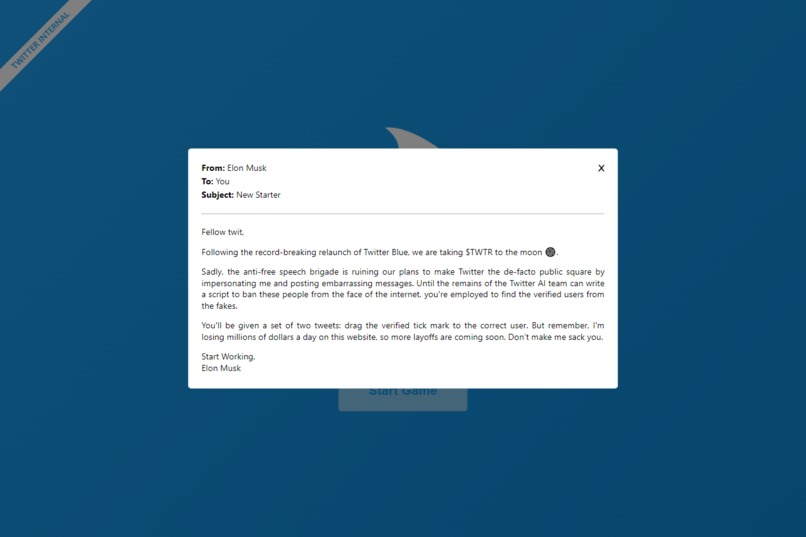
The email from your new CEO.
-

The leaderboard shown after the game ends.
-
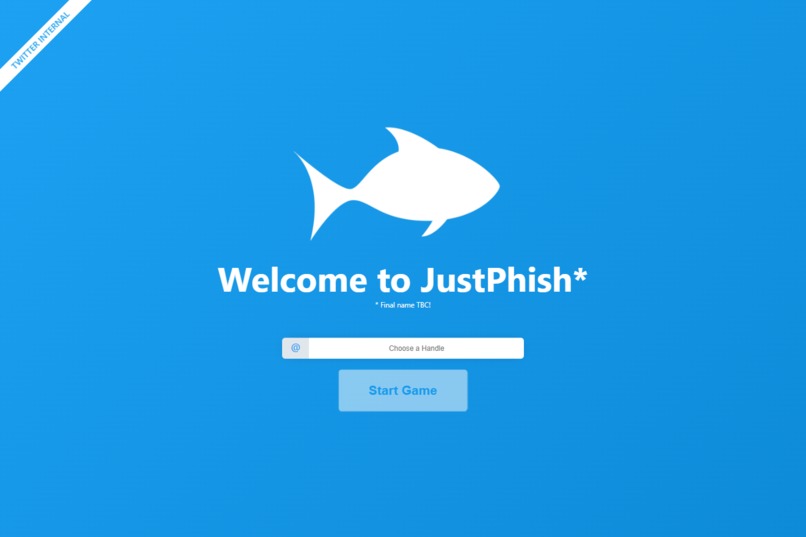
The start page.
-
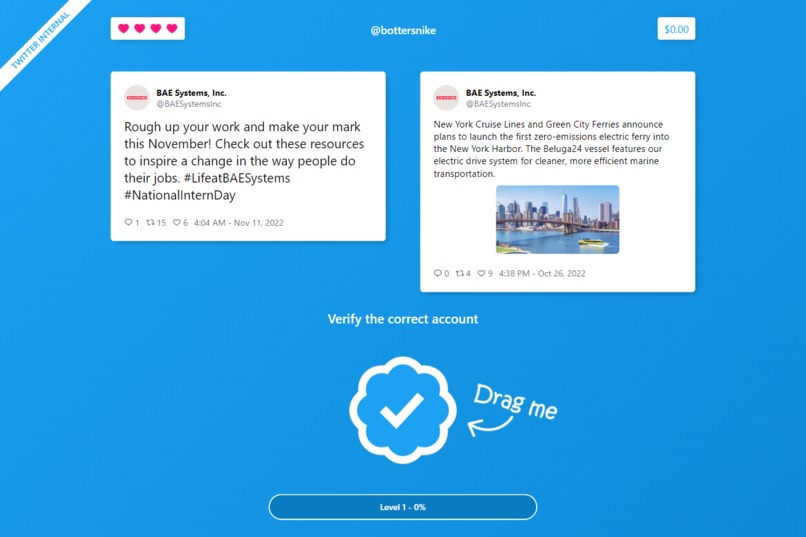
The gameplay screen.


Inspiration
We wanted to do something relevant to current affairs: something light-hearted but also demonstrating the dangers of misinformation and the power of AI.
What it does
We've created a game which challenges the player to determine the difference between real and AI-generated tweets. The player acts as a new Twitter employee working in the content moderation team, who has been tasked by the new CEO to determine which tweets are fake and which are real. If you make too many mistakes, you'll lose your job. If you do well, you'll earn Twitter lots of money through the Twitter Blue subscription service!
How we built it
We created a Python backend using FastAPI following RESTful principles. We used Hugging Face Transformer BERT models, fine tuned with tweet history, to compile a list of fake tweets. Alongside this, images were generated for the fake tweets using Midjourney AI (stable diffusion). This data was fed into a React TypeScript front end, designed with pure SCSS.
Challenges we ran into
Finding tweets that were suitable and convincing enough to be used in the game was a challenge for us. We were also hoping to add more fun features, such as occasional confetti when the player succeeds.
Accomplishments that we're proud of
The project is very polished and is fun to play! We've included several animations and easter eggs within the game, and other participants who tested it for us enjoyed the experience.
What we learned
We ended up with a larger than expected collection of tweets (127+), which meant that our use of a JSON file quickly became tedious and difficult to manage. In hindsight, we should have implemented a database.
What's next for JustPhish
We would like to extend the platform to support mobile and tablet devices. We would also like to add additional features/gamemodes. Finally, we would like to use more fine-tuned models.
Built With
- ai
- bert
- fastapi
- json
- jupyter
- python
- react
- scss
- typescript


Log in or sign up for Devpost to join the conversation.