-
-
Project
-
Mobile App


Inspiration
We were inspired to build HelmShield after witnessing several real-life accidents, including incidents involving our own relatives. Many riders lose their lives not due to the crash itself, but because timely help never reaches them. We wanted a simple, low-cost, and reliable solution that could automatically alert someone the moment an accident happens—without depending on the rider or expensive commercial devices.
What it does
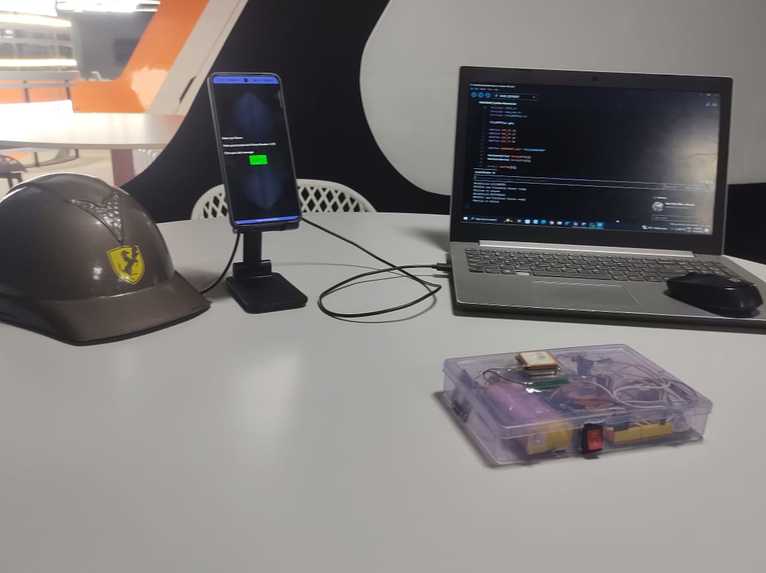
HelmShield is a smart helmet–mounted accident detection and emergency alert system. It detects crashes using an accelerometer, gyroscope, and vibration sensor. When a crash occurs, it sends an instant wireless alert to a gateway device, which then sends the rider’s GPS location to their emergency contact via SMS and performs an automatic call. A cancel button prevents false alarms.
How we built it
We built HelmShield using:
- A XIAO ESP32 sensing node with an MPU6050 and vibration sensor
- An ESP32 “BharatPi Gateway” with SIM800L GSM + GPS
- ESP-NOW for low-latency wireless alerts
- AT commands for SMS + call automation
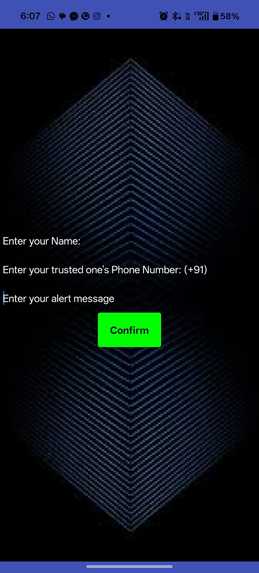
- Custom accident-detection logic merging Δacceleration, gyro spikes, and vibration checks We also built the mobile app for emergency contact configuration and fallback alerts.
Challenges we ran into
We faced issues with GSM power spikes, tuning the MPU6050 thresholds, ESP-NOW packet loss, GPS fix delays, and unexpected resets caused by unstable wiring during early prototyping. Software-side challenges included ensuring retries, ACK logic, and preventing false alarms in normal riding conditions.
Accomplishments that we're proud of
We designed a realistic, low-cost system that works entirely offline, communicates instantly, and requires no internet. We created reliable alert packets, robust detection logic, and GPS-SMS integration. We also tested the messaging system and validated the end-to-end workflow even before all components arrived.
What we learned
We learned how to design real-world IoT systems that prioritize reliability, power stability, wireless robustness, and emergency communication. We also learned how to tune sensor data effectively and build fallback mechanisms to prevent failure during critical moments.
What’s next for *HelmShield (Junior-Category 1)*
We plan to finish hardware integration once all components arrive, add ADXL345/GY45 support, improve false-alert filtering, enhance app UI, add rider health monitoring, and develop a compact PCB for real-world deployment. Our long-term goal is to create a production-ready, affordable helmet safety system for all two-wheeler riders.

Log in or sign up for Devpost to join the conversation.