-
-
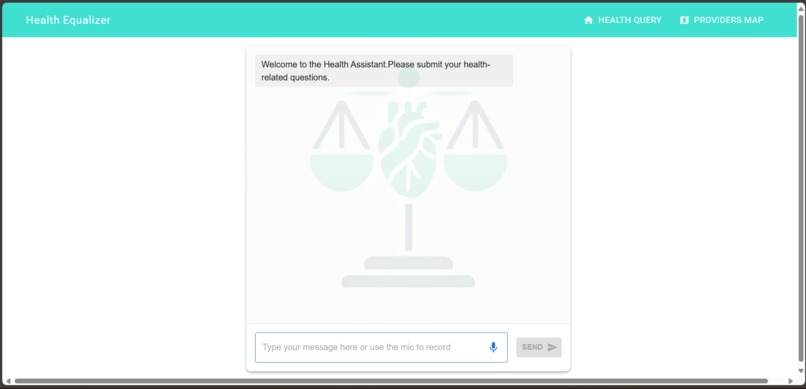
User can talk about their query to AI on this page.
-
Initial greeting from AI.
-

Our application provides a speech to text facility to the user. So, user can input their message in voice form.
-
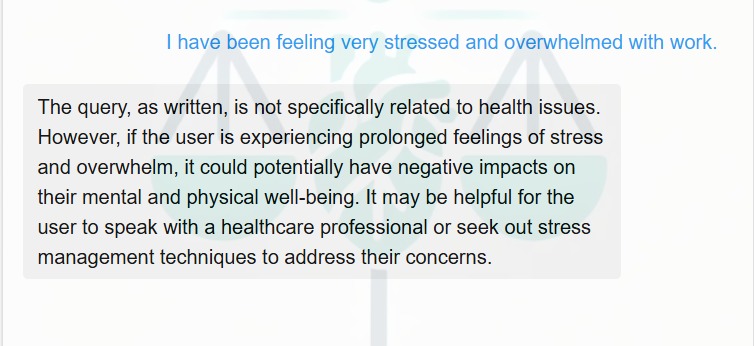
We have the written system prompt in the way which makes AI to provide accurate response to the user's queries.
-
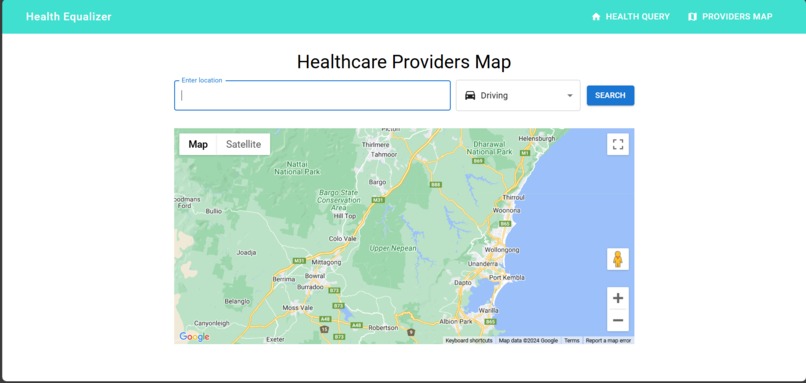
We implemented google map Api, from which user can look for a perfect hospital according their needs.
-
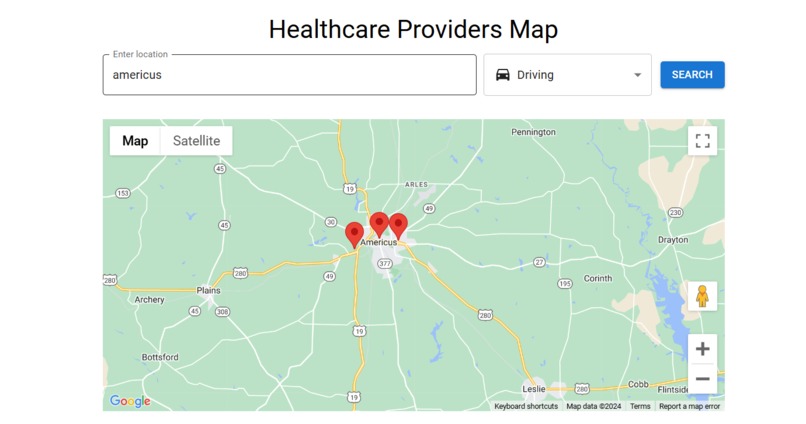
Result for search input "Americus".
-
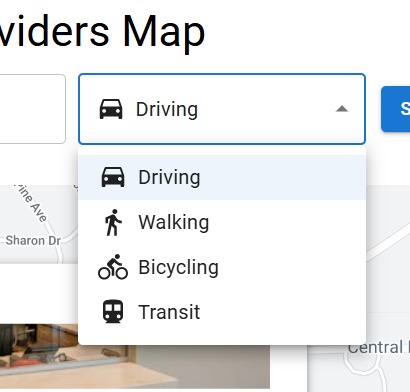
User can choose their specific transport system.
-
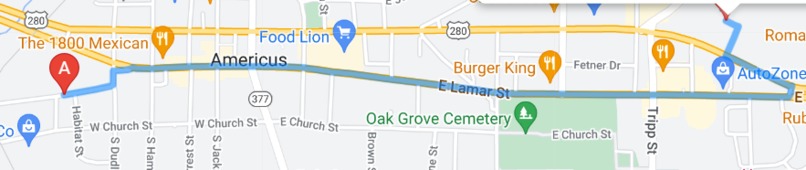
Path from user to user's selected hospital.
-
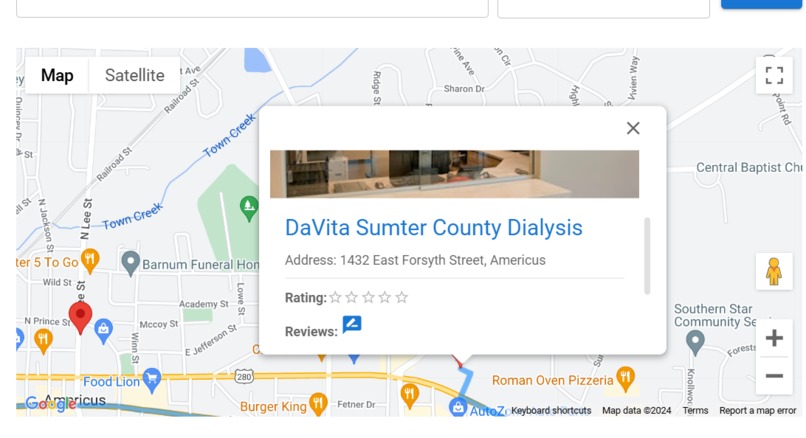
Info-content of selected hospital.
-
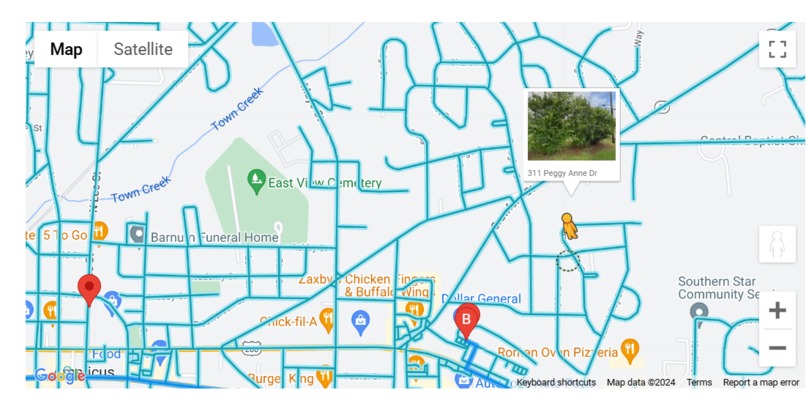
User can browse their street view images.
-
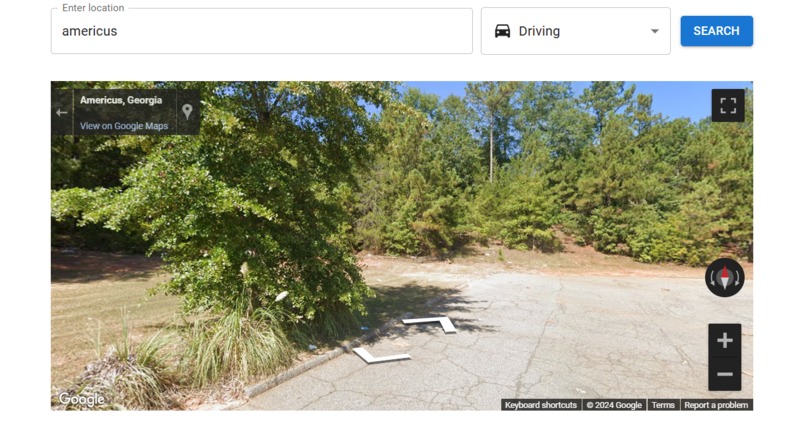
Street view images.
-
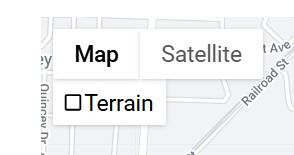
User can choose between "satellite" view or "regular" .
-
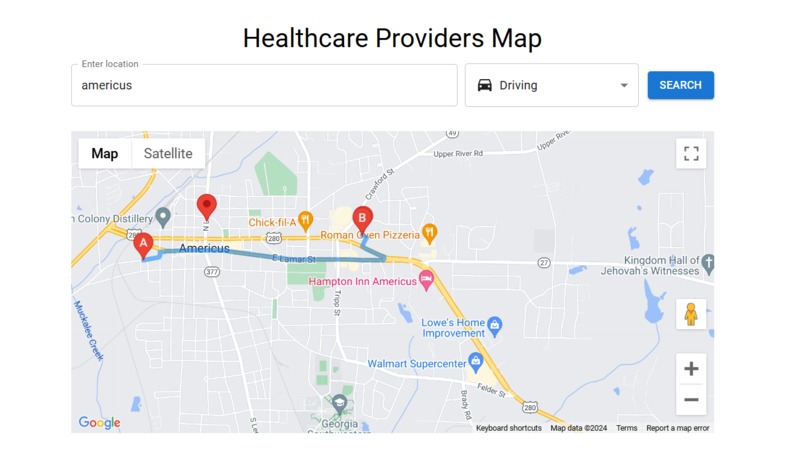
Normal view.
-
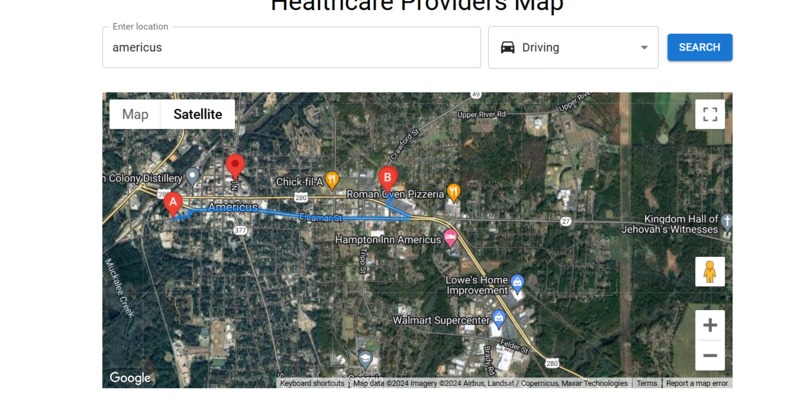
Satellite view.
-

Navigation bar.


Inspiration
The Health Equalizer project was inspired by the pressing need to address social inequalities in healthcare. By leveraging AI technologies, the project aims to enhance access to medical resources for underserved communities, ensuring that everyone, regardless of their geographical location or economic status, can receive tailored healthcare information and services.
What it does
Health Equalizer is a comprehensive platform that utilizes AI to connect users with healthcare providers and emergency services through personalized health queries, and a healthcare provider locator. It helps users quickly access crucial medical information and support, thereby improving healthcare outcomes and fostering community engagement.
How we built it
Our team developed Health Equalizer using a combination of Python with Flask for backend services, React.js for a reactive and dynamic frontend, and MongoDB for database management (planned but did not have enough time). The platform integrates the OpenAI API for processing natural language queries and Google Maps API for locating healthcare services. System development was managed through a series of GitHub issues, ensuring structured progress and effective collaboration among team members.
Backend: Flask was chosen to manage backend operations, including API routing and middleware functionalities, due to its lightweight and unopinionated structure.
Frontend: React was chosen for its efficiency in building interactive user interfaces, with Create React App used to optimize the development experience and MUI (Material-UI) to design a modern, user-friendly interface.
AI Services: Azure Speech Services enable users to interact with the platform using their voice, improving accessibility and user experience. Speech-to-text allowed users to input requests through speech.
Mapping Services: The Google Maps API was integrated to provide users with a reliable and accurate locator for healthcare providers and emergency services, enhancing the platform's utility and user convenience.
Challenges we ran into
We encountered challenges in integrating multiple APIs seamlessly, particularly ensuring that the OpenAI API and Google Maps APIs worked flawlessly within the app's ecosystem. Additionally, optimizing the mobile-responsive design and maintaining system performance under potential high user load presented significant hurdles.
Accomplishments that we're proud of
We are proud of successfully creating a functional prototype that not only meets the technical requirements but also significantly impacts healthcare accessibility. Our system demonstrates a seamless integration of AI and geolocation technologies, a robust community forum for user engagement, and a quick-access feature for emergency services, all of which work cohesively to support underserved populations.
What we learned
Throughout the course of the hackathon, we learned about the complexities of integrating AI with traditional healthcare systems and the importance of user-centric design in healthcare applications. We gained insights into the technical aspects of API integration and the practical challenges of deploying AI solutions in real-world scenarios that directly impact users' lives.
What's next for Health Equalizer
Advanced Diagnostics: Using AI techniques such as RAG Integrated more sophisticated AI models to provide diagnostic support based on symptoms and user medical history.
Healthcare Networking Platform: Envisioning a specialized platform that functions similarly to LinkedIn, we plan to create a dynamic space where patients can connect directly with healthcare professionals. This network will facilitate not just medical consultations but also long-term healthcare management and professional advice, enhancing personalized care.
Community-Forum: Develop features for the community forum where users can post, comment, and interact.
Community-Driven Support: Taking a leaf out of Reddit’s book, we aim to enhance our community forum to become a more robust, interactive space where users can engage in deeper discussions, share experiences, and support each other. This will foster a rich community of informed individuals who are actively involved in managing their health in a collaborative environment.
These enhancements will make "Health Equalizer" not just a tool for accessing healthcare but a comprehensive ecosystem where patients and doctors can interact, share knowledge, and build a healthier community together.
Built With
- azure
- flask
- googl-map
- google-cloud
- mui
- openai
- python
- react



Log in or sign up for Devpost to join the conversation.