-
-
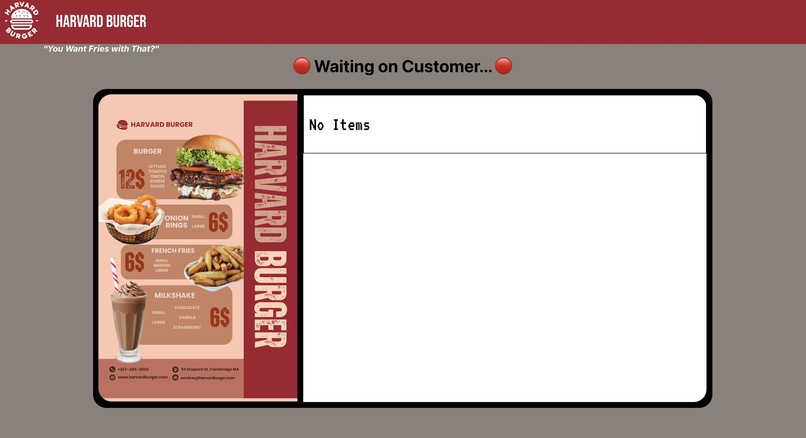
Order Page
-
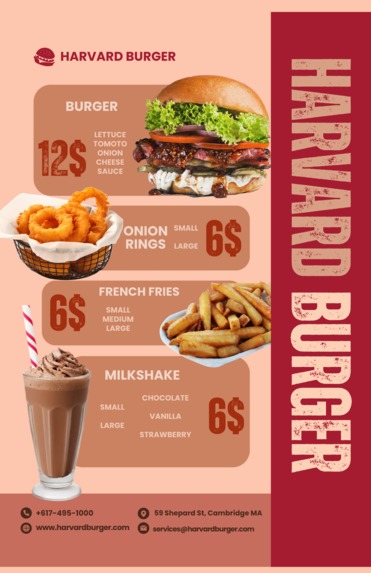
Harvard Burger Menu


Inspiration
Partially inspired by the Smart Cities track, we wanted our app to have the direct utility of ordering food, while still being fun to interact with. We aimed to combine convenience with entertainment, making the experience more enjoyable than your typical drive-through order.
What it does
You interact using only your voice. The app automatically detects when you start and stop talking, uses AI to transcribe what you say, figures out the food items (with modifications) you want to order, and adds them to your current order. It even handles details like size and flavor preferences. The AI then generates text-to-speech audio, which is played back to confirm your order in a humorous, engaging way. There is absolutely zero set-up or management necessary, as the program will completely ignore all background noises and conversation. Even then, it will still take your order with staggering precision.
How we built it
The frontend of the app is built with React and TypeScript, while the backend uses Flask and Python. We containerized the app using Docker and deployed it using Defang. The design of the menu is also done in Canva with a dash of Harvard colors.
Challenges we ran into
One major challenge was getting the different parts of the app—frontend, backend, and AI—to communicate effectively. From media file conversions to AI prompt engineering, we worked through each of the problems together. We struggled particularly with maintaining smooth communication once the app was deployed. Additionally, fine-tuning the AI to accurately extract order information from voice inputs while keeping the interaction natural was a big hurdle.
Accomplishments that we're proud of
We're proud of building a fully functioning product that successfully integrates all the features we envisioned. We also managed to deploy the app, which was a huge achievement given the complexity of the project. Completing our initial feature set within the hackathon timeframe was a key success for us. Trying to work with Python data type was difficult to manage, and we were proud to navigate around that. We are also extremely proud to meet a bunch of new people and tackle new challenges that we were not previously comfortable with.
What we learned
We honed our skills in React, TypeScript, Flask, and Python, especially in how to make these technologies work together. We also learned how to containerize and deploy applications using Docker and Docker Compose, as well as how to use Defang for cloud deployment.
What's next for Harvard Burger
Moving forward, we want to add a business-facing interface, where restaurant staff would be able to view and fulfill customer orders. There will also be individual kiosk devices to handle order inputs. These features would allow Harvard Burger to move from a demo to a fully functional app that restaurants could actually use. Lastly, we can sell the product by designing marketing strategies for fast food chains.
Built With
- canva
- css
- defang
- docker
- ffmpeg
- flask
- html
- javascript
- openai
- python
- react
- typescript


Log in or sign up for Devpost to join the conversation.