-
-
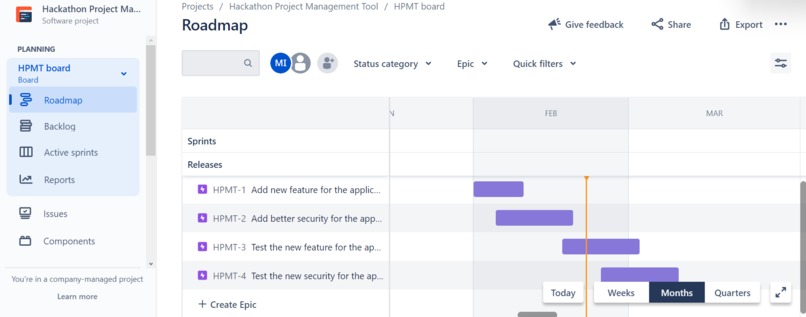
The Hackathon Project Management Tool
-
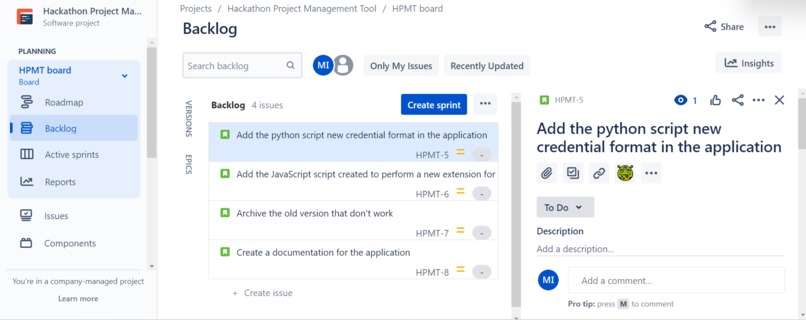
The Hackathon Project Management Tool (2)
-
Cover art concept


Inspiration
A hackathon project management tool could simplify the process of organizing and tracking the progress of a project during a hackathon by providing a centralized platform for teams to collaborate, communicate, and stay on track. Features such as task management, real-time collaboration, version control, and presentation building could help teams stay focused and maximize their time, ultimately leading to a better overall hackathon experience.
What it does
The hackathon project management tool is designed to help hackathon participants streamline their project by providing a centralized platform for team collaboration, task management, real-time communication, version control, and presentation building. The goal of this tool is to simplify the process of organizing and tracking the progress of a project, allowing teams to focus on building and presenting their ideas.
How we built it
- 1.) Define the tool's features and requirements
- 2.) Research and gather inspiration from existing project management tools
- 3.) Plan and design a user-friendly interface
- 4.) Develop the platform using a programming language and framework
- 5.) Test and iterate based on user feedback
- 6.) Launch and promote the tool to potential users.
Challenges we ran into
User adoption: Convincing hackathon participants to use the tool and integrate it into their workflow.
Technical complexity: Ensuring the platform is reliable and user-friendly, while also offering the necessary features and integrations.
Integration with other tools: Making sure the platform can integrate with other tools and platforms that hackathon participants may be using.
Scalability: Ensuring the platform can handle an increasing number of users and projects.
Data privacy and security: Ensuring the platform is secure and protects user data.
User feedback and continuous improvement: Incorporating user feedback to continuously improve the platform and meet the evolving needs of hackathon participants.
Accomplishments that we're proud of
- 1.)Improved hackathon experience for participants
- 2.)High adoption rate among participants
- 3.)Positive user feedback
- 4.)Contribution to the tech community
- 5.)Continuous improvement based on user feedback. These accomplishments demonstrate the tool's value to the hackathon community, the development team's commitment to delivering a high-quality product, and the impact the tool has had on enhancing the hackathon experience.
What we learned
Building a hackathon project management tool can provide several learning opportunities, including:
Project management: The development team will have an opportunity to apply project management principles and techniques to deliver the tool.
Technical skills: The team will learn about software development and programming, including designing, coding, testing, and deploying a software solution.
User experience design: The team will learn about creating a user-friendly interface and incorporating user feedback to continuously improve the tool.
Collaboration: Working in a team to deliver a complex software project can help the development team learn about collaboration, communication, and problem-solving skills.
Market knowledge: The team will gain an understanding of the needs and challenges faced by hackathon participants and how to develop a tool that meets their needs.
Building a hackathon project management tool can provide a valuable learning experience that can help the development team grow their technical, collaboration, and project management skills.
What's next for Hackathon Project Management Tool
Once a hackathon project management tool is launched, there are several steps that can be taken to continue its growth and success:
User feedback and continuous improvement: Incorporating user feedback to continuously improve the tool and meet the evolving needs of hackathon participants.
Integrations: Adding integrations with other tools and platforms used by hackathon participants to streamline their workflow.
Marketing and promotion: Promoting the tool to a wider audience and reaching out to new hackathons and participants to increase adoption.
Monetization: Exploring monetization options such as offering paid premium features or services to help sustain the tool's development and growth.
Expansion: Expanding the tool's capabilities and features to meet the needs of a wider range of hackathon participants.
By continuously improving the tool, expanding its reach, and adding new features and integrations, the development team can ensure the hackathon project management tool remains relevant and valuable to the hackathon community.



Log in or sign up for Devpost to join the conversation.