-
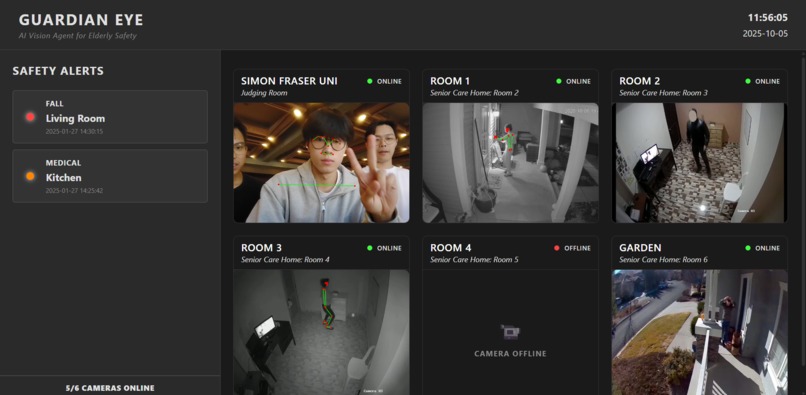
Dashboard
-
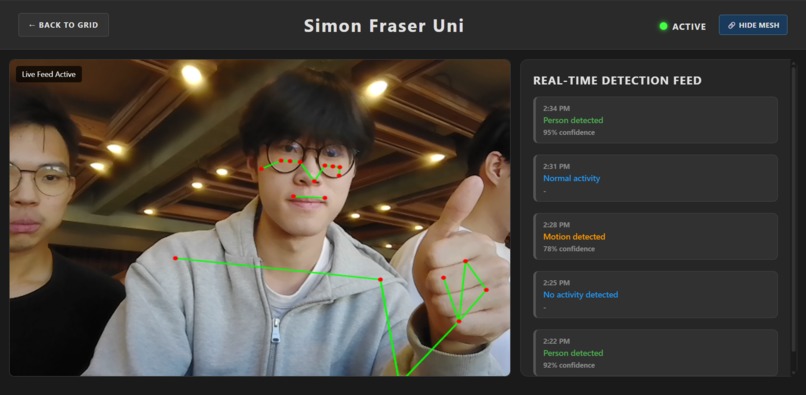
Camera
-
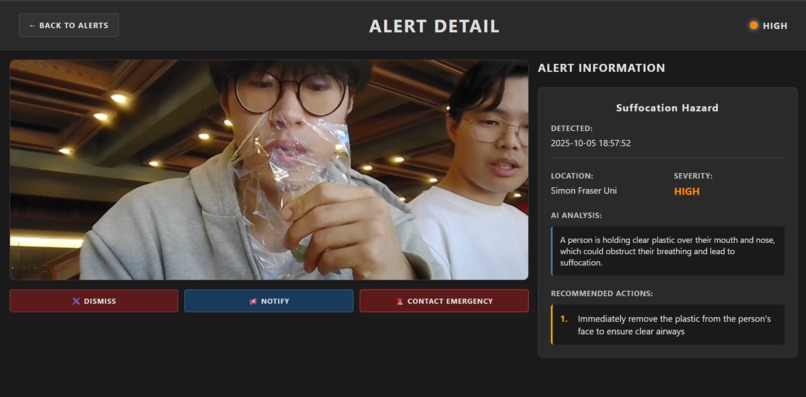
Alert Details


Inspiration
Out of the four of us, two have grandmothers recently diagnosed with Alzheimer’s, and three have experienced incidents where they fell at home. Luckily, they were found and sent to the hospital right away, but not everyone is as fortunate.
Falling is the number one cause of unintentional injury-related deaths among the elderly. Studies show that one in four seniors falls at least once every year, and in many cases, help arrives too late. When it comes to elderly care, even a few seconds can mean the difference between life and death.
That’s what inspired GuardianEye, an AI system designed to protect our loved ones when no one else is watching.
What it does
GuardianEye – AI Vision Agent for Elderly Safety The New Guardian for Real-Time Emergency Response
GuardianEye is a real-time monitoring dashboard powered by AI and computer vision. It connects to live camera feeds (such as phone or body cams) and continuously analyzes potential risks such as falls, fires or smoke, and unusual inactivity or distress.
The dashboard displays live room updates with hazard detection indicators, allowing caregivers or family members to act immediately. Its clean and intuitive UI ensures that critical information is visible at a glance.
How we built it
The frontend was built using React (TypeScript) with a responsive design system based on CSS Flexbox and Grid. The backend (FastAPI/Python) provides: • Camera feed endpoints for real-time video • Event detection APIs powered by YOLOv8, OpenCV, and MediaPipe • Integrated Gemini via Strands Agents and MCP for agentic analysis • Built specialized models for common hazard cases (eg. falling) • Camera status monitoring for device reliability • Leveraged Twilio API for instant alert messages via SMS
Technologies Used React, CSS, HTML, TypeScript, FastAPI, Python, YOLOv8, OpenCV, MediaPipe, Gemini, Strands Agents, Model Context Protocol, Figma
Challenges we ran into
Reliability and cost were some of the prominent issues we faced. Ensuring that the models produced robust output for image classification required rigorous trial and error testing. Additionally, repeated API calls to external services posed credit expense as a problem we need to address if we were to scale.
Accomplishments that we're proud of
Learning new frameworks and tools together under time pressure. Designing a clean, functional dashboard that is both technical and engaging. Developing a working prototype that demonstrates real-time event tracking. Building a meaningful project inspired by our personal experiences.
What we learned
We learned how to design systems that balance technical accuracy with emotional impact. We discovered how to handle real-time data streams across multiple APIs. We gained a deeper understanding of how AI can serve accessibility and social good.
What's next for GuardianEye
- Integrating with emergency services and third-party systems for faster response times.
- Expanding to mobile and wearable platforms for better accessibility.
- Train more specialized models to handle common hazard cases.
- Running pilot tests with real families and elderly care centers to gather feedback and improve usability.


Log in or sign up for Devpost to join the conversation.