-
-
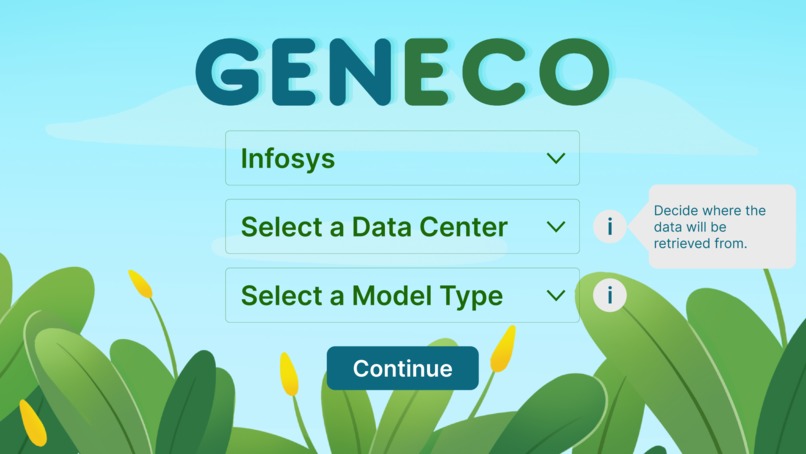
Home Page
-
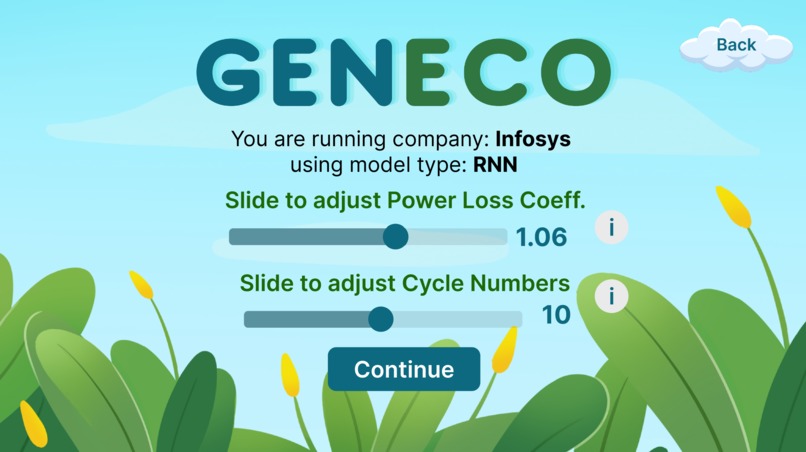
Second Home Page
-
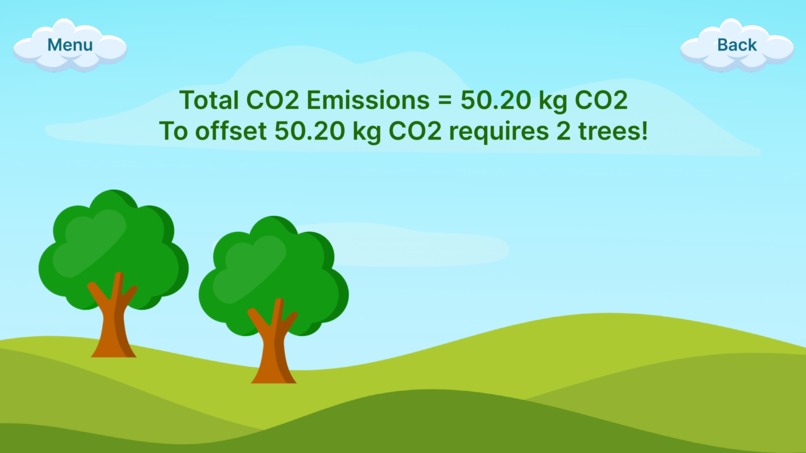
Result Page
-
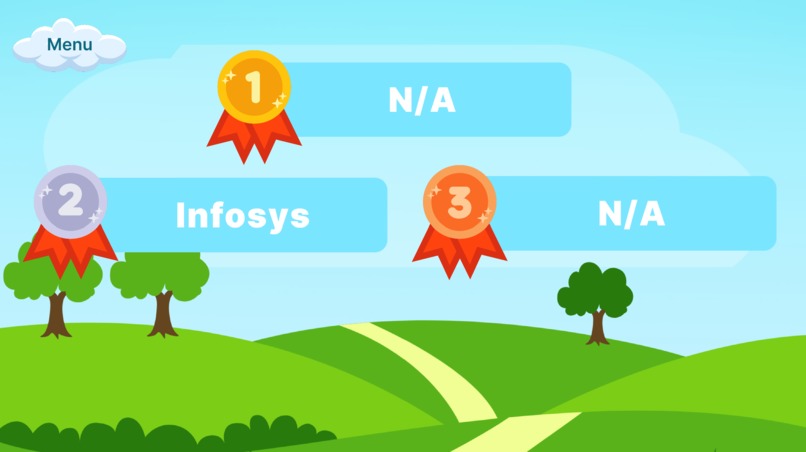
Leaderboard Page
-
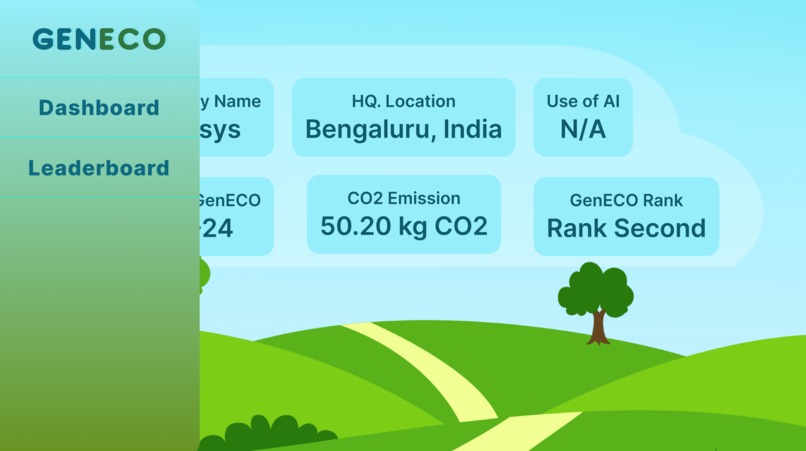
Dashboard Page + Side Navigation Bar
-
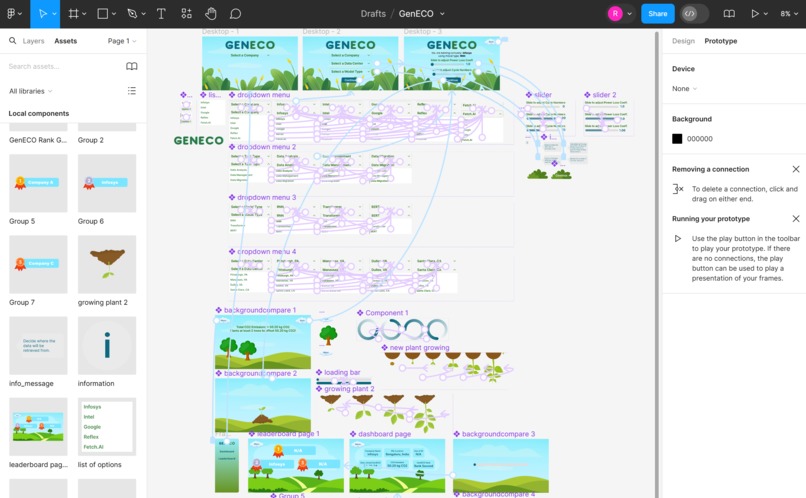
Outline of User Flow via Figma


Inspiration
GenECO emerged from the vision to integrate AI with ESG goals, and responsible digital transformation with a minimal environmental footprint. The name "GenECO" shows a vision of a more eco-friendly "Gen AI" and represents the next human generation we aim to be!
What it does
GenECO calculates and optimizes the carbon footprint of AI and cloud operations, guiding businesses toward eco-friendly practices.
How we built it
Our journey began with a critical examination of the aspects often overlooked in AI practices, especially in light of the surge in AI adoption over recent years. A key focus was the sustainability concerns associated with these technologies. To address this, we delved into the seminal work "Energy and Carbon Considerations of Fine-Tuning BERT," an insightful paper that scrutinizes the energy usage and carbon footprint of NLP models. Our goal was to gain a deep understanding of the sources of energy consumption and the variations in carbon footprint across different AI-driven tasks. In doing so, we also aimed to comprehend the intricacies of the optimization process.
Data Collection
- Gather data on hardware specifications, cloud configurations, and operational patterns from Infosys’ use of AWS for running SAP applications, particularly the AWS services involved (e.g., EC2, Redshift).
- Collect usage statistics that could influence energy consumption: compute hours, storage used, and network activity.
- Modeling Carbon Footprint using the empirical data and findings from the paper on the energy and carbon considerations of fine-tuning BERT models. Apply these findings to estimate the energy consumption and carbon emissions of fine-tuning AI models used at Infosys.
- Sentiment analysis like Infosys did in the AWS paper.
Energy and Carbon Calculation:
- Calculate energy consumption using the detailed methodologies from the EMNLP paper, such as measuring kWh consumption, adjusting for power loss, and translating energy use into carbon emissions based on the specific energy mix of the data centers used by Infosys on AWS.
- Using tools like CodeCarbon or cloud-specific tools provided by AWS to estimate and track carbon emissions.
Convert CO2 Emission to Trees:
- To summarise the various studies, it can be concluded that annual CO2 offsetting ranges from 21.77 kg CO2/tree to 31.5 kg CO2/tree. This means that one tonne of CO2 can be offset by 31 to 46 trees. link
Integration and Simulation:
- Develop a simulation model that integrates collected data, energy estimates, and carbon calculations.
- This is so that we can test the available strategies for reducing carbon footprint, like optimizing data processing times, selecting more efficient hardware, and switching to renewable energy sources within AWS.
Reporting and Decision Support: Prepare reports that provide insights into the carbon footprint of current AI operations. This could be done using plots charts, and data visualization.
Develop recommendations for corporates to improve the sustainability of AI operations
- Drawing from both the specific data on the company’s operations and general recommendations from the EMNLP findings.
Accomplishments that we're proud of
We use Figma for the first time to create a complete user flow demonstrating how our project works, integrating user-friendly and eye-catching elements. The animated and casual style we designed for our project allows non-business people to use and learn about the effort each company takes to reduce energy consumption by integrating AI into their business models.
What we learned
We learned about the potential of AI as a force for good, the subtleties of carbon accounting in digital operations, and the nuances of implementing ESG initiatives in a corporate context. We learned to utilize Figma to design a functional user flow under time constraints.
What's next for GenECO
Looking ahead, GenECO is poised for expansion. We aim to enhance the precision of our simulation model and extend our reach to include a wider array of tasks including data, engineering, and marketing. We're excited about integrating real-time analytics, enabling dynamic ESG reporting, and developing a predictive engine that can anticipate and mitigate potential environmental and social risks.
Built With
- figma
- javascript
- nextjs
- python


Log in or sign up for Devpost to join the conversation.