-
-
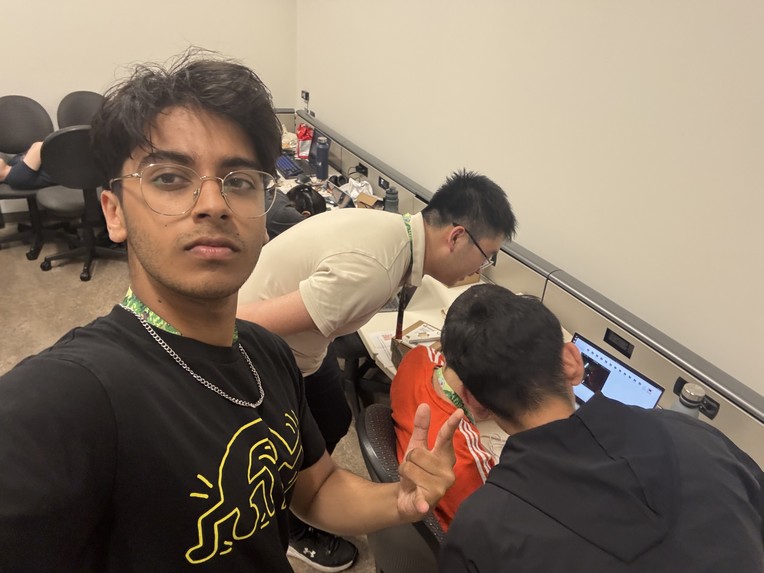
selfie with the team (i was the only one not locked in)
-
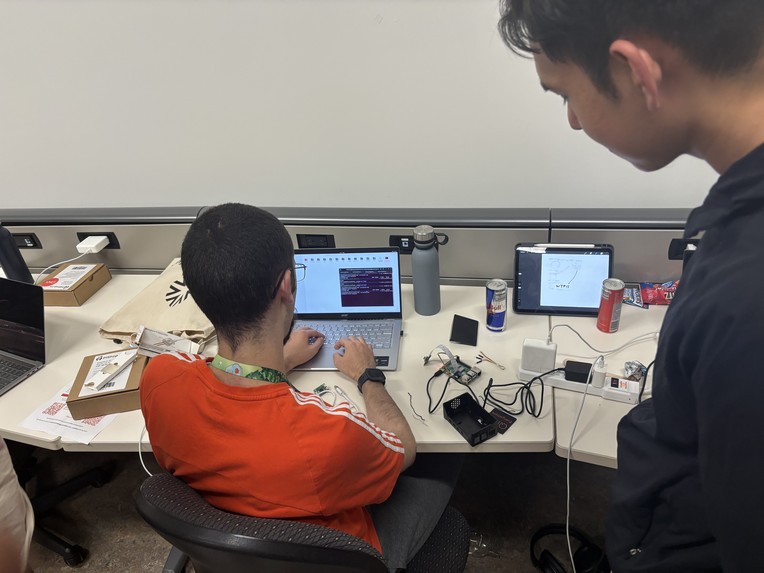
when you realize you got a huge bottleneck but lunch is lowkey in 5 mins
-
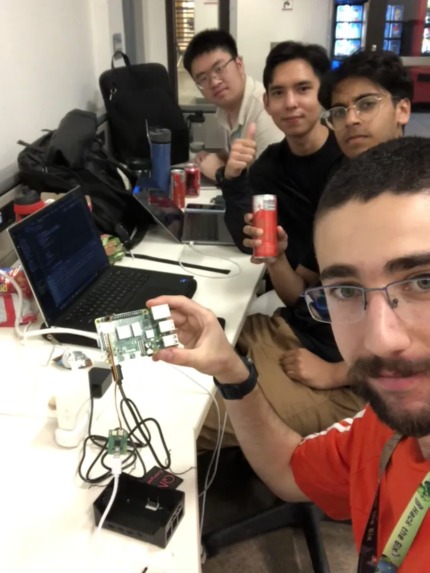
redbull gave us wings
-
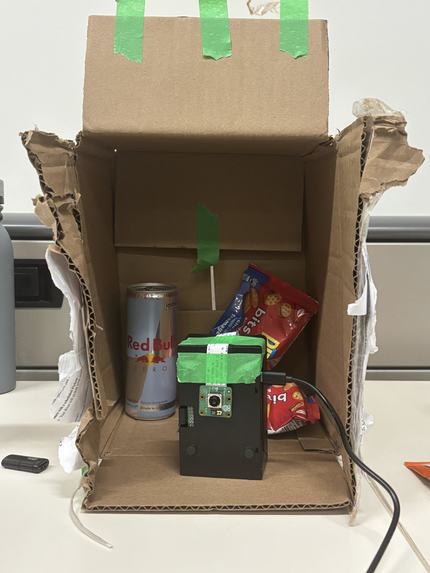
behold the fridge.


FridgeMind
Inspiration
When we first sat down to brainstorm hackathon ideas, like most people, we somehow ended up talking about food, specifically, how packed our parents’ fridges always are. We joked about how things go bad before anyone even remembers buying them, and then it hit us: this isn’t just something that happens in our homes. It’s everywhere. In Canada, over 58% of all food produced ends up being wasted, and the average household throws away more than $1,300 worth of food every year. That’s not only wasteful, it’s expensive, and it’s a huge environmental issue too, contributing 56 million tonnes of CO₂ emissions annually.
That casual conversation turned into something bigger. We realized this was a problem worth solving.
Now, discussing the idea got us excited about the potential, but all of us, as programmers, believe that technology should be used for more than just novelty, it should solve real problems and make a whole bunch of people say “That saved me time and money!” That’s when we started thinking beyond our own experiences and looked toward the people closest to us. We realized that while we sometimes forget what’s in the fridge, for seniors, especially those with memory loss, dementia, or Alzheimer’s, this everyday issue becomes much more serious. It’s not just about waste anymore; it’s about safety, nutrition, and independence.
That realization pushed us to design a solution that’s not just smart, but also accessible, inclusive, and genuinely helpful. And just like that... the fridge, your favorite appliance in the kitchen, got a whole lot smarter thanks to FridgeMind.
🤖 What it does
FridgeMind transforms any ordinary fridge into a smart fridge, without the $2,500 price tag. Instead of replacing your appliance, we enhance it using a combo of computer vision, hardware and AI to give your fridge a brain.
Paired with a sleek mobile app, FridgeMind’s AI assistant keeps tabs on what’s inside, whether you're adding new items, checking your inventory, or asking “What’s expiring soon?” It tracks when each item was added and generates a smart, organized list of what needs to be used up.
But we didn’t stop there.
FridgeMind can also generate 1–3 personalized recipes based on your available ingredients, and it even ranks them by which foods expire soonest, helping you make meals that save time and reduce waste.
Craving strawberries? Trying to eat healthier? Want to stop wasting that lonely zucchini every week? FridgeMind’s got your back.
🛠️ How we built it
- 🧠 QNX + Raspberry Pi: A custom OS was built using QNX to run a lightweight web server and stream real-time footage from inside the fridge. Stable, real-time performance was key.
- 🔍 Computer Vision: We trained a custom YOLOv5 model on a hand-curated dataset of 300+ labeled food images. It can identify fruits, containers, condiments, and more.
- 📱 Frontend with Expo Go: We used React Native + Expo to build a mobile app that connects to the hardware and backend.
- 💬 Gemini + AssemblyAI: Our app uses Gemini’s LLM API to generate customized recipes, and AssemblyAI for both speech-to-text and text-to-speech, making the system hands-free and accessible for everyone.
🧗 Challenges we ran into
😴 Getting sleep.
Other than that…
Hreem
Integrating the backend with the frontend across Mac and Windows was tricky. As a Windows user, I had to adapt to a macOS-built backend, dealing with pathing, environment setup, and package management. It taught me a lot about cross-platform development and writing more portable code.
Leo
Data collection was no joke. Finding good, labeled fruit images took hours. We sourced from Kaggle and scraped where necessary. Maintaining consistency across images made us appreciate just how much time goes into good training data.
Malek
Building a custom OS using QNX from scratch, with no prior experience, was incredibly tough. I had to dive into documentation, configure networking, and manually set up dependencies. But seeing it all work in the end was deeply rewarding.
William
I had never worked with Expo before. Debugging on mobile, especially through Expo Go, introduced challenges I didn’t expect. But I learned fast, creating multiple endpoints and building the UI flow taught me a lot about mobile-first development.
As a team
With four of us on four different components (frontend, backend, hardware, ML), integrating everything was intense. Merge conflicts, broken endpoints, version mismatches, we’ve seen it all. But when everything finally connected, it was magic.
🏆 Accomplishments we’re proud of
Hreem
Designed the frontend in Figma and translated it into a working app, speech features included! Created a smooth user experience and linked it reliably with backend logic.
Leo
Got the model up and running way faster than expected. It gave the team early momentum and helped validate the project. It’s a win that reflects how much I’ve grown as a dev.
Malek
Built and deployed a working custom QNX system. I learned a lot from the mentors and ended up with something I never thought I’d be able to build in under 36 hours.
William
Developed the backend infrastructure that manages inventory data and dynamically tracks expiry dates based on when items are added to the fridge.
💡 What we learned
Working with five different operating systems gave us a new appreciation for how each system serves a purpose:
- 💻 macOS: Great for backend and command-line development. Smooth environment for scripting and APIs.
- 🪟 Windows: Fantastic for frontend/UI development and mobile testing, but required extra effort to integrate with Unix-like stacks.
- 🐧 Linux: Perfect for headless CLI work and quick experimentation. Ideal for backend testing and pipelines.
- 🧬 Ubuntu: Our go-to for ML training and package installation. Robust, flexible, and great for the model workflow.
- ⏱ QNX: The star of the show. It taught us what it means to build in a real-time, embedded, safety-critical environment. We now deeply respect OS architecture at a new level.
🔮 What’s next for FridgeMind
We’re redesigning FridgeMind for scalability across any fridge type, mini fridge, side-by-side, or industrial cooler. That means accounting for:
- Variable shelf heights
- Door layouts and lighting
- Different camera angles
- Broader object detection support
Want to see your fridge think for itself? 🧠🥕
FridgeMind is just getting started.


Log in or sign up for Devpost to join the conversation.