-
-
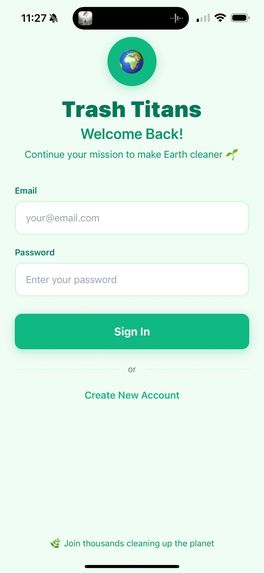
Sign-In Page
-
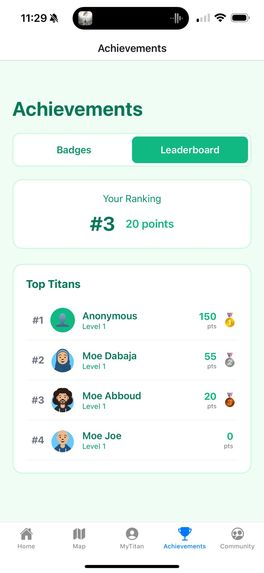
GreenPoints Leaderboard
-
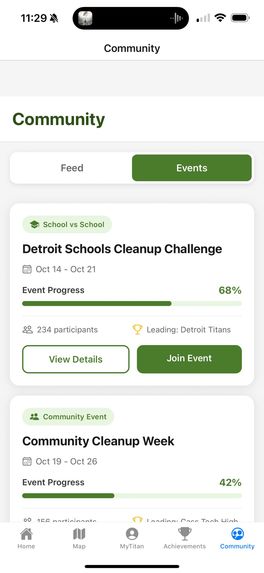
Friendly School Competition Event (*)
-
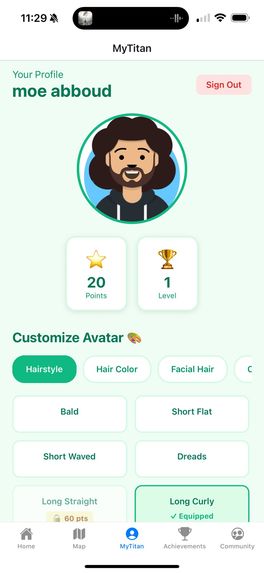
Avatar/Profile Page
-
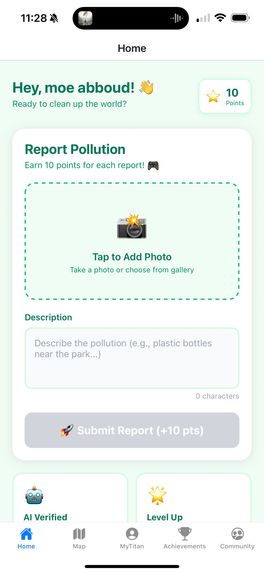
Upload Proof of Litter Pollution
-
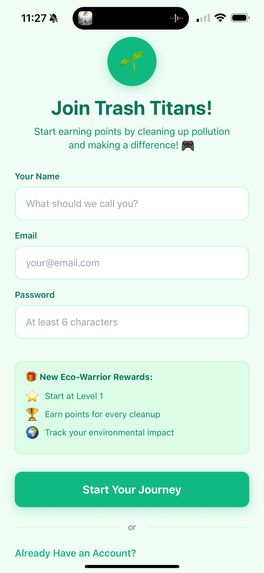
Create An Account
-
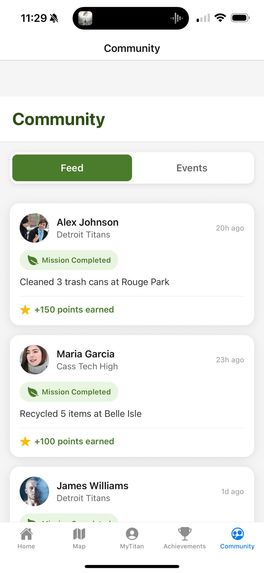
Community Talks Tab
-
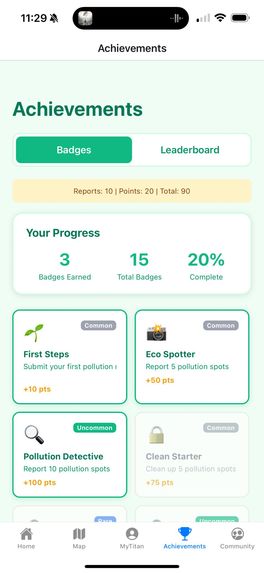
Achievements Badge Progress / Quests
-
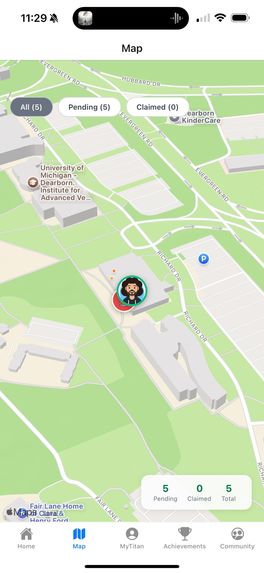
Interactive Live-Updating Map - Based on User Pollution HotSpots
-
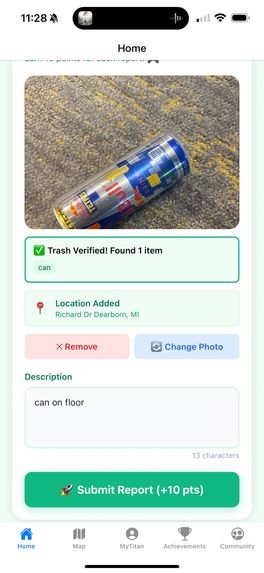
AI Detected and Approved Pollution Log
-
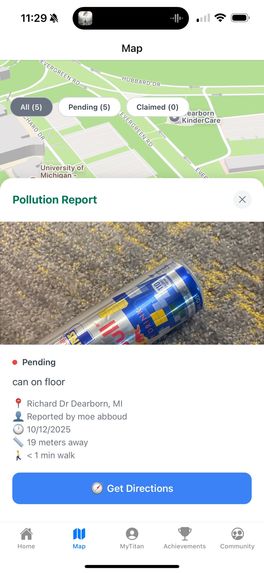
Viewing of Pollution Log on Map
-
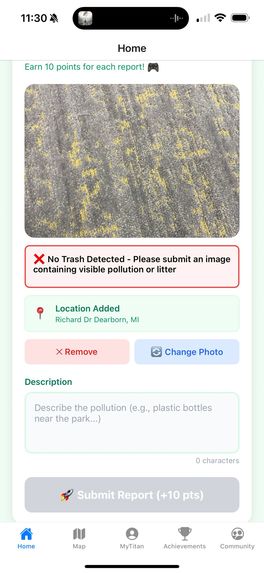
AI Detected and Rejected Pollution Log


Inspiration
InspirationEnvironmental degradation and littering remain critical global issues, yet reporting pollution is often fragmented and unverified. We wanted to create a gamified, community-driven platform that incentivizes both pollution reporting and actual cleanup efforts. By combining real-time GPS mapping, AI verification, and a points-based reward system, we're transforming environmental cleanup from a passive concern into an engaging, trackable activity that motivates users to take immediate action.
What it does
TrashTitans is a mobile application that enables users to report pollution by taking photos of littered areas with automatic GPS tagging, ensuring accuracy through OpenAI's Vision API to confirm images actually contain litter and prevent false reports. Users can claim pollution reports, complete cleanup work, and submit before and after photos for AI verification. The app tracks all activity through a points system, awarding 10 points for reporting and 50 points for completing a verified cleanup. An interactive map displays pending, claimed, and completed cleanups in real-time, allowing users to visualize the environmental impact of their community. Users also compete on leaderboards and unlock badges for environmental achievements, creating sustained motivation for continued participation.
How we built it
The frontend is built with React Native and Expo, utilizing Expo Router for seamless navigation and react-native-maps for geolocation and interactive mapping. The backend leverages Firebase for user authentication, Firestore for real-time database operations managing reports and user stats, and Cloud Storage for securely hosting images. The standout feature is our integration with OpenAI's GPT-4 Vision API, which analyzes submitted images to verify they contain actual pollution and compares before and after photos to validate cleanup completion. We implemented context-based state management with real-time Firestore listeners to ensure all users see live updates across the platform. Location services automatically tag every report with GPS coordinates and address information for precise map display, while image quality is optimized during the picker phase to balance file size and verification accuracy.
Challenges we ran into
One of our biggest obstacles was achieving reliable image verification accuracy. We had to carefully engineer prompts for the AI to distinguish between genuine litter and clean environments, ultimately setting a 80% confidence threshold for initial reports and a 90% threshold for cleanup verification. Managing real-time synchronization presented another challenge, as we needed to prevent race conditions when multiple users interact with the same cleanup task simultaneously, requiring careful Firestore transaction handling. OpenAI API costs and rate limiting forced us to think strategically about when to trigger verification calls and implement appropriate cooldowns. Location services proved inconsistent across devices, with some phones lacking EXIF data or GPS accuracy, so we built fallback mechanisms to manually capture location when automatic methods fail. Implementing secure Firebase authentication while maintaining a smooth user onboarding experience required balancing security best practices with user convenience, especially around permission requests for camera and location access.
Accomplishments that we're proud of
Our AI-powered verification system stands as a core achievement, significantly reducing false reports while ensuring genuine environmental impact from each submission. The seamless cleanup workflow with intuitive before and after photo comparison creates a compelling user experience that guides people through the entire process. Building a real-time collaborative map that shows community cleanup efforts as they happen provides powerful visual feedback and fosters a sense of collective action. The gamification mechanics successfully drive sustained user engagement by rewarding both reporting and actual environmental action, moving beyond mere awareness to concrete cleanup work. Our scalable architecture built on Firebase enables easy expansion to new geographic regions and addition of new features without major refactoring. The comprehensive user stats tracking system allows individuals to monitor personal progress over time while competing on leaderboards, creating both intrinsic and extrinsic motivation.
What we learned
Working with vision models taught us the critical importance of prompt engineering. Being specific and clear about what we wanted the AI to detect directly impacted accuracy—vague prompts led to inconsistent results. GPS and location services vary dramatically across Android and iOS devices, and even between different phone models, so we learned that building fallback mechanisms isn't optional but necessary. Users respond incredibly well to visual feedback and real-time map updates showing community impact, which proved more motivating than abstract point totals. Points and gamification are effective engagement tools, but only when paired with meaningful environmental action rather than trivial tasks. Firebase's real-time listeners are powerful for collaborative features, but we quickly discovered they require careful subscription management to avoid memory leaks and excessive database reads that inflate costs. We also learned that error handling and user feedback matter enormously—when image verification fails, users need clear, helpful guidance on what went wrong and how to fix it.
What's next for TrashTitans
We plan to launch TrashTitans on iOS and Android app stores to reach users on their primary devices. To improve security and reduce API costs, we'll implement a backend service that handles OpenAI calls server-side rather than exposing the API key in the mobile app. Social features like sharing cleanups with friends, inviting others to cleanup events, and team challenges will transform TrashTitans from an individual pursuit into a community movement. Advanced analytics capabilities will display heat maps showing pollution hotspots, track community cleanup trends over time, and measure overall environmental impact in quantifiable ways. Integration with local governments could enable official cleanup coordination, proper environmental permits, and potentially public funding for large-scale environmental projects. An offline mode would allow users to report pollution even without connectivity, syncing data once the connection returns. We envision a rewards marketplace where users can exchange earned points for local business discounts or donate points to environmental organizations. Extended AI capabilities could detect specific pollution types such as plastic, electronics, or hazardous waste, enabling targeted cleanup efforts and more accurate environmental assessments. A comprehensive achievement badge system will reward milestones like 10 completed cleanups, reaching 500 points, or maintaining cleanup streaks. Finally, we want to explore video verification options for complex cleanup scenarios that require more detailed documentation than still photos can provide.Retry


Log in or sign up for Devpost to join the conversation.