-
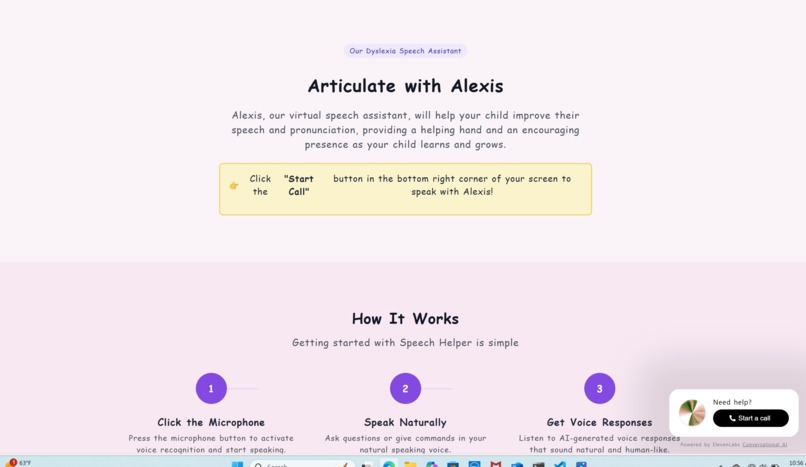
Speech Assistant Alexis
-
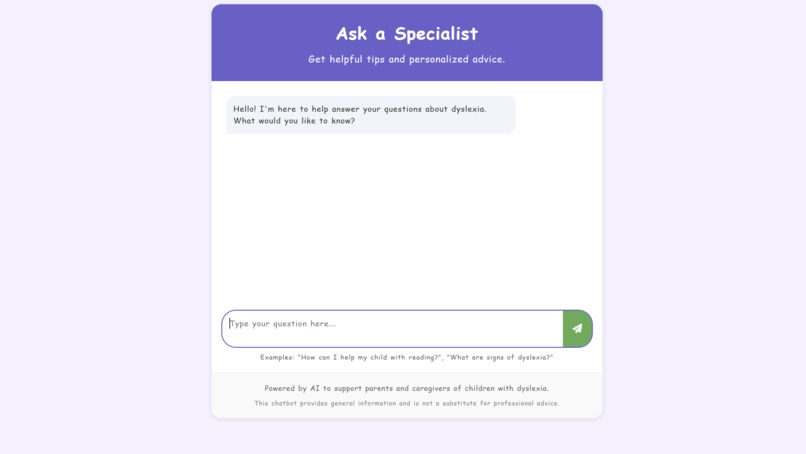
Parent Guidance
-
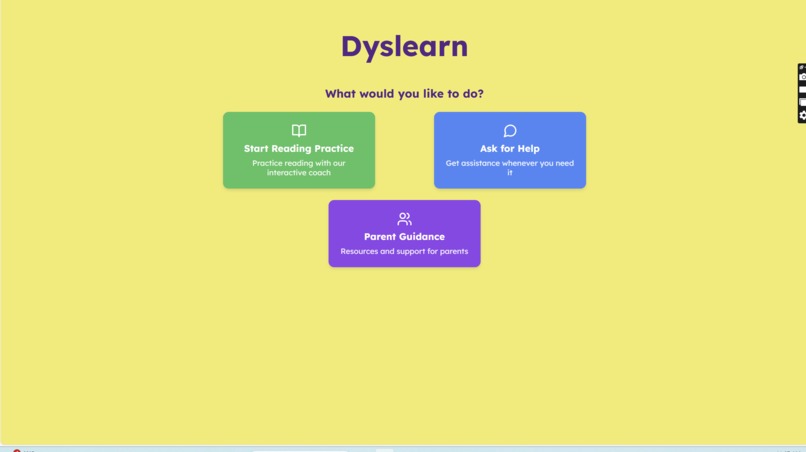
home page


Inspiration
1 in 10 children globally have dyslexia — a learning difference that can make everyday reading feel isolating and frustrating. Because it’s so common, we believe that dyslexic learners deserve tools that empower them to thrive like everyone else. To support this, we built an AI-powered reading and speech assistant that helps children practice reading in a supportive, non-judgmental way and guides parents with grounded, accessible resources to support their child’s journey.
What it does
Dyslearn is an AI-powered reading coach and parent support assistant for children with dyslexia. It offers text-based reading practice, step-by-step comprehension guidance, and a retrieval-augmented chatbot for caregivers seeking personalized advice. The system encourages children with supportive feedback, progress tracking, and digestible reading challenges — all in an accessible, calming interface.
How we built it
We used Flask to build our backend, integrating Vectara’s RAG API for grounded parent Q&A support. For the reading coach, we designed age-aware prompts and structured reading flows using a rule-based dialogue system. Our frontend was styled for accessibility and simplicity, with dyslexia-friendly fonts and spacing. We also incorporated session tracking to simulate badge progress and personalized feedback.
Challenges we ran into
We struggled to integrate Vectara into flask in addition to getting Corpus key. However, we eventually figured out that we could save the Vectara API Key and Corpus ID into environmental variables, and connect parents to resources by creating a new Corpus and adding data to it.
Accomplishments that we're proud of
We’re proud of creating a safe, friendly reading space for children with dyslexia that encourages progress without pressure. We successfully built a fully functional reading comprehension coach that works entirely through text, making it accessible without requiring speech input. For caregivers, we deployed a RAG-based chatbot using Vectara to provide grounded, personalized support. Together, these features form a thoughtful, inclusive experience designed to uplift learners and their families.
What we learned
We learned how to use AI not just for output, but for empathy — how to shape models and prompts to gently support readers at different levels. We also learned to integrate retrieval-based systems like Vectara for grounded Q&A, and the importance of UI/UX for accessibility in real learning environments.
What's next for Dyslearn
We plan to add progress tracking with local storage or logins, deeper personalization for different reading levels, and possibly a letter recognition module to screen early signs of dyslexia. We also aim to partner with educators and therapists to train new reading flows based on real classroom needs.

Log in or sign up for Devpost to join the conversation.