-
-
-
-
-
-
-
-

Me
-

Me on the left


Inspiration
I've always been the person friends text when they need a recipe recommendation. Growing up cooking alongside my family and eventually becoming the go-to home cook in my circle, I noticed a disconnect — I'd watch YouTube cooking creators like Joshua Weissman or Ethan Chlebowski, screenshot ingredients from their videos, and lose them in my camera roll. Meanwhile, the creators behind these incredible recipes earn nothing when apps scrape their content.
When I saw RevenueCat Shipyard, I knew it was time to build what I'd been envisioning: a recipe app where subscriptions actually support the creators who feed your family. Nebula proved this model works for educational YouTube — I wanted to bring the same creator-first economics to food.
What it does
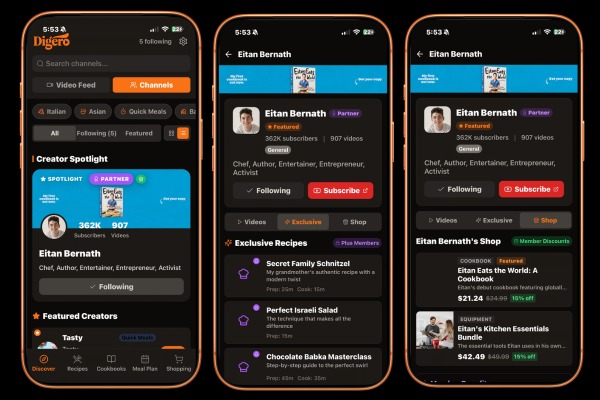
Digero is a mobile recipe app with a Nebula-inspired creator economy built on RevenueCat subscriptions.
For home cooks:
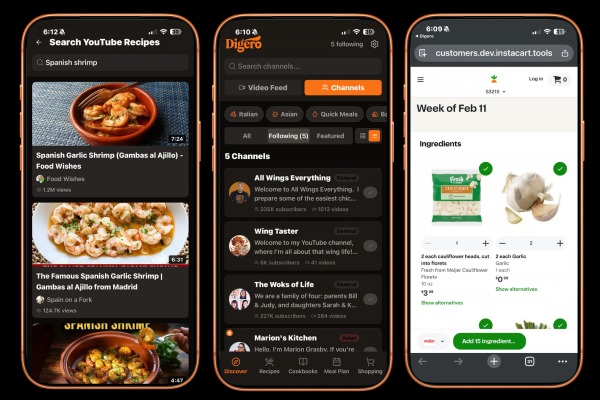
- Import recipes from any URL, YouTube video, or physical cookbook (AI-powered extraction via Gemini)
- AI Sous Chef chat for hands-free cooking guidance and recipe ideas
- Cook Mode with step-by-step voice assistant (Speechmatics Flow)
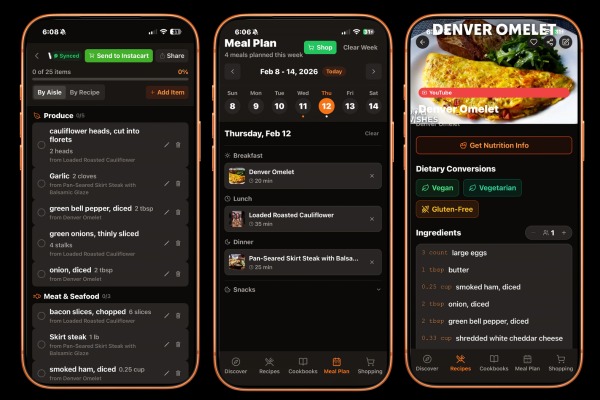
- Meal planning calendar and smart shopping lists with Instacart integration
- "I Made This!" social proof tracking
For creators:
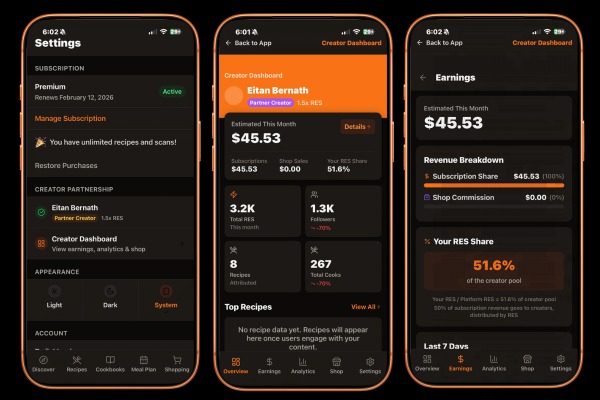
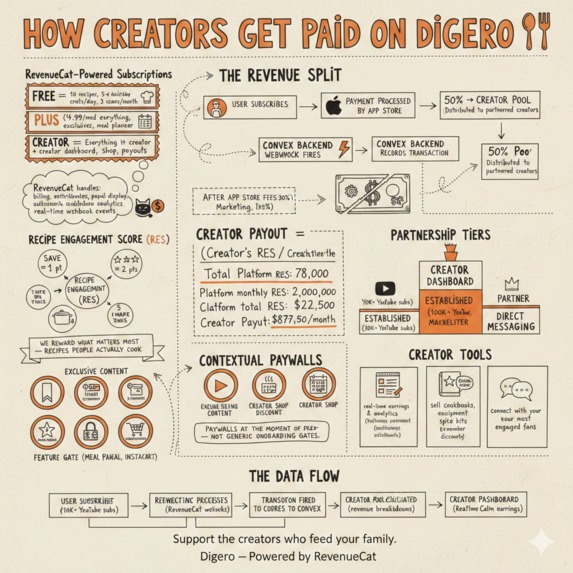
- 50/50 profit sharing — half of all subscription revenue goes to a creator pool
- Recipe Engagement Score (RES) determines payout distribution: saves (1x), cooks (5x), shares (3x), ratings (2x)
- Creator Dashboard with real-time earnings, top recipes, and engagement analytics
- Creator Shop to sell cookbooks, equipment, and digital products with member discounts
- Exclusive recipes and early access content for subscribers
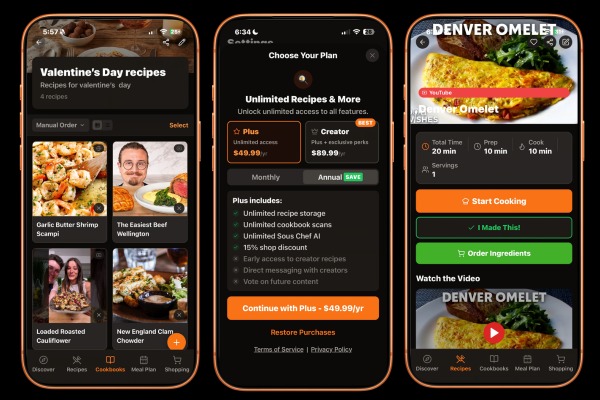
RevenueCat powers three subscription tiers:
- Free — 10 recipes, 5 AI chats/day, 3 scans/month
- Plus ($4.99/mo) — Unlimited everything + creator exclusives
- Creator ($9.99/mo) — Everything in Plus + creator dashboard, shop, and payout eligibility
How we built it
- React Native + Expo SDK 54 for cross-platform mobile with file-based routing (expo-router)
- Convex as the real-time backend — schema-enforced database, server functions, and webhook handlers
- Clerk for authentication (email, Apple, Google sign-in)
- RevenueCat for subscription management, entitlement-based feature gating, and revenue tracking via webhooks
- Google Gemini 2.0 Flash for AI recipe extraction from URLs, YouTube transcripts, and cookbook photos (OCR)
- Speechmatics Flow for real-time voice assistant in Cook Mode
- OneSignal for targeted in-app messaging and push notifications based on subscription status and engagement
- NativeWind v4 (Tailwind CSS for React Native) for styling with full dark mode support
- EAS Build + TestFlight for iOS distribution
RevenueCat is deeply integrated beyond basic paywalls:
- Contextual paywall triggers at 6 strategic moments (recipe limit, AI chat usage, exclusive content, shop discounts, cookbook scanning, feature gates)
- Webhook-driven revenue tracking to calculate creator profit sharing in real-time
- Entitlement-based feature gating that controls access at the Convex backend level
- Subscription state synced across RevenueCat, Convex, and OneSignal for targeted messaging based on tier
Challenges we ran into
- Sandbox purchase restoration kept auto-upgrading new test accounts to Premium — RevenueCat's
restorePurchases()found previous sandbox transactions tied to the Apple ID, making it impossible to test the free tier experience. We solved this by removing auto-restore on init and letting users manually restore via Settings. - EAS Update channel configuration — OTA updates weren't reaching devices because the channel-branch mapping wasn't set up. We had to do a full native rebuild to deliver JS-only changes while we figured out the EAS Update pipeline.
- Creator profit sharing math — Designing a fair payout formula that rewards high-intent engagement (cooking a recipe) over passive actions (saving) required careful weighting. The 5x multiplier on "I Made This" presses creates the right incentive for creators to publish recipes people actually cook.
- Expo + OneSignal plugin ordering — The OneSignal Expo plugin must be first in the plugins array, which conflicts with other plugins that also expect priority. Getting push notifications, share extensions, and camera permissions to coexist required careful entitlement and infoPlist configuration.
Accomplishments that we're proud of
- The creator economics are real — not a mockup. RevenueCat webhooks feed into Convex, which calculates RES scores and estimated payouts in real-time. The Creator Dashboard shows actual revenue splits.
- 6 contextual RevenueCat paywalls placed at moments of peak user motivation — when a free user taps exclusive creator content, when the AI chat hits 4/5 daily messages (inline upgrade card right in the conversation), when browsing creator shop products with specific dollar savings shown. These aren't generic onboarding gates.
- AI Sous Chef with real voice interaction — you can ask "what temperature should I preheat the oven to?" while your hands are covered in flour, and Speechmatics Flow responds in real-time.
- Full import pipeline — URL paste, YouTube video extraction, physical cookbook scanning via camera, and manual entry all flow through Gemini AI to produce structured recipe data with ingredients, instructions, prep time, and nutritional info.
- iOS Share Extension — share a recipe URL from Safari or YouTube directly into Digero without opening the app first.
What we learned
- RevenueCat's webhook system is powerful enough to build an entire revenue-sharing backend on top of. By processing
INITIAL_PURCHASE,RENEWAL, andCANCELLATIONevents in Convex, we can calculate creator payouts without any additional payment infrastructure. - Contextual paywalls convert better than timing-based ones. Showing an upgrade prompt when a user taps a locked exclusive recipe (desire-driven) is more compelling than interrupting them after 3 days of usage (arbitrary).
- The creator partnership model is the retention moat. Users who follow creators and engage with exclusive content have a fundamentally different relationship with the app than utility-only users. RevenueCat's tiered entitlements made it possible to build this graduated value ladder.
- Expo's managed workflow with EAS Build makes it realistic to ship a polished iOS app in 2 weeks, but OTA updates require careful channel/branch setup from day one.
What's next for Digero
- Creator onboarding portal — Web-based application flow at digero.com/creators for YouTube cooking channels to apply for partnership (10K+ subscriber requirement)
- Medusa-powered creator marketplace — Migrate Creator Shops to Medusa.js for a full multi-vendor + marketplace with inventory management, order fulfillment, and custom storefronts per creator
- Stripe Connect payouts — Automated monthly creator payments based on RES calculations, replacing the current dashboard-only estimates
- RevenueCat Experiments — A/B test pricing ($4.99 vs $5.99 vs $6.99 for Plus) and paywall designs (feature list vs creator testimonials) to optimize conversion
- Grocery delivery partnerships — Expand the Instacart integration to support one-tap ordering from any recipe's ingredient list
- Live cooking classes — Creator Tier exclusive video sessions where subscribers cook along with their favorite YouTube chefs in real-time
- Android launch — The React Native codebase is cross-platform ready; Android build and Play Store submission is next
- International expansion — Localized recipe units, dietary preferences, and ingredient availability by region
Built With
- expo.io
- gemini
- react-native
- revenuecat
- youtubeapi
Log in or sign up for Devpost to join the conversation.