-
-
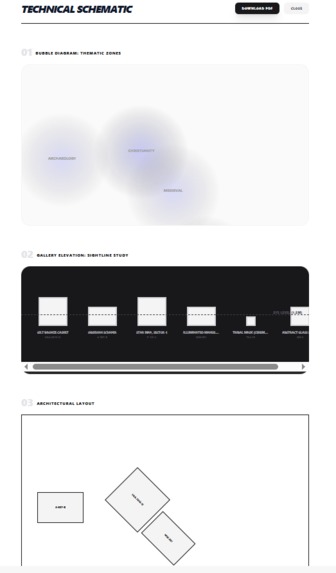
A printable report with 3 items: thematic bubble map, wall view, and birds eye view
-
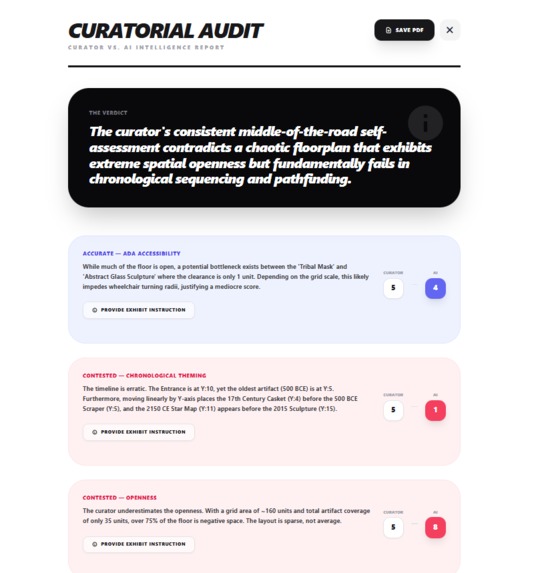
Example of AI audit feedback
-
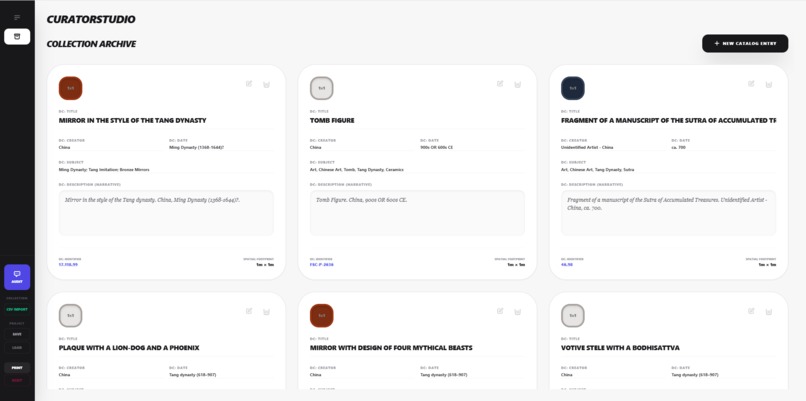
Catalog View
-
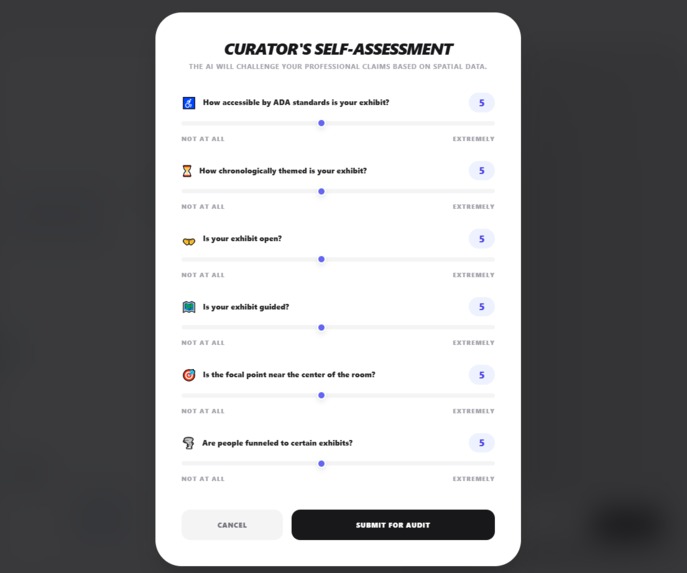
The self assessment questionnaire for curators looking to perform an AI audit.
-
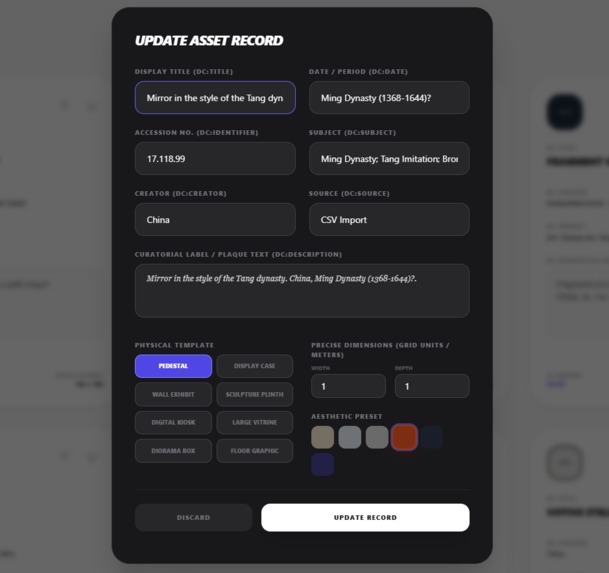
Modal For Editing Artifact Catalog Entries
-
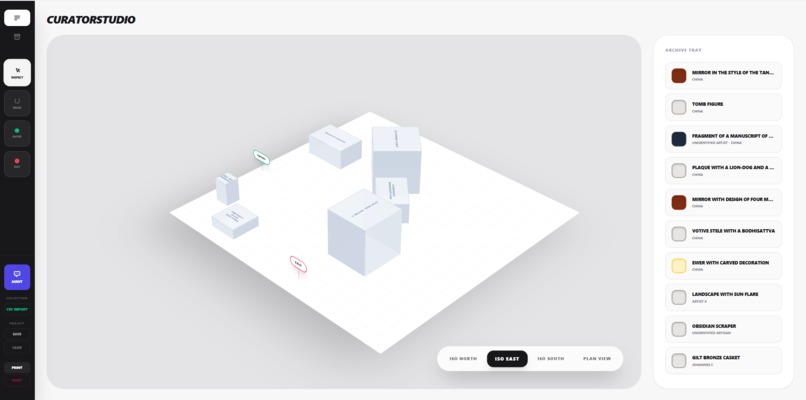
Main Exhibit Placement Grid View


Inspiration
Curator Studio was inspired by a long-standing passion for museums. Having studied Museum Studies in college, I gained a deep appreciation for the immense effort behind the scenes—specifically in exhibition preparation and cataloging. This project is a tribute to that meticulous work.
What it does
This app streamlines the process of prototyping museum exhibits, saving curators hours of manual labor. Key features include:
- Grid-Based Prototyping: Build exhibits visually on a spatial grid.
- Dublin Core Integration: Import full catalogs based on the universal standard for museum organization.
- AI Spatial Auditing: Instead of providing misinformation, the AI engages the Curator in a productive debate, ensuring human expertise remains at the center.
- Automated Reporting: Generate PDF reports covering thematic zoning, sightline analysis, and top-down grid layouts using Gemini’s advanced reasoning.
How we built it
The project is a React-Vite Web Application built using Google AI Studio and Antigravity. We chose a web-based approach to ensure maximum accessibility for museum staff.
The Evolution of the Tool:
- The Grid: Started as a simple spatial tool with entry/exit markers.
- The Archive: Added an editable archive using the Dublin Core standard. It supports CSV imports (compatible with tools like Omeka) to bridge the gap between cataloging and design.
- Advanced Reasoning: To compete with heavy-weight CAD programs, I implemented AI-driven spatial analysis for thematics, chronology, and accessibility.
- The "Debate" Model: After finding that deterministic AI feedback was often inconsistent, I pivoted. The system now asks for a curator’s self-assessment and debates it, providing parallel human-AI scores and specific suggestions for improvement.
Challenges we ran into
- Feature Creep: We initially attempted a routing algorithm for visitor density and pathing, but it slowed development without serving the core mission.
- AI Consistency: Getting the AI to provide high-quality, reliable spatial feedback was difficult. Solving this required moving away from "AI as a judge" to "AI as a debater."
Accomplishments that we're proud of
I am proud to have built a foundation that could genuinely impact the museum world, similar to how Omeka revolutionized digital cataloging. Merging my background in History with modern AI is a personal milestone.
What we learned
The most vital lesson was that AI should not be used deterministically. It functions best as a facilitator of innovation and a fountain of ideas. By allowing the AI to handle the "practical" layout insights, curators are freed to focus on crafting the emotional and educational experience of the exhibit.
What's next for CuratorStudio
- Local Implementation: Introducing the tool to museums across New Hampshire.
- Social Sharing: Developing a feature similar to Kuula where curators can share and explore layouts within a professional network.
- Refinement: Continuing to polish the pipeline for artifact data imports.
Log in or sign up for Devpost to join the conversation.