-
-
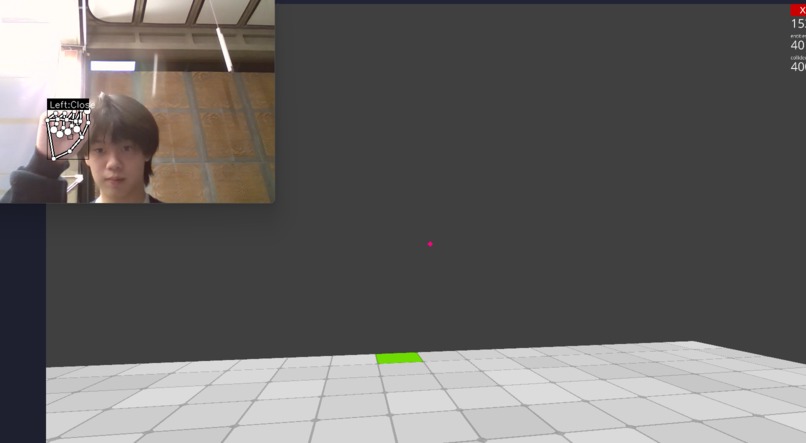
Testing Movement

Inspiration The inspiration behind Block Touch comes from the desire to create an interactive and immersive experience for users by leveraging the power of Python computer vision. We aim to provide a unique and intuitive way for users to navigate and interact with a simulated world, using their hand movements to place blocks dynamically.
What it does Block Touch utilizes Python computer vision to detect and interpret hand movements, allowing users to navigate within a simulated environment and place blocks in a virtual space. The application transforms real-world hand gestures into actions within the simulated world, offering a novel and engaging user experience.
How we built it We built Block Touch by combining our expertise in Python programming and computer vision. The application uses computer vision algorithms to analyze and interpret the user's hand movements, translating them into commands that control the virtual world. We integrated libraries and frameworks to create a seamless and responsive interaction between the user and the simulated environment.
Challenges we ran into While developing Block Touch, we encountered several challenges. Fine-tuning the computer vision algorithms to accurately recognize and interpret a variety of hand movements posed a significant challenge. Additionally, optimizing the application for real-time responsiveness and ensuring a smooth user experience posed technical hurdles that we had to overcome during the development process.
Accomplishments that we're proud of We are proud to have successfully implemented a Python computer vision system that enables users to control and interact with a simulated world using their hand movements. Overcoming the challenges of accurately detecting and responding to various hand gestures represents a significant achievement for our team. The creation of an immersive and enjoyable user experience is a source of pride for us.
What we learned During the development of Block Touch, we gained valuable insights into the complexities of integrating computer vision into interactive applications. We learned how to optimize algorithms for real-time performance, enhance gesture recognition accuracy, and create a seamless connection between the physical and virtual worlds.
What's next for Block Touch In the future, we plan to expand the capabilities of Block Touch by incorporating more advanced features and functionalities. This includes refining the hand gesture recognition system, adding new interactions, and potentially integrating it with virtual reality (VR) environments. We aim to continue enhancing the user experience and exploring innovative ways to leverage computer vision for interactive applications.



Log in or sign up for Devpost to join the conversation.