-
-
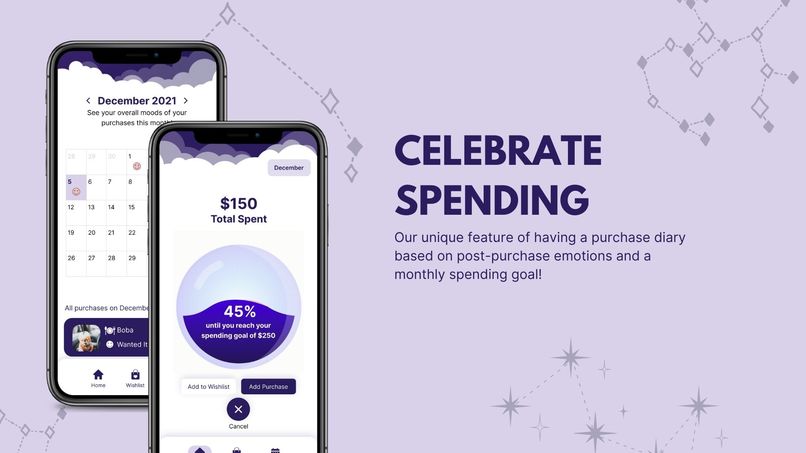
Through Cloudbuck, we are solving the problem for Financial Management and Mental Health
-
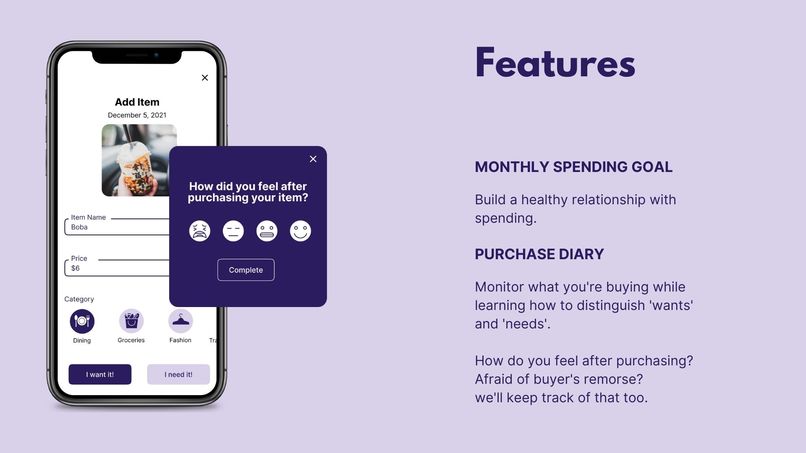
A look at Cloudbuck's features
-
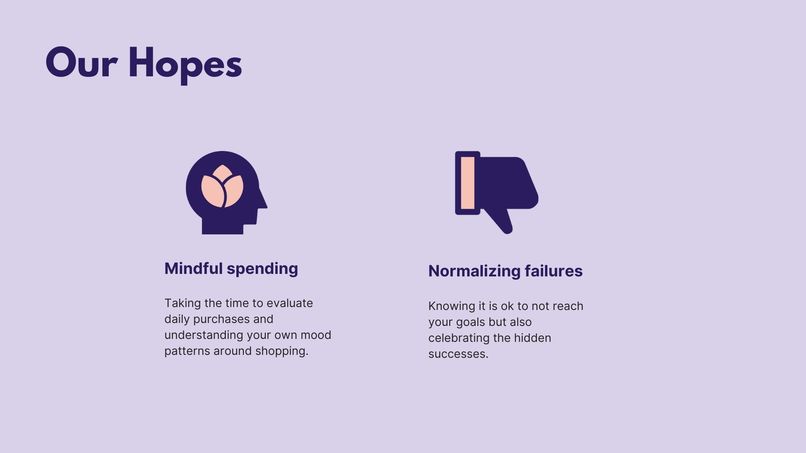
What we hope our platform can change
-
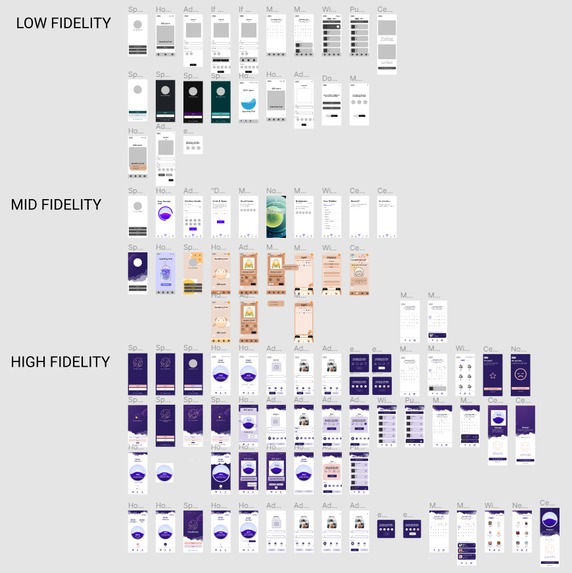
We did a total of 101 screens of low, mid, and high fidelity wireframes!


Inspiration
We started by researching some of the problems that people faced around finances. Many young people are addicted to spending as a coping mechanism due to the lack of mental health resources, and the pandemic has made it worse. With that, we did further research on how other apps and platforms are helping people to solve these financial issues. However, with research and personal experience, savings brings a lot of pressure and stress. So many apps focus on savings, and yet we still suffer from financial issues. So, why not rethink how we SPEND money?
We decided to tackle this problem by turning it on its head and focusing on MINDFUL SPENDING instead.
When it came to designing our app, we were inspired by constellations and later turned to clouds since they focus on transparency and free-flowing life. These related to our idea of being clear with finances along with mental health of how it's okay to not achieve goals. The symbolism for clouds are balance, clarity, and inner peace which is perfect for our idea. We also created our spending tracker into a sphere inspired by moons, giving a calm reminder to our users that they are in charge of their own emotions and decisions.
Solution
Our platform, Cloudbucks, helps users reevaluate their purchase decisions by categorizing them into “wants” and “needs” while also recording their emotions post-purchase. One of our main features is having a purchase diary that users can add their spending or a new item into their wishlist within the app. Every time the user enters a purchased item in the diary, the app tracks their mood immediately after making the purchase and again after 3-7 days. This clearly indicates whether the purchase was useful or if there was buyer’s remorse.
Another one is how the user is able to set a monthly spending goal, where they have to spend within the budget. If they spend enough, great! If they went over their spending limit, that’s okay! We all have our bad days and can try again next month. There is no pressure to reach goals along with no consequences if you overspend. With this, we are also trying to defy the conventional mindset of society around accomplishments, goals, and winnings, as well as societal pressure on spending money.
Challenges we ran into
When it comes to financing and mental health, there are several pressing issues. We thoroughly dissected the problem and narrowed our focus to a single aspect. While doing this, we created several workflows to look at and choose from. We made our decisions through stimulating design discussions, dot voting in our design sprint, and collaborating closely with mentors at the TechTogether hackathon.
Some other challenges that we faced in the design process:
- We understand the risk of data breaches and value security. Users can steer away from downloading apps if it asks for personal information. Thus, we don’t have our users share their monthly income or financial status on the app.
- With different styles, we had trouble deciding the user flow and combining all of our ideas into one platform
- We tried prototyping with micro-interactions learned through Youtube (only to find later that it doesn’t work because it is still under beta testing in Figma)
- One of the features we were most excited about was the animated sphere on the home screen but we exhausted our solutions on how to export an Adobe XD animation into a .gif file while also having a transparent background.
Accomplishments that we're proud of
- Creating a simple, intuitive, and meaningful interface that tackles the problem of finances while acknowledging its connection to mental health.
- Following the design thinking process very methodically starting with research, target audience, HMWs, defining the problem, hypothesis, crazy eights, user flows, wireframes, multiple fidelity mockups, and lastly, a workable prototype. Thus, clearly understanding and defining the problem.
- Creating multiple iterations to offer the most sensible design solution and carefully assessing the product to be empathetic towards sensitive topics such as mental health and finances.
What We Learned
“We learned to tackle finance management through a mental health perspective by understanding the deeper links of the two separately viewed problems. We learned that it's a vicious cycle of cause and effect that the user gets trapped or shamed into. We also tried to break the conventional thinking and societal pressure around accomplishments. Thus you will notice that our app actually celebrates not achieving the spending goal but in retrospect is also good because hey, more savings!” --- Sampada
“I appreciate how our team got together and really thought about the flaws with popular finance tracking apps today along with thinking “what would make me use a finance app more?” Another thing I learned was having a different approach towards designing apps to be more minimalistic, as it is something I haven’t had experience with as a beginner UX designer. With adding in mental health as an aspect to our app, it really shows how we should be thoughtful about how to make the user experience better but how to positively influence lives when designing.” --- Jenny
“It was my first time working with interactive components, and I was really excited to use micro-interactions in our platform. Unfortunately, I learned later when prototyping that interactive components are still in beta testing, so I couldn’t implement them in our platform. Another new design challenge I attempted and learned was designing with an 8-point grid for an IOS platform. It definitely helped me with figuring out the layout relative to IOS’s features. Aside from designing, I also learned how to speak my mind more. I learned how to clarify my reasoning more to engage in our stimulating design discussions and whiteboard session. I thank my teammates for trusting me to lead the whiteboard sessions. Because of them, I’m able to stretch my design brain and carefully examine which design system works best for which purpose.” --- Crystal
Future Add Ons
- Resources to help with mental health issues or shopping addiction, if consistently tracked through this platform.
- Guidance towards healthy habits instead.
- Resources for cheaper finance management assistance if needed.
- Collaborative wishlist with friends and accountability partners.
Built With
- figma


Log in or sign up for Devpost to join the conversation.