-
-
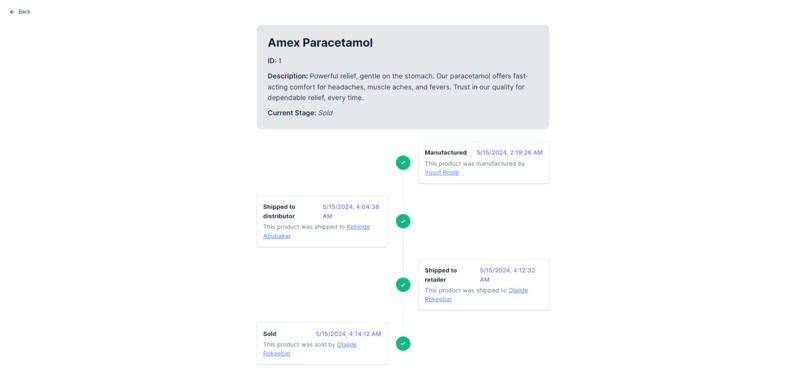
tracking page
-
-
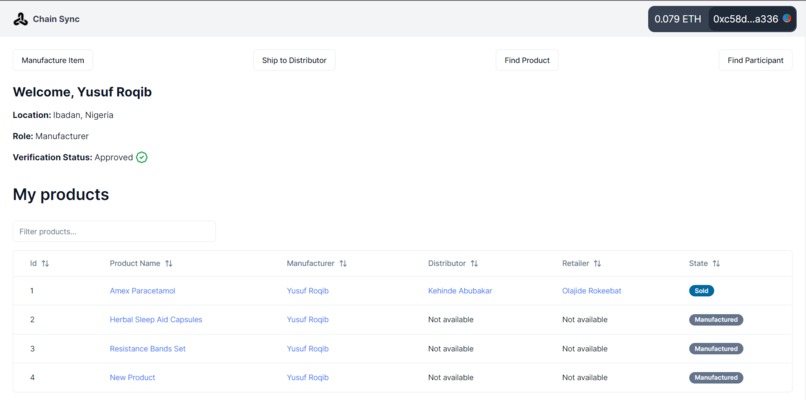
verified manufacturer
-
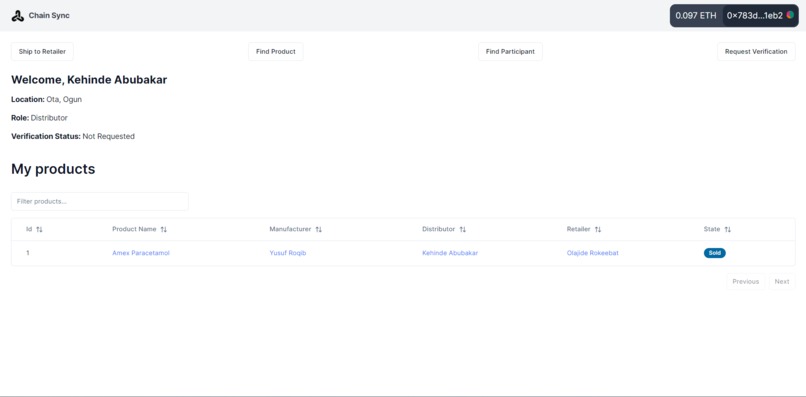
Unverified Distributor


Chain Sync: Revolutionizing Supply Chain Management with Blockchain
Inspiration
Inspired by the increasing demand for transparency and traceability in supply chains, we embarked on developing Chain Sync. Traditional supply chains often suffer from opacity, leading to mistrust and inefficiencies. Leveraging blockchain technology, we aimed to create a solution that enhances visibility and trust across the entire supply chain.
What it Does
Chain Sync is a blockchain-based platform designed to streamline supply chain operations. It facilitates the tracking of goods from manufacture to final consumer, ensuring every transaction is securely recorded and verifiable. This not only increases transparency but also reduces the risk of fraud and counterfeit products.
How We Built It
The development of Chain Sync involved a meticulous process of defining roles and responsibilities within the supply chain, identifying critical data points, and designing smart contracts to govern interactions. The contract owner can verify roles when business owners request for verification badge after submitting relevant documents, indicating their authenticity and reliability. Only verified users will be assigned verified badge. Unverified users can also participate but the verification badge won't be assigned. The smart contract stores information about the product's current stage in the supply chain. Anyone can view the product's history and current stage.
Contract Deployment: We deployed the smart contract thereby, giving the contract owner role, setting up supply chain parameters and verifying roles such as manufacturer, distributor, and retailer when requested.
User Registration: Users sign up, choose roles.
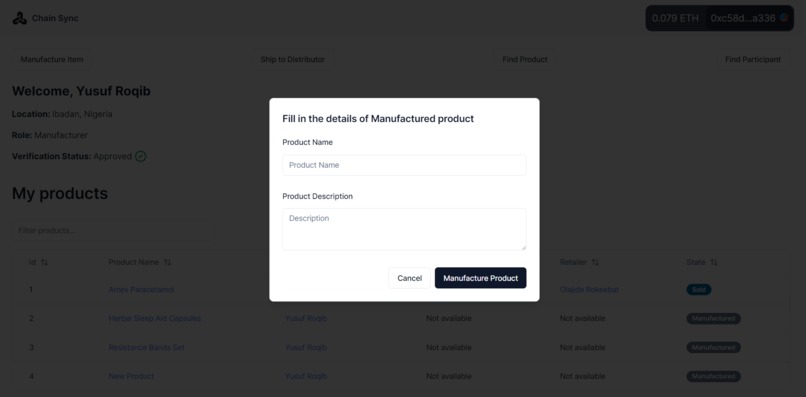
Product Creation: Manufacturers create digital profiles for their products.
Distribution: When distributor buys product from manufacturer, they update the smart contract about the state of the product
Retail: Retailers purchase products from distributors, updating the smart contract.
Product Tracking: The smart contract logs the product's current stage in the supply chain, allowing anyone to view its history and current status.
Role Management: The contract owner verifies roles upon receiving documents proving business owners' authenticity and reliability, granting them a verification badge.
Challenges We Ran Into
One of the primary challenges was ensuring the smart contracts were intuitive and accessible to all stakeholders, regardless of their technical background. Overcoming this required implementing user-friendly interfaces and thorough testing. Additionally, optimizing the performance of the smart contracts to minimize transaction fees and ensure scalability presented a significant hurdle, necessitating extensive testing and optimization.
Accomplishments That We're Proud Of
Despite the challenges, we successfully deployed Chain Sync, achieving a high degree of transparency and efficiency in supply chain operations.
What We Learned
Through this project, we learned the importance of iterative development and user-centered design. Understanding the needs of all stakeholders is key to overcoming initial obstacles and achieving our goals.
What's Next for Chain Sync
Looking ahead, we plan to expand Chain Sync's capabilities, integrating advanced analytics and predictive modeling to forecast supply chain disruptions. We also aim to explore partnerships with industry leaders to broaden adoption and further validate the platform's effectiveness.


Log in or sign up for Devpost to join the conversation.