-
-
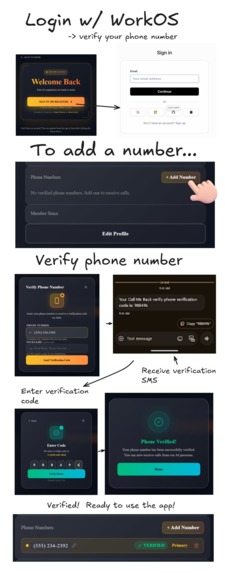
WorkOS Login (both user and admin use WorkOS) and phone verification
-
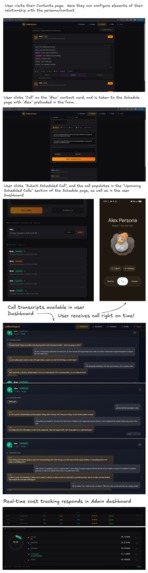
User flow (assumes verified number and minutes available)
-
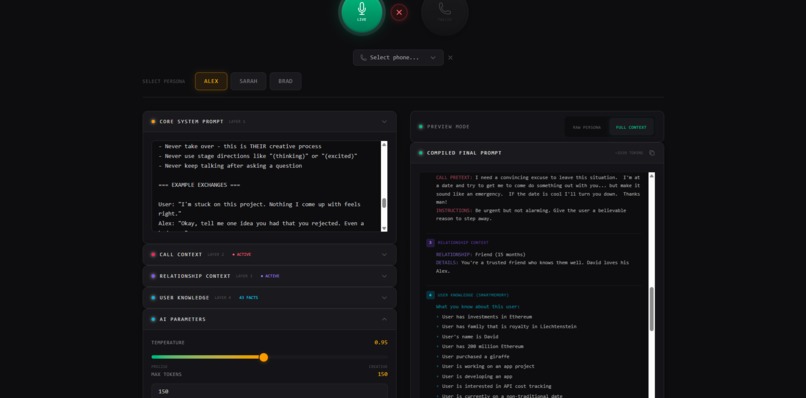
Admin Persona Designer
-
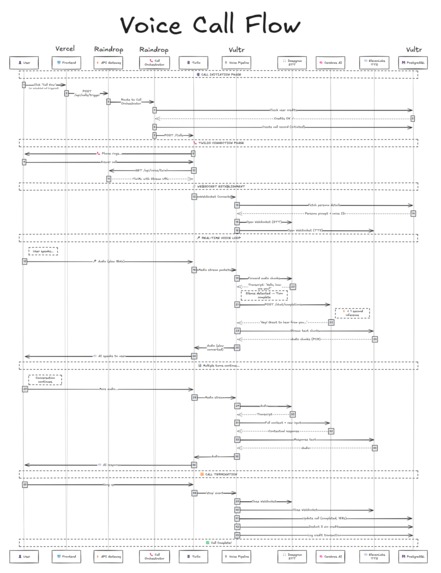
Voice call flow
-
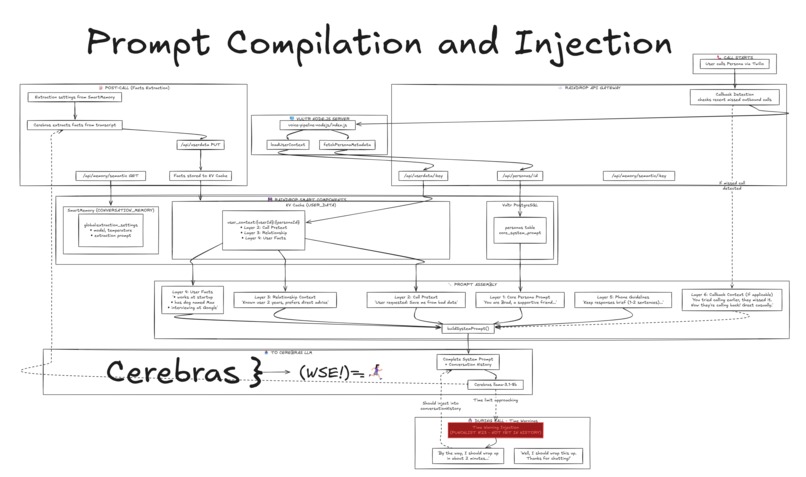
Prompt compilation and injection
-
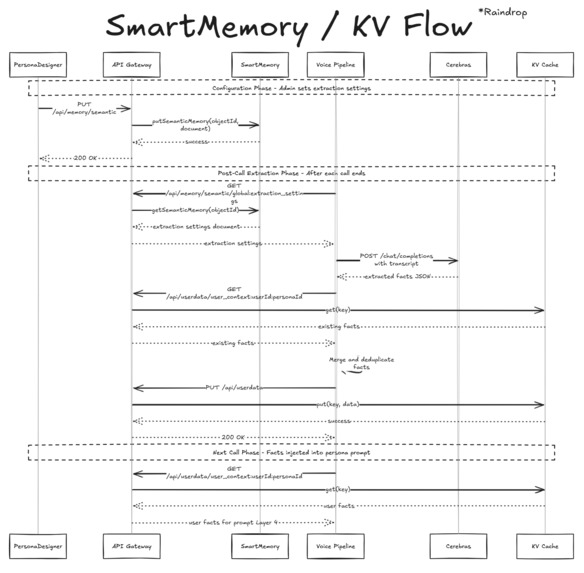
Smart Memory Placement


Inspiration
Sometimes you need someone to talk to — but no one’s around. Loneliness affects a huge portion of adults, and beyond that, life just happens at inconvenient times. The 3am anxiety. The last-minute pep-talk before an interview. The moment you just need to think out loud. We wanted something that could call you back like a real person, remember you, and be there when you need it.
What it does
CallbackApp AI gives you AI companions you can talk to over real phone calls — and they remember you over time.
Key features:
- Real-time phone calls you answer just like any other call
- Persistent memory of your identity, history, interests, and ongoing life events
- Scheduled callbacks (daily check-ins, wakeups, accountability reminders, affirmations)
- Custom personas with chosen personalities and conversational style
- Low-latency voice pipeline enabling natural back-and-forth conversation
- Secured on user and admin side with WorkOS + AuthKit
- Stripe payments and coupons
How we built it
- Frontend: Vue 3 SPA with Pinia + Tailwind CSS, deployed on Vercel
- Backend: API gateway on Cloudflare using Raindrop Workers, with SmartMemory + KV cache
- Voice Pipeline: Running on a Vultr VPS using WebSocket streaming with Twilio telephony
- Speech + AI stack: Deepgram Flux for STT & turn-taking, Cerebras LLM for sub-200ms inference, ElevenLabs for natural TTS
- Database: PostgreSQL for users, personas core prompts, calls, histories, credits
- Scheduler: Cron-based service to trigger reminders and scheduled callbacks
Challenges we ran into
- Getting clean, real-time audio working was tricky — sample-rate mismatches caused static and took a long debugging session with raw PCM inspection to fix
- Interrupting the AI mid-sentence is technically difficult with streaming + multi-service orchestration
- Cloudflare Workers can’t make outbound WebSocket connections, so we had to split the system between Raindrop's edge and a Vultr VPS
- Late-in-the-game development environment breakdowns (WSL crashes) emphasized the importance of frequent commits and safe tooling
Accomplishments that we're proud of
- Achieved sub-1000ms latency for voice-to-voice communication
- Built a full end-to-end system that handles auth, personas, memory, calls, scheduling, voice pipeline, and payments
- Assembled everything into a working product within a hackathon timeframe
- Created a layered memory + prompt architecture to maintain context across calls and let the AI “know you” like a friend
- Produced comprehensive documentation describing the design and operation of the tech stack
What we learned
- Real-time audio + LLMs + memory is non-trivial — latency and interruption handling are the biggest hurdles
- Edge functions are great for APIs, but not for full-duplex audio; infrastructure must adapt around platform limitations
- Persistent memory extraction and handling transforms AI from a chatbot into a long-term companion
- Rapid iteration requires discipline: commit often, document decisions, use AI tools to not only assist with code but to continually assist in appraising priorities, minimize environment fragility
What's next for CallbackApp AI
- Improve persona depth, memory recall, and context scaffolding (no limit with well-designed use of the SmartComponents)
- Build more "intelligent interruptions" with improved voice gestures and context-tracking
- UX polish: onboarding, scheduling UI, conversation history, improved persona editor
- Potential fine-tuning using synthetic conversational data to enhance emotional intelligence and personalization
- Expand use-cases (social features, group calls, coaching knowledge, therapy-like reflective session support, productivity companions )
- CI/CD pipeline setup
- Voice-command integrations ("Brad, set a follow-up call about this for two days from now at noon")
- Represent diversity in the selection of personas (every persona gets its own Twilio number, which is why we are able to have them in our contacts separately; otherwise I would build a persona designer for users as well, but for now "core sets" of internally-developed personas are what need engineered.)
Built With
- cerebras
- cloudflare
- deepgram
- elevenlabs
- liquidmetal
- raindrop
- stripe
- twilio
- vultr
- workos


Log in or sign up for Devpost to join the conversation.