-
-
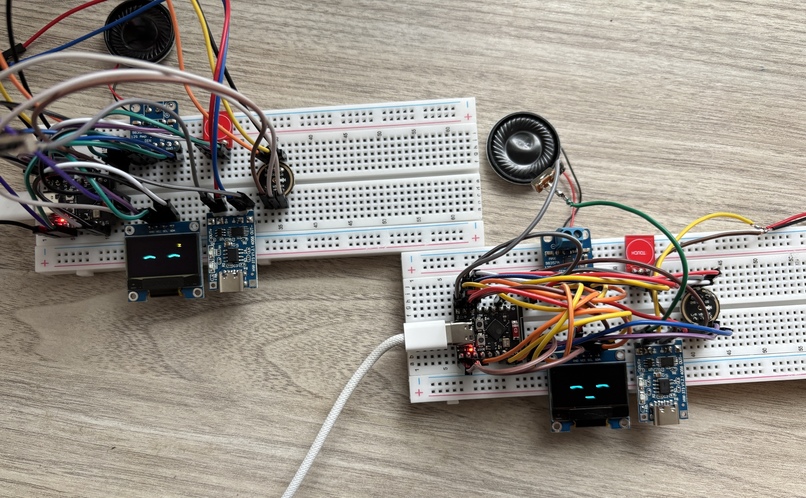
Our Bots
-
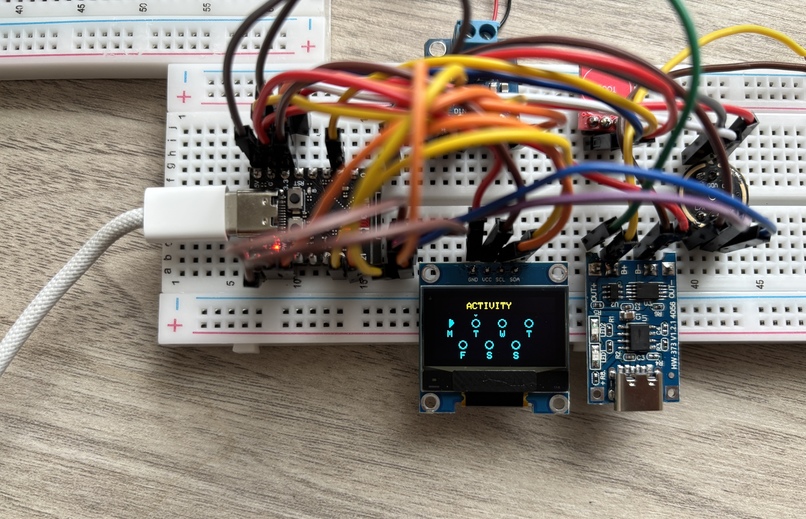
Accountability
-
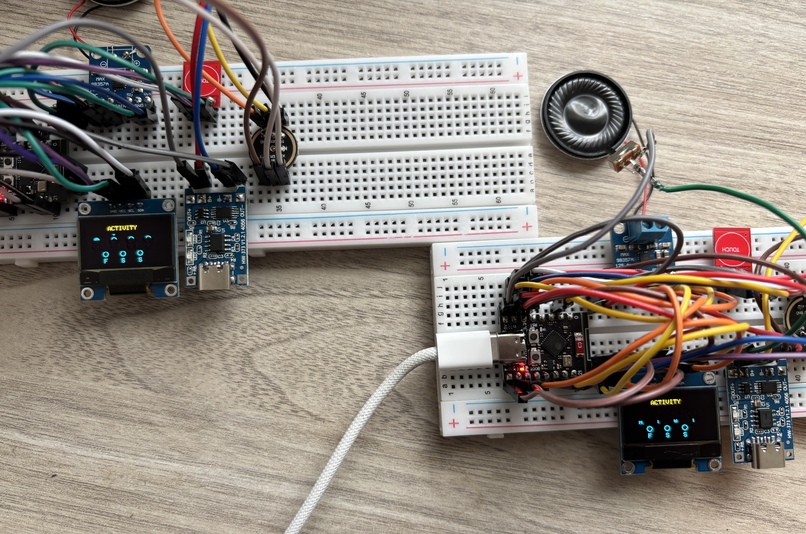
Shared Accountability
-
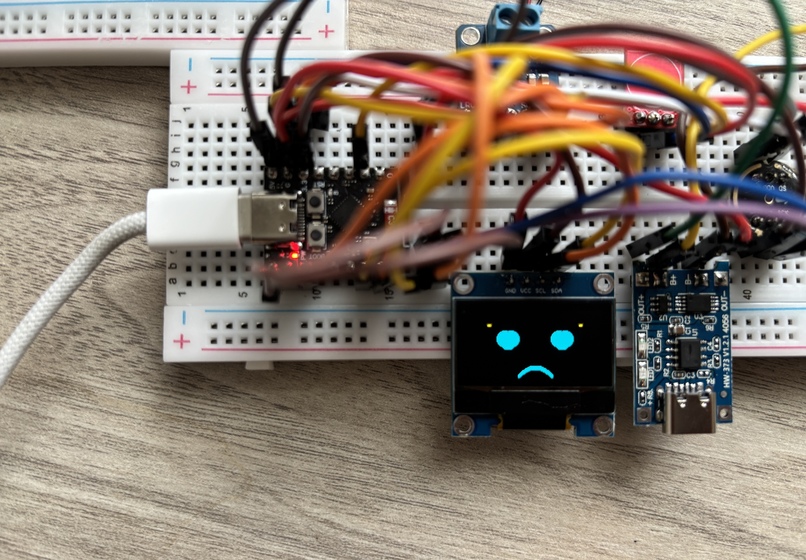
EMo-Ji
-
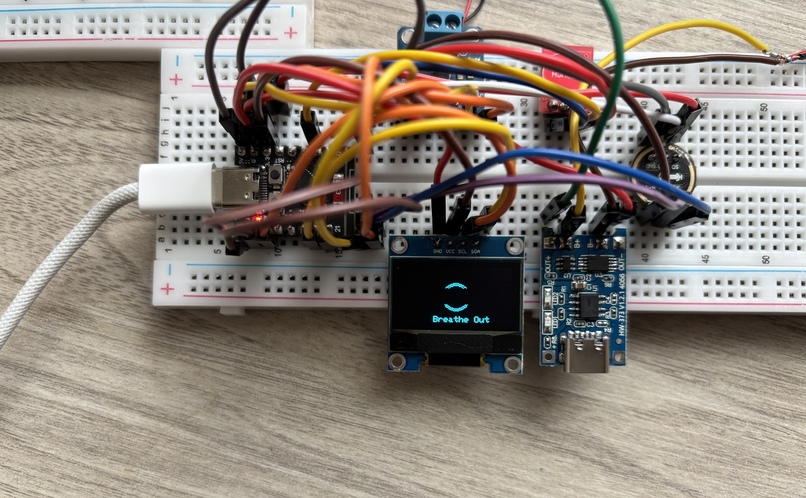
Anxiety Help Feature
-
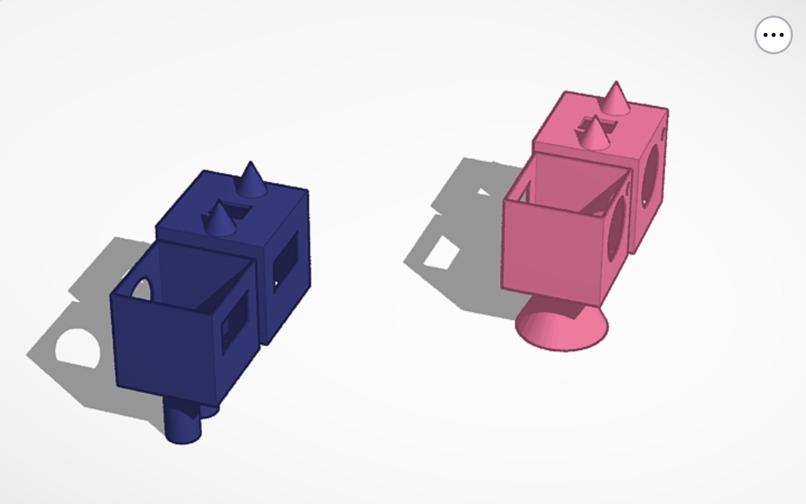
3d model of the bots


💗Inspiration
On Valentine’s Day, connection should feel warm, present and human, not buried inside notifications. 💕 Modern relationships are always online, yet emotional wellbeing often gets lost in fast messages and passive communication. Texts are convenient, but they rarely carry comfort, reassurance or care in a meaningful way.
We wanted to explore a healthier way for couples to stay emotionally close without increasing screen time. 💖 Inspired by mental wellbeing, emotional co-regulation and intentional connection, we built a pair of physical companion devices that let partners feel each other’s presence.
Instead of conversations, the experience centers on gentle emotional signals like touch, voice, and shared rituals that support connection, reduce anxiety and encourage care for each other’s mental health. 💓
🧠 What We Learned
The Couple Companion Device is a pair of Wi-Fi connected emotional artifacts that help couples stay emotionally present, regulate anxiety and support each other’s wellbeing without uv screens. Each partner owns one device. Interaction happens through simple gestures that trigger meaningful responses:
• Presence Ping — a symbolic “I’m here” signal through animation and sound • Mental Health Check-In — voice-based emotional sharing with AI emotion classification • Anxiety Breathing Mode — guided breathing animation for emotional regulation • Shared Habit Accountability — visual progress showing mutual commitment
The system is intentionally minimal with no texting, no passive monitoring and no background listening. It focuses on emotional co-regulation instead of communication overload.
🔧 How We Built It
Hardware: Two embedded devices built around ESP32-C3 microcontrollers with I2S microphone input, I2S audio output, OLED display, capacitive touch interaction, and rechargeable Li-Po power. Communication: Devices communicate through an MQTT broker hosted on DigitalOcean, enabling lightweight real-time messaging between partners. Backend: Node.js service handles message routing, emotion analysis pipeline, and state synchronization. AI Integration: Voice check-ins are converted to text and classified for emotional state using Google Gemini. Data Storage: MongoDB Atlas stores shared habit progress, emotional state summaries, and interaction logs. Design approach: We intentionally avoided screens, text interfaces, and passive sensing. Every interaction is deliberate and symbolic, reducing cognitive load while supporting mental well-being.
⚙️ Challenges We Faced
We also faced challenges with real-time communication between two physical devices. While we found examples of single-device MQTT implementations, adapting the architecture to support a synchronized pair of partner devices required additional design work. Ensuring both devices could reliably send, receive, and react to emotional interactions introduced complexities in message routing, state handling, and debugging. Overall, the project pushed us beyond our comfort zone in both hardware engineering and distributed device communication.
🤖 What we learned
We learned how challenging it is to design technology that reduces digital noise instead of adding to it. Building meaningful interaction through minimal signals required careful human-centered design.
On the technical side, we gained hands-on experience integrating embedded hardware, real-time communication, cloud infrastructure, and AI-based emotion analysis into a single cohesive system. We also learned that emotional design is as important as technical architecture when building wellbeing-focused technology.
⏭️What's next for the Couple Companion Device
Next steps include improving battery optimization, designing a custom PCB, and developing a production-ready enclosure. We plan to introduce encrypted communication, haptic feedback, and deeper emotional insight models. A companion dashboard for long-term wellbeing insights is also under consideration.
Built With
- adafruit
- ai
- amplifier
- api
- apis
- atlas
- audio
- backend
- battery
- c++
- capacitive
- charging
- class-d
- cloud
- communication
- digitalocean
- display
- driver
- elevenlabs
- esp32-c3
- firmware
- gemini
- hardware
- i2s
- inmp441
- json
- li-po
- libraries
- max98357a
- mems
- messaging
- microphone
- module
- mongodb
- mqtt
- networking
- node.js
- oled
- programming
- protocol
- pubsubclient
- sensor
- ssd1306
- supermini
- touch
- tp4056
- ttp223
- voice
- wi-fi
- wifi.h
Log in or sign up for Devpost to join the conversation.