-
-
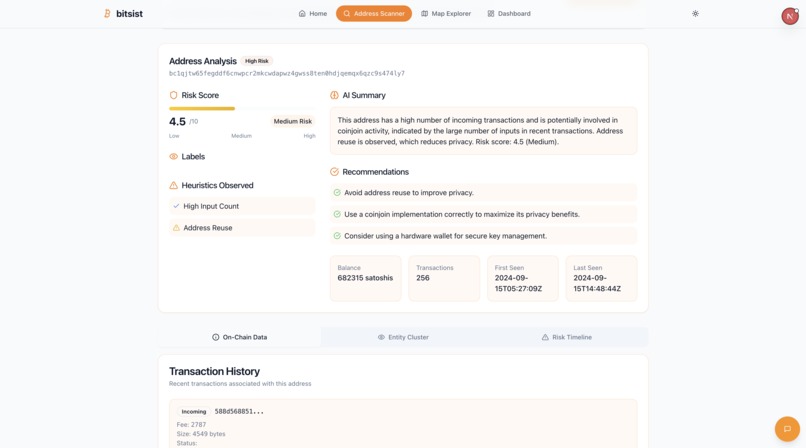
Address Scanner Page
-
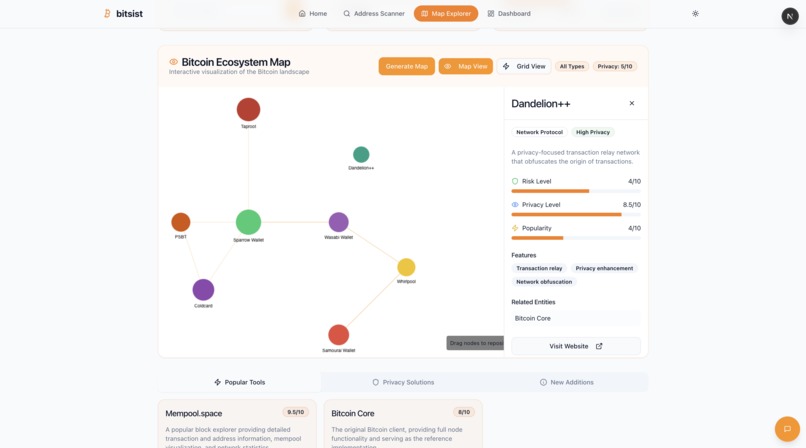
Ecosystem explorer page
-
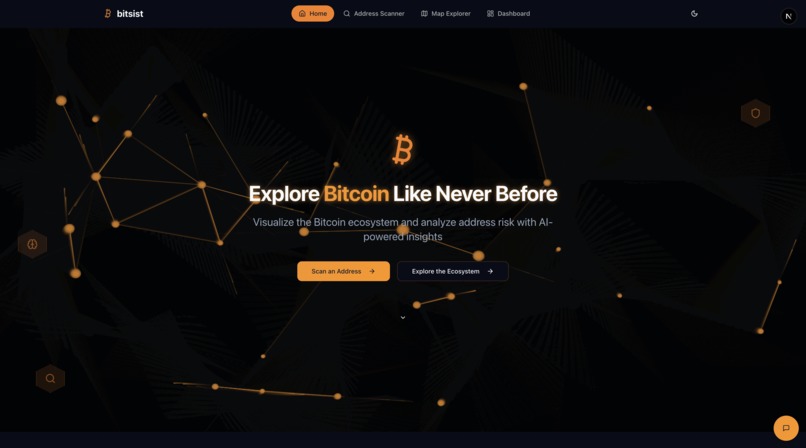
Home Page
-
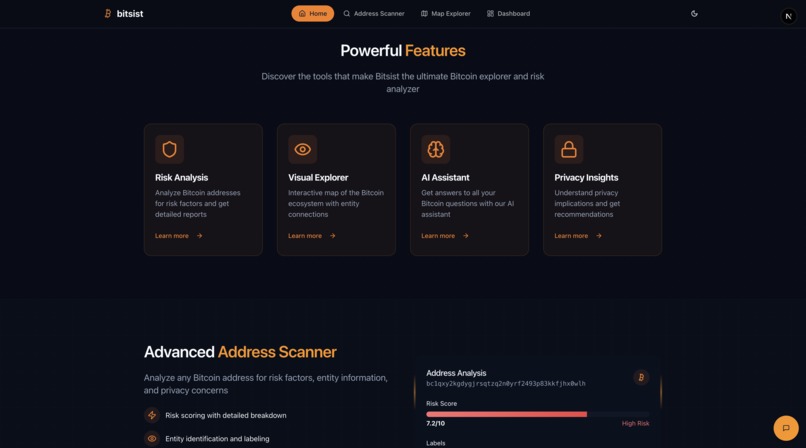
Home Page
-
Home Page
-
Home Page
-
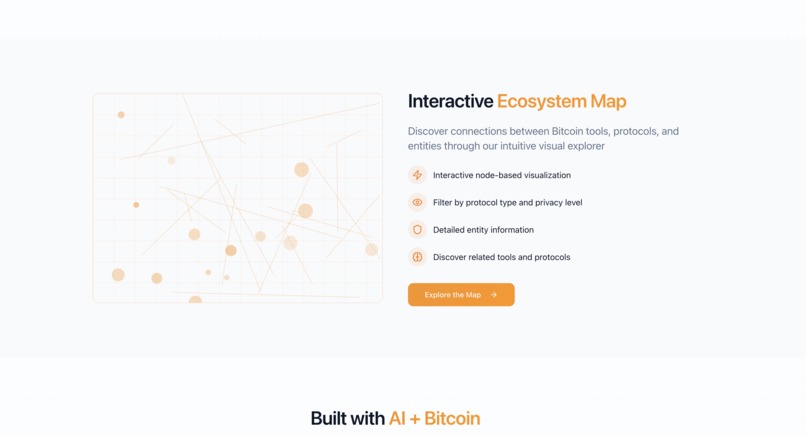
Interactive ecosystem map section


Bitsist
Inspiration
As Bitcoin’s ecosystem rapidly evolves—especially with the rise of Ordinals, Inscriptions, and BRC-20s—it becomes harder to understand on-chain activity at a glance (I struggled too). I wanted to create a tool that simplifies on-chain intelligence and offers a visual, explainable way to navigate risks and trace behavioural patterns, provide actionable insights, an information system of some sort, for folks new to the Bitcoin landscape.
What It Does
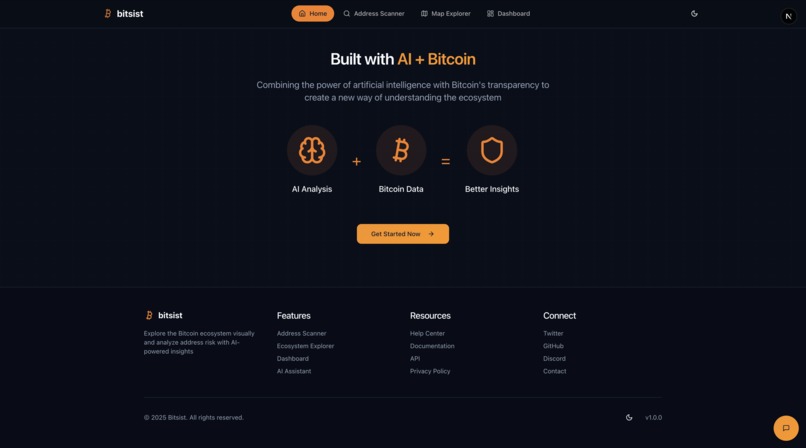
Bitsist is an AI-powered forensic analysis and risk intelligence tool for Bitcoin tools. It enables users to:
View risk timelines for wallets, with historical events and associated scores.
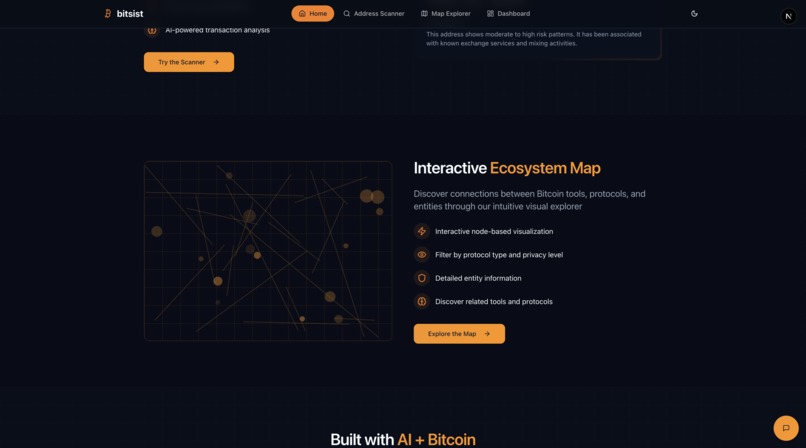
Explore visual ecosystem maps of wallet/token relationships powered by AI-generated insights.
Get natural language summaries of suspicious or anomalous activity.
Data Source
Mempool APIs:
- Address Info/Details
- Address Transactions
- Address Mempool Transactions
- Address UTXOs
How It Was Built
Next.js (App Router), TailwindCSS, ShadCN UI, and Framer Motion for animations.
AI Layer: Gemini 2.0 flash via Vercel AI SDK for structured outputs for the intuitive UI
Graph Visualisation: Canvas API.+ custom AI-based node generation from entity relationships.
Risk Engine: Combines heuristics and AI output to produce a behavioural timeline.
Accomplishments that I am proud of
That I got to make the submission, I almost gave up, it seems like I wasn't going to make it owing to errors from the AI, and majorly the empty responses from Rebar data APIs
What I Learned
Prompt engineering was critical to translating raw on-chain data into meaningful, explainable insights.
Graph rendering from dynamically structured AI data requires meticulous formatting and logic to avoid visual breakage.
Building for Bitcoin’s ecosystem is starkly different from EVM chains—fewer composable tools, more raw data handling.
Challenges Faced
Inscription Lookups Returning Empty: Even when data existed on OrdinalScan, some endpoints returned nothing, I needed for address-level analysis. For whatever reason, Rebar data APIs were returning empty
Rendering AI-generated Graphs: The ecosystem map involved turning semi-structured AI data into nodes and links—non-trivial and extremely prompt-sensitive.
Rebar Integration: Rebar data didn’t provide the appropriate data specific for my use-cases., which almost derailed the submission. I had to switch to Mempool. Conversely, Mempool API integration via the SDK was a breeze
Token Limits: Gemini max token length was exceeded during deeper address analysis. Required chunking strategies and input data reduction
Future Updates
Add agent explainability: Let users chat with an AI agent that can explain suspicious behaviour using real evidence.
Tech stack
- Nextjs
- TypeScript
- TailwindCSS
- Zod
- Radix UI
- Google Gemini via Vercel AI SDK
- Mempool.js
Built With
- aisdk
- gemini
- nextjs
- radixui
- tailwindcss
- typescript
- zod

Log in or sign up for Devpost to join the conversation.