-
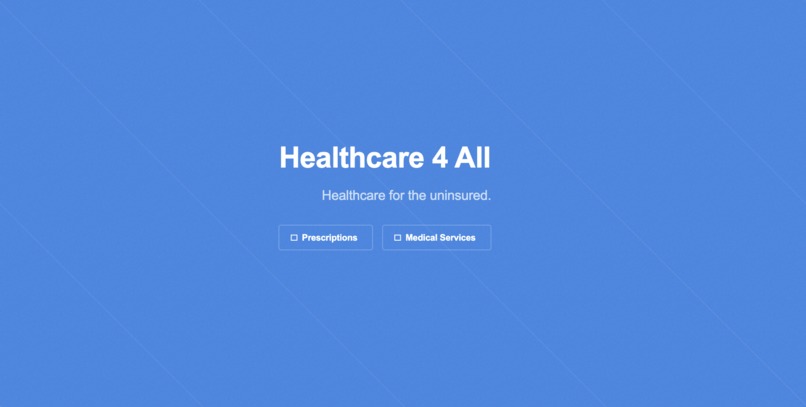
Landing Page
-
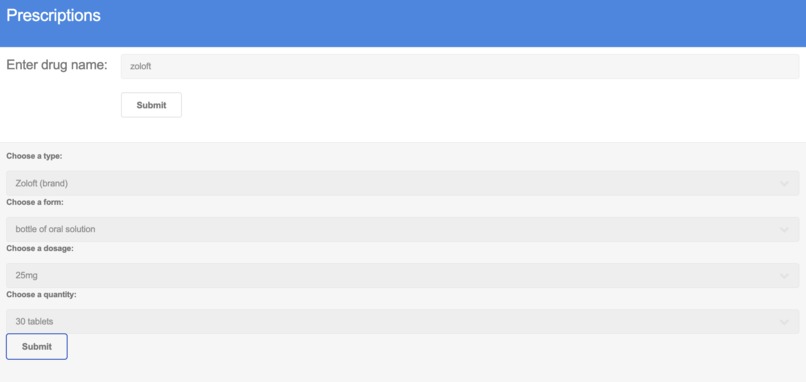
Medication Search
-
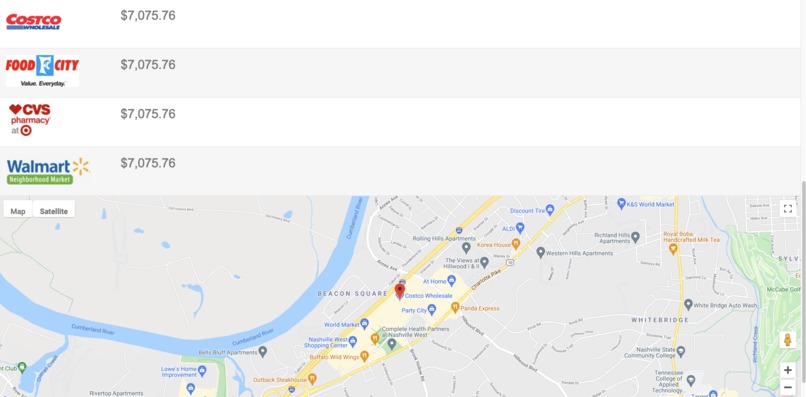
Results and Map


Inspiration
While brainstorming, we all gravitated towards the idea of making a positive impact in the field of healthcare. Initially, we considered the idea of an Alzheimer's disease monitoring and detection system but soon realized that there were already many projects working on this problem. After thinking some more about the major issues within healthcare, we decided to focus on affordability. We chose to develop a webpage that helps find the lowest available prices for elementary medical procedures and prescription medicines for the uninsured, the group that is perhaps in most need of it.
What it does
H4A provides two main features, medical provider and prescription medicine searching. Both follow the same general principles, but the medical provider search pulls from a spreadsheet of aggregated data while the prescription medicine search uses real-time web scraping. Once the user has chosen the procedure/drug they would like to search for (as well as specific information such as dosage for medications), the website displays options from the most popular clinics and pharmacies. Users can also click on each option to find the nearest location to them.
Accomplishments that we're proud of
Considering our previous lack of experience, we are very proud of our ability to learn new development technologies such as web-scraping and backend creation. Most of all, however, we are proud of our program, which helps users navigate over 5,000 commercially available drugs and 175 medical treatments at 9 of the largest clinical healthcare providers across the nation.
How we built it
H4A runs on an HTML/JS/CSS webpage with a Flask Python backend. User-submitted information is sent to the backend, where Python functions sort data using Pandas and Numpy and web-scrape using Selenium and Beautifulsoup4. These functions return variables that are then displayed on the webpage using Jinja templates. Google Maps API and JS are also used for finding the nearest location of an option.
Challenges we ran into
This was everyone on our team's first Hackathon, and while we all had experience in theoretical computer science, none of us had ever created something before. We learned all of the necessary skills as we went along, which meant many hours of painful debugging and silly mistakes. A perfect example of this is when I (Michael) accidentally pushed my (old) Google API Key to the GitHub repository.
What's next for H4A
We would love to add dynamic elements to our website through a database. This would allow us to track important data such as price information over time, providing users with a useful time history of changes to their medication/medical services. We would also love to expand our web-scraping to include a larger list of sources while controlling for variables such as credibility and accessibility.

Log in or sign up for Devpost to join the conversation.