-
-
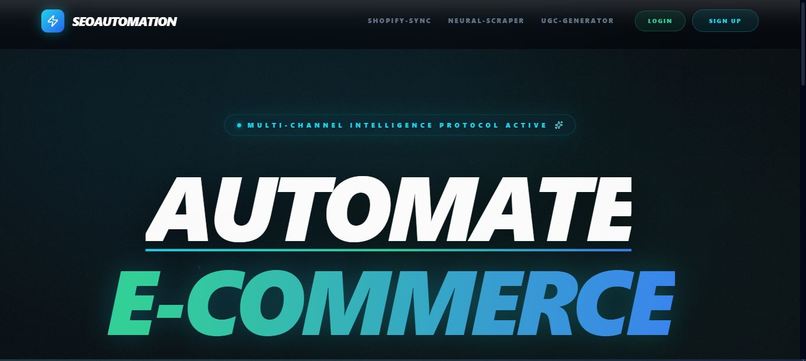
Landing page of the website
-
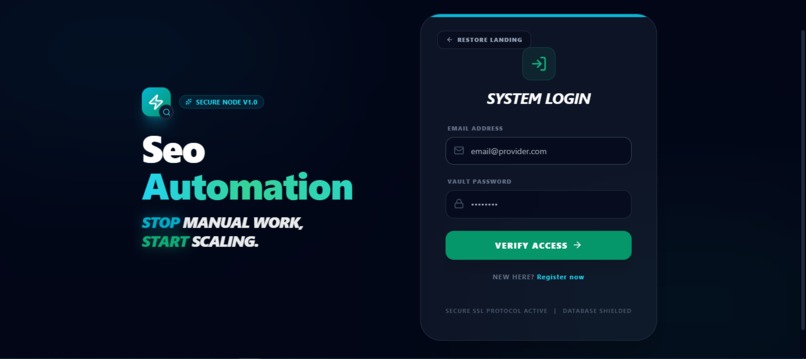
User Access page
-
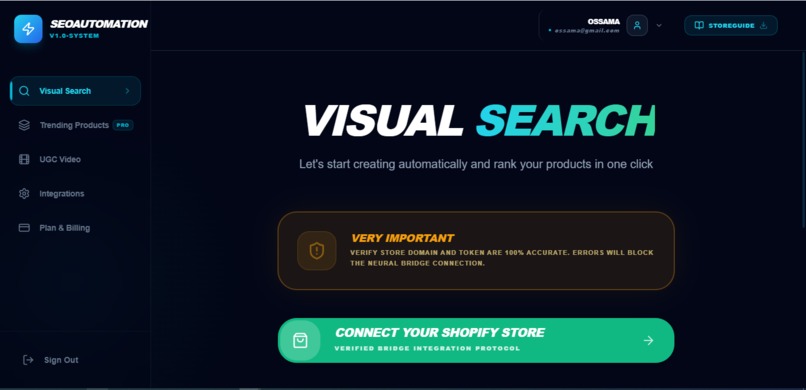
Dashbord Visual Search
-
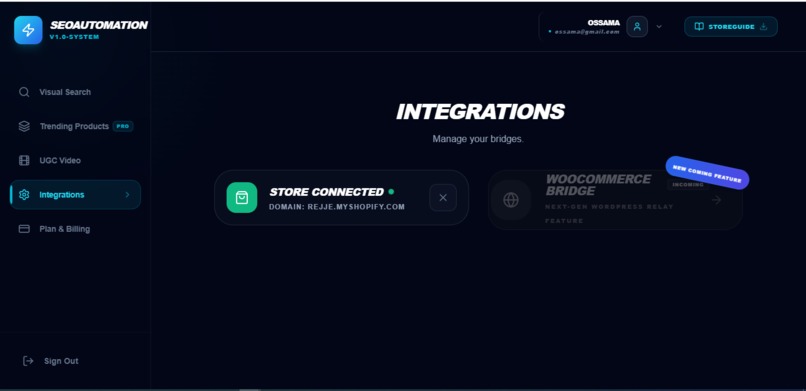
Intergartions of shopify and WooCommerce Page
-
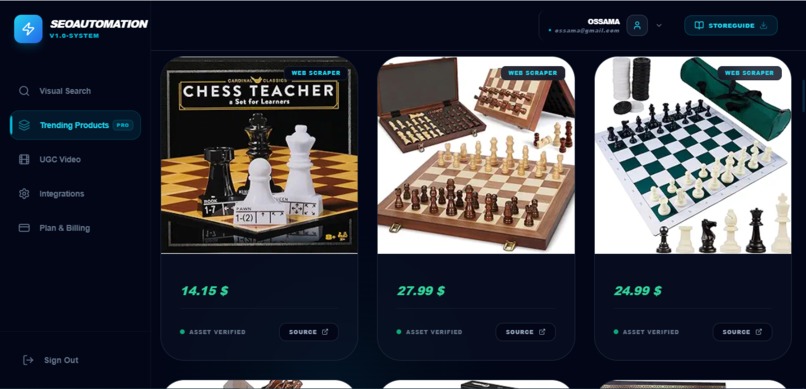
Feature of detect product amazon Page
-
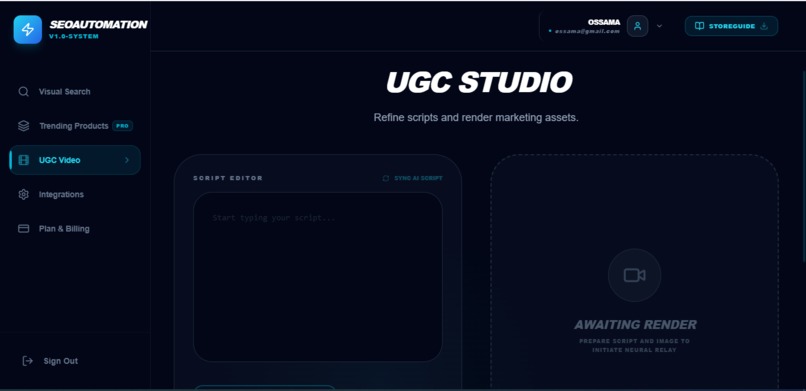
Feature of UGC video Page
-
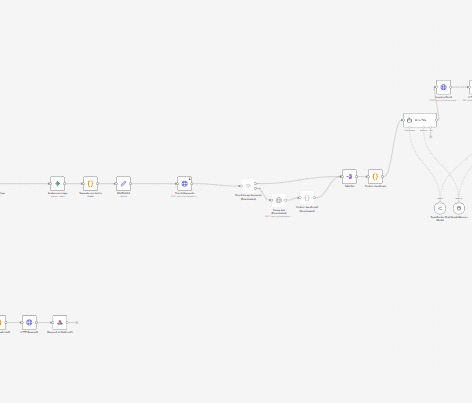
A snapshot of the n8n workflows powering the backend


My inspiration for SeoAutomation was born in the very first days of my AI Workflow & Automation bootcamp at ARK-x Talent Solutions. Our coach challenged the class with a single, powerful question: "Where can we apply Ai automation in the E-commerce domain to create the most impact?"
In that exact second, the idea flashed into my brain. I realized that while many tools help people manage a store, almost none help them create a professional, SEO-optimized, and ad-ready product with images listing instantly. I wanted to build "The Magic Button" for entrepreneurs—turning a raw product image into a live revenue stream in seconds.
** How I Built My Project**
As an AI Workflow & Automation Specialist, I wanted to prove that you can build a complex SaaS by combining "Vibe Coding" with n8n automation No-code Low-code advanced logic:
- The Front-End (Vibe Coding): I used natural language instructions to develop a clean, modern dashboard where a user’s only task is to drag and drop an image, all the website vibe-coded with Ai google Studio.
- The Backend (n8n Orchestration): The "brain" is a multi-step (Multi-Agents AI) n8n workflow.
- The Database & Authentication: is used to handle user authentication and secure access management (Supabase).
- Vision AI: Analyzes the uploaded photo to identify the product, using gemini analyze images node.
- The "SEO Magic": I built a node that scrapes Google Trends Keywords to inject high-performing keywords into the titles and descriptions—ensuring the product is "born" to rank high on search engines, I can also use google keywords planner for ranking.
- Trend Detect: User can get the best products selling in amazon with only product name, by scaping data in https node.
- The Content Factory: The system writes high-converting copy for Shopify and wooCommerce Stores and creates a UGC (User Generated Content) promotional video based on an AI-generated script, and the best amazon products can make the user inspire from them.
** What I Learned**
Beyond the technical skills, I learned the importance of Real-Time Data. In e-commerce, owners spend nearly 60% of their time on manual tasks like writing descriptions and making ads? For a dropshipper with 100 products, that’s days of lost revenue."
I also applied the logic of Conversion Efficiency ():
Where:
$$E_c = \frac{T_{trending} \cdot C_{ai}}{T_{launch}}$$
- $T_{trending}$: = Real-time keyword volume.
- $C_{ai}$: = Quality of AI-generated sales copy.
- $T_{launch}$: = The time saved (reducing hours of work to seconds).
** Challenges I Faced**
- Contextual Accuracy: Getting the AI to choose keywords that were both "trending" and "relevant" to the specific image was a challenge. I had to build a validation agents in n8n to double-check the SEO output.
- Multi-Platform Sync: Ensuring the automation worked perfectly for both Shopify and WooCommerce required careful API mapping and handling different data structures.
- Prompt Engineering for Agents: I spent significant time in refining the system instructions for my dedicated agents. The challenge was finding the perfect prompt that balanced SEO keyword density with natural, persuasive sales copy for the titles and descriptions. I had to ensure the agents didn't just "dump" keywords but actually wrote descriptions that drove organic traffic and converted visitors into buyers.
There are many features i can add to automate a Shopify & WooCommerce stores.
I really hope you’ll like one of my real projects in AI automation & workflow.
Thank you.
Built With
- ai
- ai-agents
- ai-google-studio
- apify
- apis
- automation
- cloudinary
- gemini
- google-trends
- javascript
- llm
- ocr
- seo
- shopify
- supabase
- webhooks

Log in or sign up for Devpost to join the conversation.