-
-
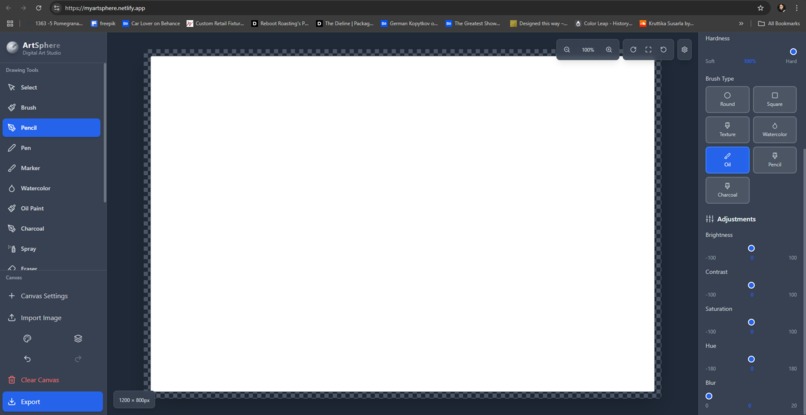
myartsphere homepage
-
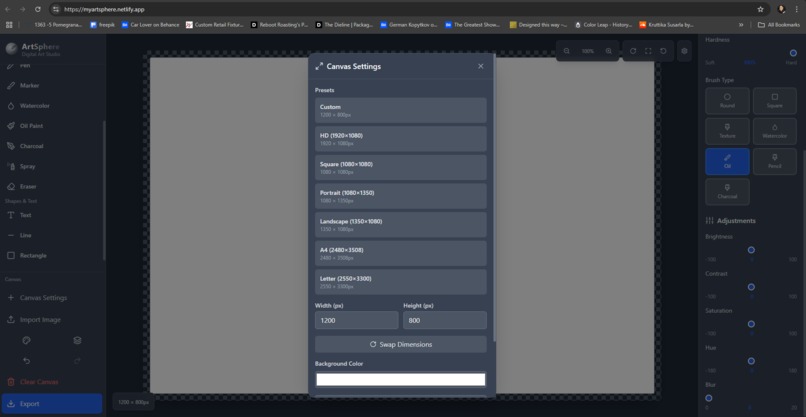
Canvas Size
-
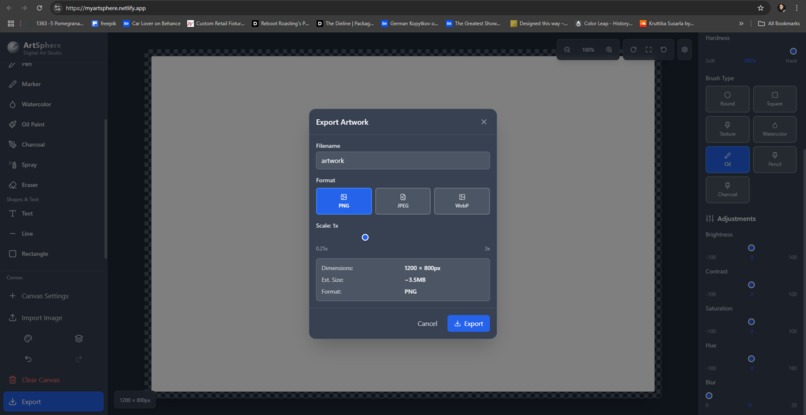
export setting


InspirationInspiration
We launched MyArtSphere to fill a gap for artists seeking an all-in-one creative community. Many emerging artists struggle to get exposure and feedback on their work, and community-run art platforms can dramatically change that. For example, studies note that dedicated art websites give new creators a stage to “gain exposure” and build supportive networks
What it does
MyArtSphere is a React‑based digital art platform that serves as both a personal portfolio and a community hub. The homepage greets users with a large, inviting banner and a search bar for exploring artwork by keywords .
How we built it
We used a modern MERN-stack approach with responsive design. The front end is built in React and Redux, using Chakra UI (with styled-components) for a consistent, mobile-friendly look. We also added Framer Motion for smooth animations and transitions. The back end is a Node.js/Express server with MongoDB (via Mongoose) for storing art posts and user data Firebase is used for handling image storage and authentication seamlessly. The team followed a structured development plan, iterating on features like searching and category filters. We then deployed the app using cloud platforms: the frontend runs on Vercel (with Netlify as an alternative build target) and the backend on a cloud instance.
Challenges we ran into
Building MyArtSphere posed several technical hurdles. Integrating the image editor into React was tricky; we needed client‑side tools for adjusting brightness and saturation without slowing performance. Handling user authentication securely took time (we implemented JWTs and password hashing). Designing a smooth, debounced search and category filter required careful state management in Redux so the UI would update quickly without excessive requests. We also spent extra effort making the interface fully responsive – ensuring art grids, forms, and navigation all adapt neatly on mobile and desktop. Finally, coordinating as a team during a fast-paced hackathon meant streamlining our workflow (using Git branches and code reviews) so we could iterate features without conflicts.
Accomplishments that we're proud of
Rich Feature Set: In a short time we delivered a full portfolio platform with live uploading, commenting, and image editing. Integrating all these pieces (React UI + Redux store + backend API) was a major milestone. Intuitive UI/UX: We crafted a polished, user-friendly design with Chakra UI and Framer Motion. For example, the image editor interface (shown below) feels native and easy to use. Performance: The search and filtering are snappy thanks to debouncing logic, and our site remains responsive even with many images. Deployment: We successfully deployed the frontend and backend so anyone can try the live app (frontend on Vercel/Netlify, backend on Cyclic). This end‑to‑end deployment is a key technical success.
What we learned
This project was a crash course in full-stack development. We gained hands-on experience with the MERN stack and deployment tools. Working with Redux taught us about state management for complex data flows (search filters, user sessions, etc.). We also deepened our understanding of asynchronous React patterns for things like real-time search debouncing and API calls. Collaborating under time pressure helped us improve our workflow: we practiced Git branch management and agile planning. On the product side, we learned a lot about designing for user engagement – for example, how visual category cues and comment threads encourage interaction. Overall, the team became much stronger at quickly iterating and integrating new features.
What's next for ArtSphere
Moving forward, we plan to expand and polish the platform. Upcoming features include: Enhanced Social Features: Options for following artists, direct messaging, or collaborative gallery events to deepen the community feel. AI-Assisted Tools: Integration of AI to suggest art tags or style transformations. For example, using an AI model to auto-generate color palettes or creative filters for artworks. Mobile App: Developing a React Native or mobile-optimized version so artists can upload and browse on the go. Expanded Genres and Content: Adding more art categories (e.g. Sculpture, Digital 3D) and enabling multi-media (short video showcases). Workshops and Tutorials: Building a section for community-led tutorials or challenges to help artists learn new techniques.
Built With
- backend
- netlify
- react
- vercel


Log in or sign up for Devpost to join the conversation.