-
-
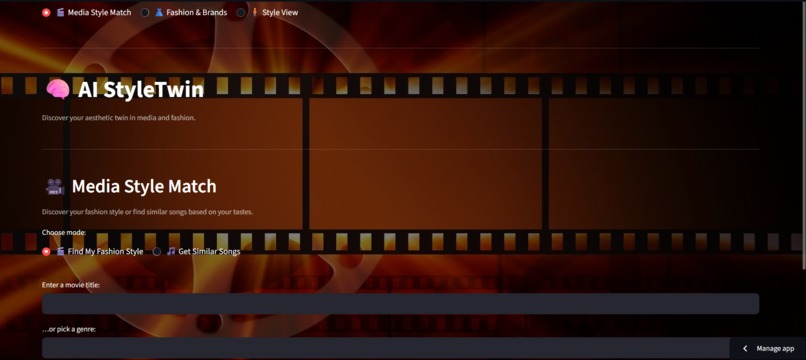
View of movie recommendation tab
-
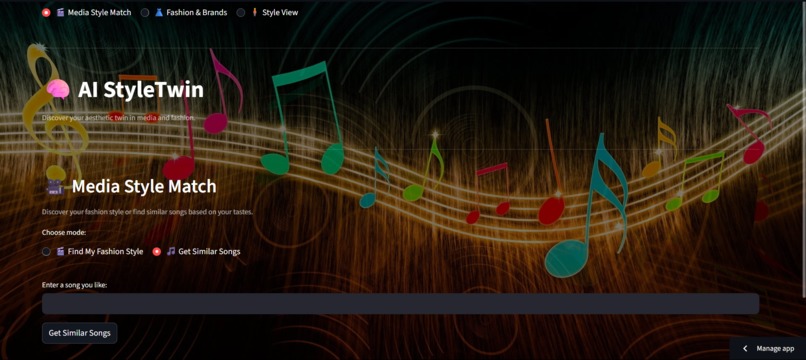
View of music recommendation tab
-
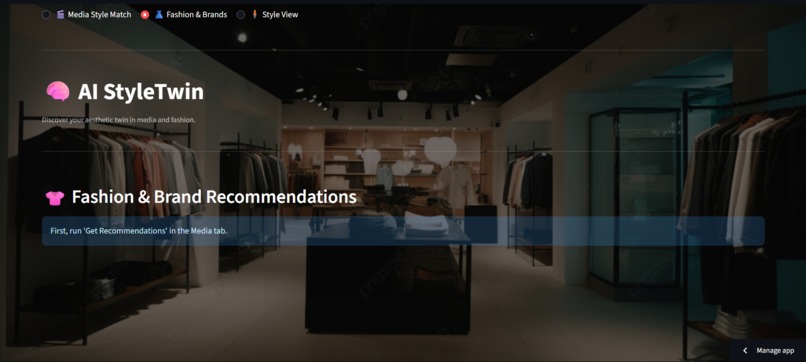
View of fashion archetype tab
-
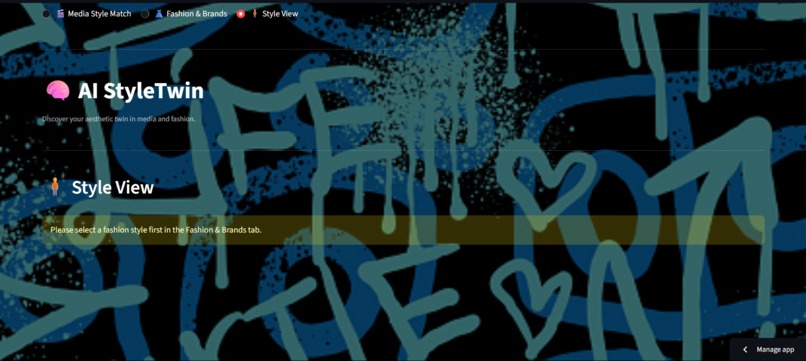
View of fashion recommendation tab
-
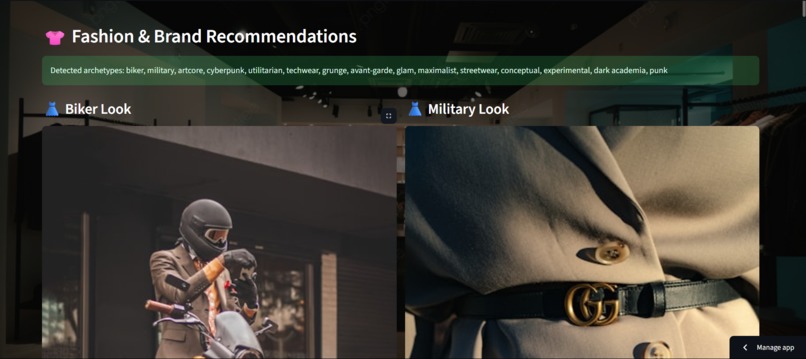
Fashion archetype generation in action
-
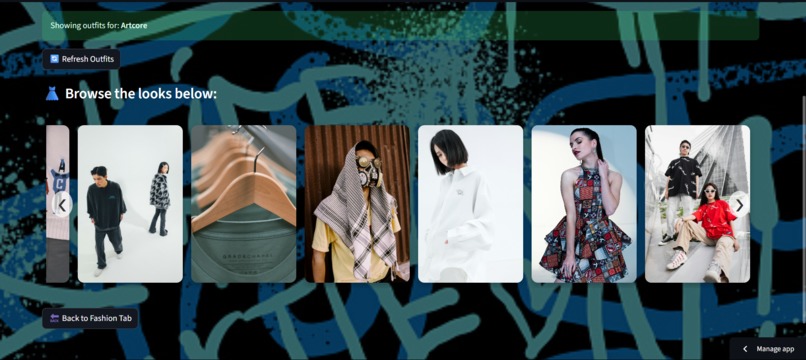
Recommended fashion styles


Inspiration
The idea for AI StyleTwin was inspired by a close friend who’s really into fashion. Despite having a great sense of style, they often struggled with a surprisingly common dilemma: “I have nothing to wear” — even with a wardrobe full of options. I realized that it wasn't just about having clothes; it was about finding the right outfit that fits the mood, the moment, or the mindset.
That got me thinking — our favorite movies and songs often reflect who we are or how we feel on a given day. What if I could tap into that? What if someone could get outfit suggestions based on the vibe of a film they love or a song they’ve been playing on repeat?
That question led to the creation of AI StyleTwin: a tool that uses AI to match media taste with fashion archetypes — helping people like my friend (and probably many others) find inspiration when they need it most.
What it does
AI StyleTwin is an AI-powered web app that matches your fashion style with the media you love.
You start by entering either a movie, genre, or song that resonates with you. The app then:
Analyzes your input using AI-driven cultural intelligence (Qloo) and fallback logic from Spotify and TMDB
Maps the emotional and aesthetic “vibes” of that media to fashion archetypes and style tags
Recommends real-world outfits and brands that reflect those styles
Lets you view, browse, and "try on" looks in a virtual fitting room
Whether you’re feeling like a character from a dramatic indie film or vibing with upbeat retro-pop — StyleTwin helps you dress the part.
How I built it
I built AI StyleTwin using a combination of AI APIs, fashion heuristics, and a clean Streamlit interface to deliver a unique experience.
Backend & AI
Qloo API: Used to fetch cultural insights and fashion-relevant tags based on media input
TMDB + Spotify + Last.fm: Provide fallback data when Qloo fails or returns empty results
Custom mapping logic: I created genre-to-tag pipelines that map to fashion archetypes and ultimately visual fashion prompts
Frontend & UI
Streamlit: Used to build the multi-tab interface and manage app state
HTML/CSS Coverflow: Embedded to create an interactive, swipeable outfit gallery
Dynamic Tab System: Enables smooth transitions between Media, Fashion, and Fit modes
APIs & Image Sources
Unsplash, Pexels, Pixabay: Provide aesthetic outfit imagery from search terms
IMGBB: Supports quick image hosting for user-submitted content or previews
Secrets and keys were securely handled using st.secrets.
Challenges I ran into
1. Integrating Qloo’s API
Qloo was central to my project’s concept — but it turned out to be one of the most complex parts to integrate. I struggled with:
Understanding and formatting entity URNs correctly
Handling cases where Qloo returned no styles at all
Dealing with inconsistent behavior across endpoints and undocumented errors
Eventually, I implemented fallback logic using TMDB, Spotify, and my own genre-to-style mapping to keep the app functional.
2. Streamlit’s Layout Limitations
Streamlit is powerful for quick prototyping but has limitations in layout control. I ran into issues with:
Embedding HTML/CSS cleanly for carousels and layered visuals
Maintaining readability while supporting custom backgrounds
Preserving session state and dynamic tabs without losing user context
Despite these, I found creative workarounds to simulate advanced UI/UX within the Streamlit ecosystem.
Accomplishments that I'm proud of
Built an AI pipeline that connects culture to clothing, bridging media consumption with fashion identity
Developed a smooth multi-tab experience in Streamlit, complete with dynamic carousels and recommendation logic
Integrated 7+ APIs including Qloo, TMDB, Spotify, Last.fm, Unsplash, Pexels, Pixabay — all gracefully failing over if needed
Designed an interactive fitting room that lets users browse fashion archetypes visually
Focused on accessibility by using free tools and keeping the app lightweight enough to run globally
What I learned
APIs don’t always behave predictably. Qloo was a learning curve in dealing with nonstandard URNs, 401s, and 404s. I now understand how to build resilient API pipelines with retries and fallbacks.
Creative logic matters as much as the model. When Qloo failed, genre-based heuristics still gave surprisingly good style matches.
Streamlit requires ingenuity. I learned how to extend a data app framework to look and feel like a complete product through HTML/CSS and session-state hacks.
Empathy is key in fashion tech. It’s not about dictating what to wear — it’s about suggesting something that makes people feel seen, expressive, and confident.
Performance can make or break user flow. I used Streamlit’s caching tools to reduce lag across multiple external calls and deliver a snappy experience.
What's next for AI StyleTwin
This is just the beginning. Here's where I hope to take AI StyleTwin next:
-Smarter Recommendations using fine-tuned models that learn user preferences and mood boards
-User Profiles & History to personalize and evolve suggestions over time
-Outfit Shopping Integration with fashion retailers for real-time browsing and purchases
-Mobile App with AR Try-Ons for a Gen Z-friendly immersive experience
-Global Aesthetic Coverage by including more diverse, culturally inclusive style archetypes
-Smarter API Prioritization so that Qloo, TMDB, Last.fm, and fashion image sources work in harmony depending on the context


Log in or sign up for Devpost to join the conversation.